
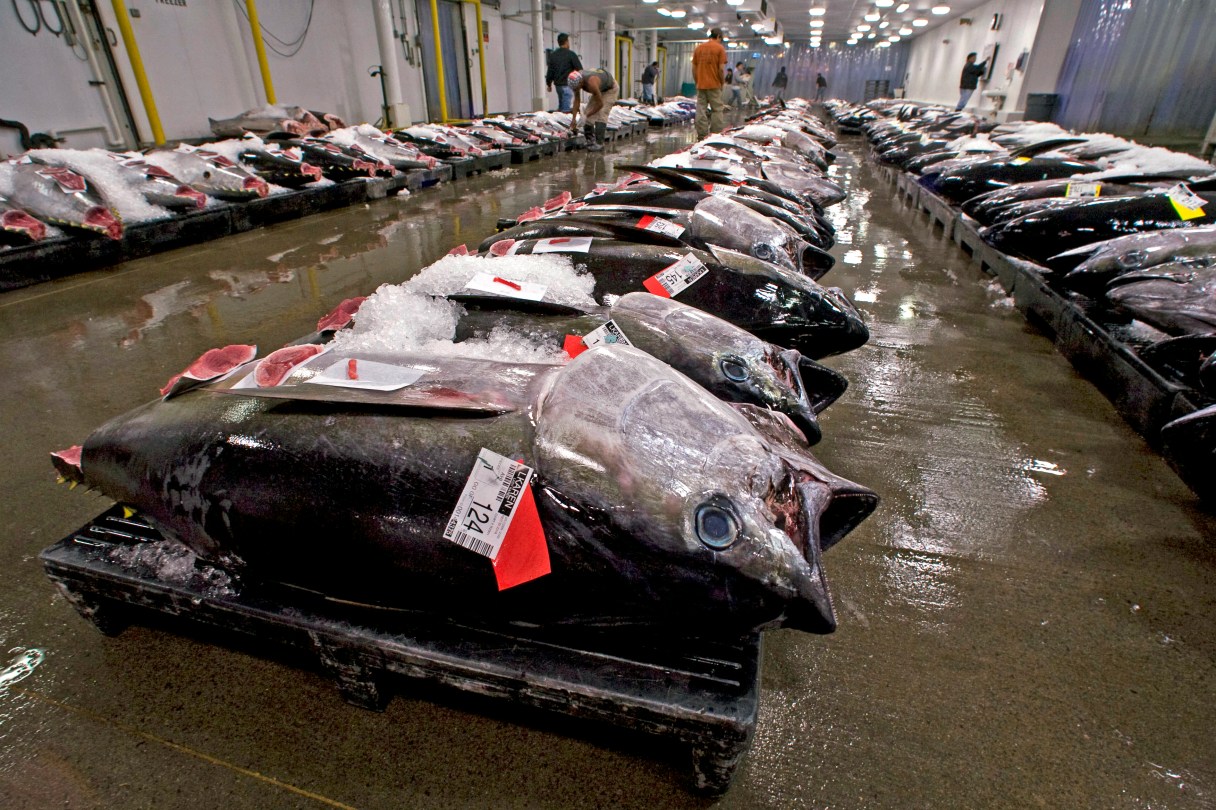
HONOLULU (AP) – Environmentalists on Friday asked a federal judge to stop the National Marine Fisheries Service from allowing Hawaii-based fishermen to attribute some of the bigeye tuna they catch to U.S. territories.
They argue the agency is enabling the fishermen to circumvent international agreements aimed at controlling the overfishing of a popular tuna species known as ahi.
Earthjustice attorney David Henkin told U.S. District Court Judge Leslie Kobayashi the fisheries service acted illegally when it created a framework allowing Hawaii longline fishermen to record some of their catch as having been caught by fishermen in Guam, the Northern Mariana Islands and American Samoa.
“This is allowing them to fish without limits,” Henkin said of Hawaii fishermen during a hearing in federal court for a motion Earthjustice filed on behalf of the Conservation Council for Hawaii and other environmental groups.
Bradley Oliphant, a U.S. Justice Department attorney who argued on behalf of the fisheries service, said the agency carefully studied the environmental effects of the quota transfer. He said the arrangement meets the requirements of U.S. fisheries and environmental laws.