
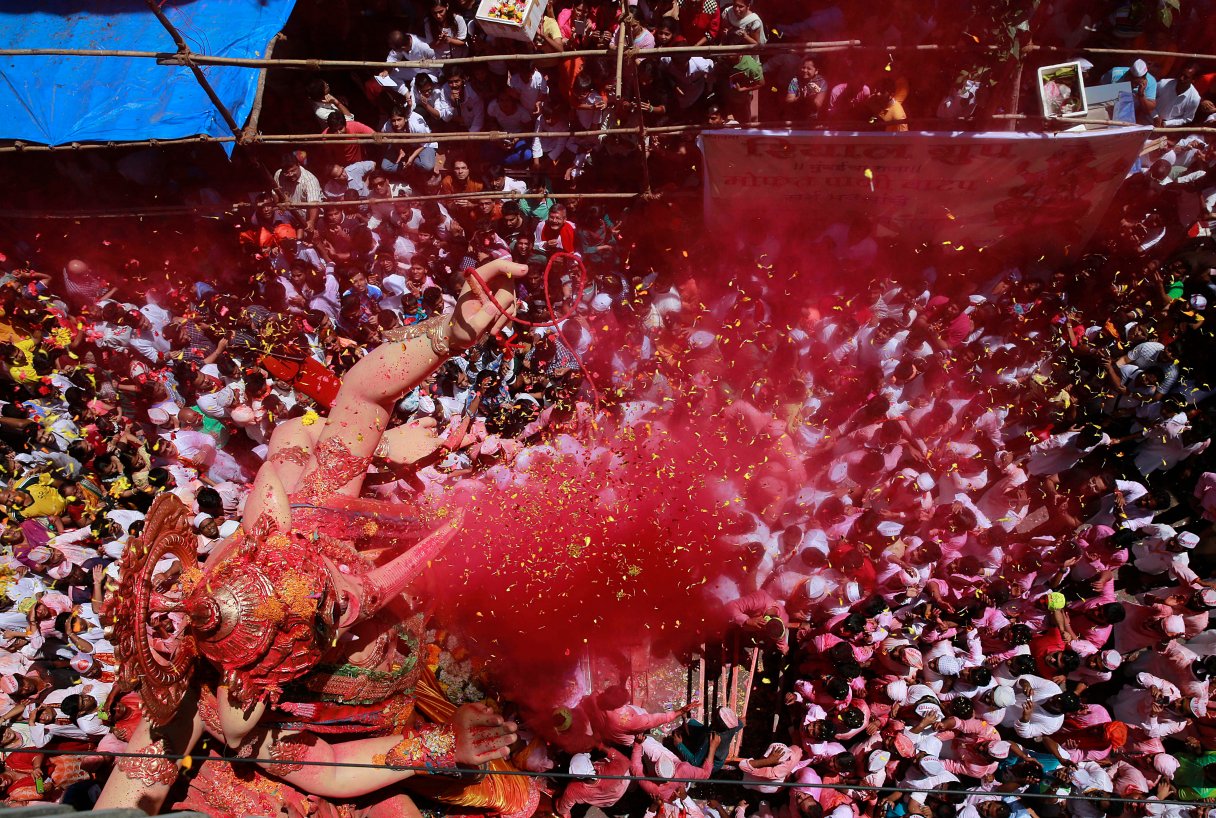
MUMBAI, India (AP) – Every year, after months of pouring monsoon rains, millions of devout Hindus across western India step out to joyfully celebrate the birthday of Ganesha, the elephant-headed god.
Elaborate idols of the god are purchased and brought home, where they are worshipped. After a few days – every family has its own tradition – the idols, made either from Plaster of Paris or clay, are carried to a large body of water and ceremonially immersed. The beautiful ritual, however, leaves rivers, lakes and even the sea polluted with a mix of toxic paints and materials.
Over the past few years, people like Anand Pendharkar, a maker of Ganesha idols, have been experimenting with creations that are less damaging to the environment.
He’s tried edible paints and biodegradable materials before, but this year Pendharkar has gone a step further.
His Ganesha idols now contain fish food made of corn, spinach and flour that can be consumed after the outer shell of clay has dissolved.