
Wednesday, November 11, 2026Nov 11

Uproar over Egypt’s policy of state-dictated Friday sermons

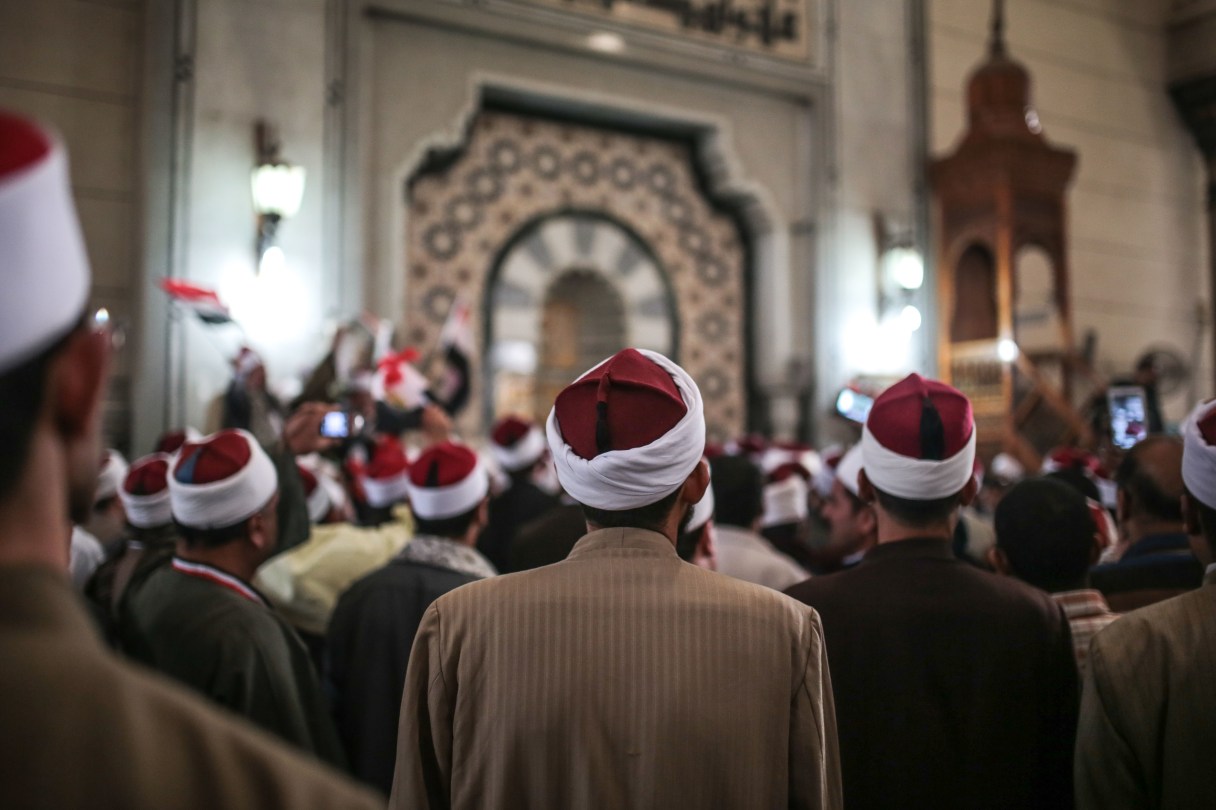
FILE - In this Feb. 3, 2015 file photo, Egyptian clerics from Al-Azhar institution rally to denounce terrorism and show solidarity with the Egyptian government and security forces at a mosque in central, Cairo, Egypt. In July 2016 the Egyptian government launched a radical bid to establish control over Egypt’s religious discourse, mandating that all imams at all mosques across the country read pre-written sermons distributed by the ministry. The government describes the initiative, unprecedented in Egypt’s history, as a means of weeding out extremist ideology, but it has proved extremely unpopular, with critics accusing the state of stifling the freedom of thought and creativity of the clerics. (AP Photo/Mosa'ab Elshamy, File)
FILE - In this Feb. 3, 2015 file photo, Egyptian clerics from Al-Azhar institution rally to denounce terrorism and show solidarity with the Egyptian government and security forces at a mosque in central, Cairo, Egypt. In July 2016 the Egyptian government launched a radical bid to establish control over Egypt’s religious discourse, mandating that all imams at all mosques across the country read pre-written sermons distributed by the ministry. The government describes the initiative, unprecedented in Egypt’s history, as a means of weeding out extremist ideology, but it has proved extremely unpopular, with critics accusing the state of stifling the freedom of thought and creativity of the clerics. (AP Photo/Mosa'ab Elshamy, File) FILE - In this Feb. 3, 2015 file photo, Egyptian clerics from Al-Azhar institution rally to denounce terrorism and show solidarity with the Egyptian government and security forces at a mosque in central, Cairo, Egypt. In July 2016 the Egyptian government launched a radical bid to establish control over Egypt’s religious discourse, mandating that all imams at all mosques across the country read pre-written sermons distributed by the ministry. The government describes the initiative, unprecedented in Egypt’s history, as a means of weeding out extremist ideology, but it has proved extremely unpopular, with critics accusing the state of stifling the freedom of thought and creativity of the clerics. (AP Photo/Mosa'ab Elshamy, File)

CAIRO (AP) – Inside a large mosque in the Nile Delta, an Egyptian cleric looked over his congregation as he climbed the pulpit clutching a piece of paper and began to speak – delivering a 13-minute discourse on the virtues of personal hygiene.

For the first time in his career, the young imam found himself forced to read a Friday sermon printed from the official website of the Religious Endowments Ministry.

Minutes after he ended the unusually short sermon, uproar spread through the congregation.

Some men in the crowd began shouting “No to written sermons!” while others tried to hush them – a commotion filmed on cellphones and posted online. Similar scenes occurred across the country and in the capital, where one angry worshipper reportedly snatched the paper from the hands of the cleric.

The clamor was in response to a controversial bid by the government to establish control over Egypt’s religious discourse. Launched last month, it mandates that all imams at state-run mosques read pre-written sermons distributed by the ministry. The measure – which expands upon a 3-year-old effort to provide general guidelines – is unprecedented in Egypt, even under previous autocratic governments.