
Thursday, November 12, 2026Nov 12

No great places to shelter from this market turmoil

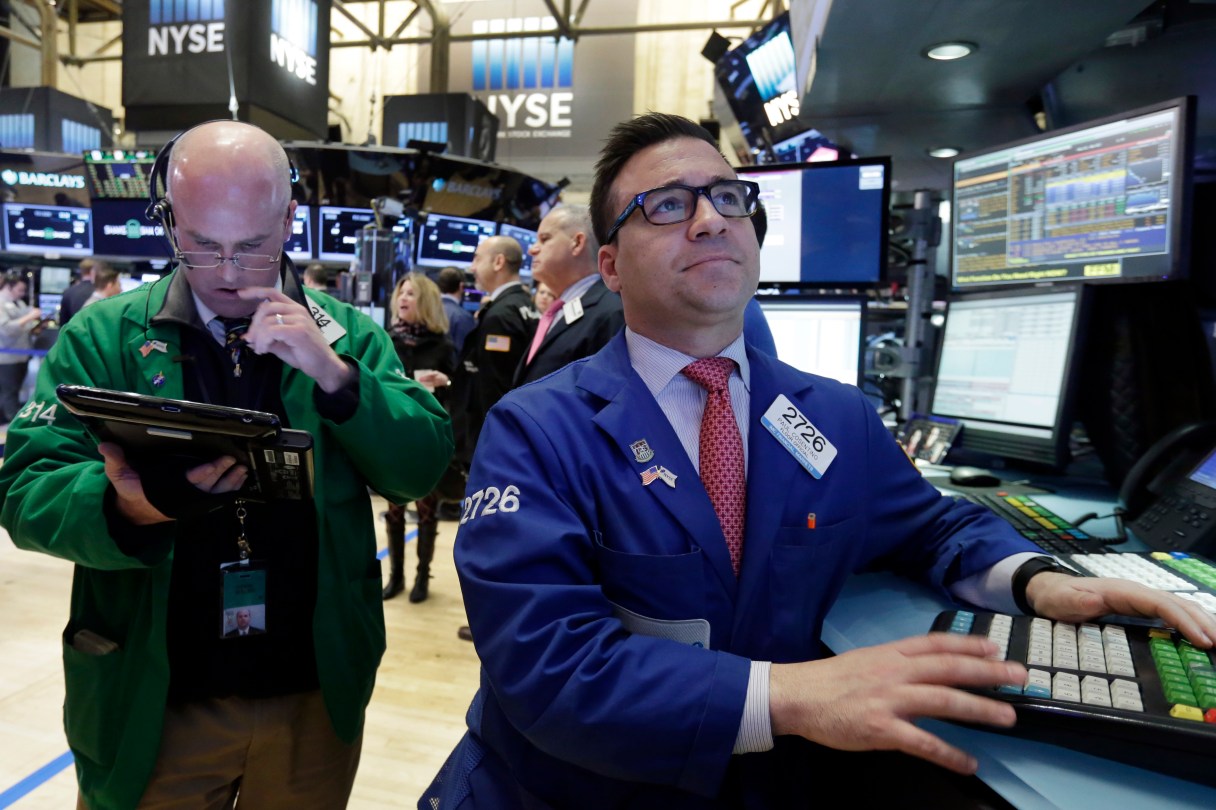
Trader Kevin Walsh, left, and specialist Paul Cosentino work on the floor of the New York Stock Exchange, Thursday, Jan. 14, 2016. U.S. stocks moved slightly lower in early trading Thursday, extending losses following the worst market drop since September. Investors had their eye on the latest company earnings and outlooks. Consumer discretionary stocks were among the biggest decliners.  (AP Photo/Richard Drew)
Trader Kevin Walsh, left, and specialist Paul Cosentino work on the floor of the New York Stock Exchange, Thursday, Jan. 14, 2016. U.S. stocks moved slightly lower in early trading Thursday, extending losses following the worst market drop since September. Investors had their eye on the latest company earnings and outlooks. Consumer discretionary stocks were among the biggest decliners. (AP Photo/Richard Drew) Trader Kevin Walsh, left, and specialist Paul Cosentino work on the floor of the New York Stock Exchange, Thursday, Jan. 14, 2016. U.S. stocks moved slightly lower in early trading Thursday, extending losses following the worst market drop since September. Investors had their eye on the latest company earnings and outlooks. Consumer discretionary stocks were among the biggest decliners. (AP Photo/Richard Drew)

NEW YORK (AP) – Stock prices are crumbling around the world, but the usual place for investors to go for safety, bonds, can’t provide as much cover as usual.

Bonds are still doing their job this year as investors’ best friends during a downturn: They’re holding up better than stocks, cushioning the blow for balanced investors. High-quality, investment-grade U.S. bonds have returned 0.9 percent through Wednesday, while the Standard & Poor’s 500 index has lost 7.4 percent on worries about the strength of the global economy.

The problem is that bonds are not doing as good a job as in past downturns, and the outlook for them is dim. Super-low interest rates mean bonds don’t pay investors much for the bonds they hold or are buying now. And those bonds may fall in price in the coming months and years if interest rates increase as the Federal Reserve, as expected, continues to move short-term rates higher.

“It’s just basic math,” says Chris Philips, head of institutional advisory services at Vanguard. “We’re at different levels today, and bonds don’t have as much room to grow on the price side.”

That means it will take longer for most investors – even those with a balanced mix of both stocks and bonds – to recoup all their losses from this downturn for stocks.