
Wednesday, November 11, 2026Nov 11

Researchers confirm site of hangings for Salem witch trials

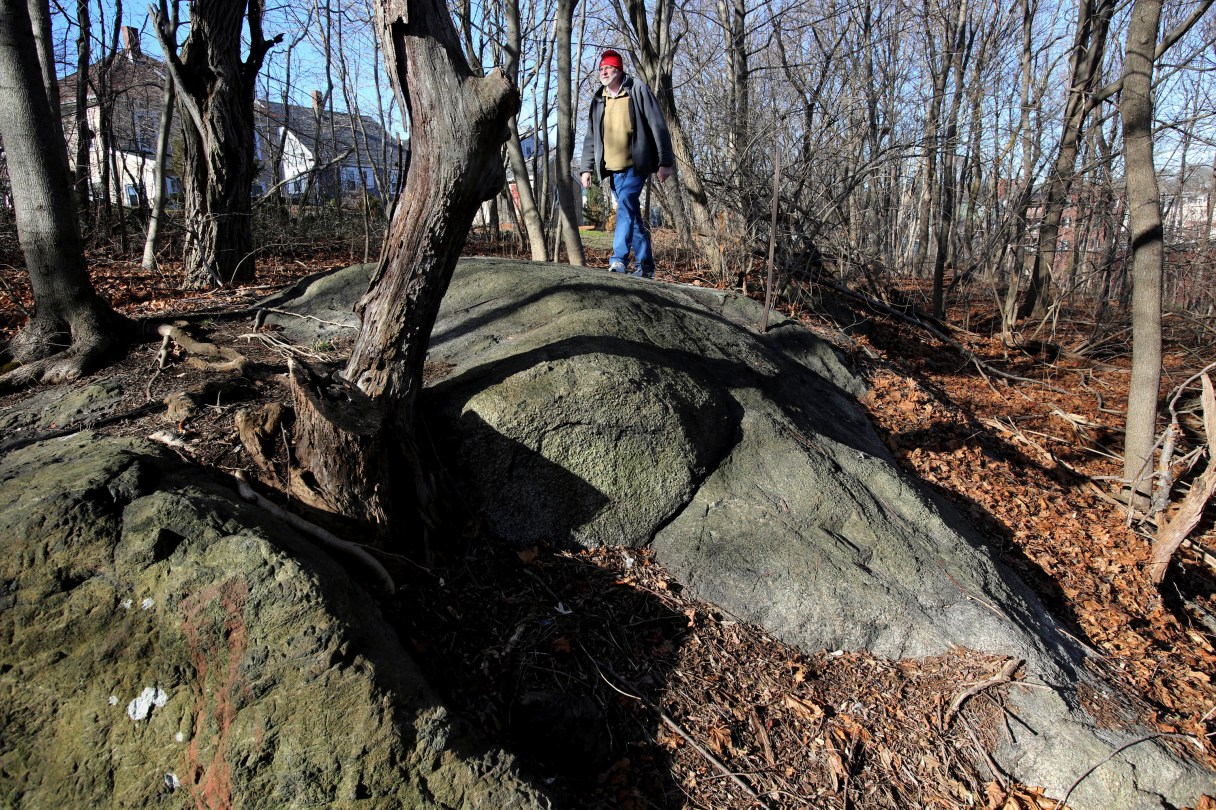
In this photo taken Jan. 11, 2016, Salem State University history professor Emerson Baker walks through an area that he and a team of researchers said is the exact site where 19 innocent people were hanged during the 1692 witch trials in Salem, Mass. Salem Mayor Kim Driscoll said the city plans to put a tasteful memorial at the site, which is known as Proctor's Ledge and is surrounded by private homes. (Ken Yuszkus/The Salem News via AP) MANDATORY CREDIT
In this photo taken Jan. 11, 2016, Salem State University history professor Emerson Baker walks through an area that he and a team of researchers said is the exact site where 19 innocent people were hanged during the 1692 witch trials in Salem, Mass. Salem Mayor Kim Driscoll said the city plans to put a tasteful memorial at the site, which is known as Proctor's Ledge and is surrounded by private homes. (Ken Yuszkus/The Salem News via AP) MANDATORY CREDIT In this photo taken Jan. 11, 2016, Salem State University history professor Emerson Baker walks through an area that he and a team of researchers said is the exact site where 19 innocent people were hanged during the 1692 witch trials in Salem, Mass. Salem Mayor Kim Driscoll said the city plans to put a tasteful memorial at the site, which is known as Proctor's Ledge and is surrounded by private homes. (Ken Yuszkus/The Salem News via AP) MANDATORY CREDIT

SALEM, Mass. (AP) – A team of researchers using historical documents and 21st-century archaeological techniques has confirmed the exact site where 19 innocent people were hanged during the Salem witch trials more than three centuries ago.

The site, known as Proctor’s Ledge, is a small city-owned plot of woods nestled between two residential streets and behind a Walgreens pharmacy, said Salem State University history professor Emerson “Tad” Baker, a member of the seven-person team, which announced its findings this week.

Historian Sidney Perley had pinpointed Proctor’s Ledge nearly a century ago as the site of the hangings by using historical documents, but his findings were lost to time, and myth, misconceptions and conspiracy theories had taken their place, Baker said.

The current research, known as the Gallows Hill Project, was about correcting the misinformation many people have about one of the most tragic episodes in American history.

“We are not discovering anything, and we don’t want to take credit for that,” he said. “This is all about the healing, not about the discovery.”