
Wednesday, November 11, 2026Nov 11

Iraq’s military is still struggling despite US training

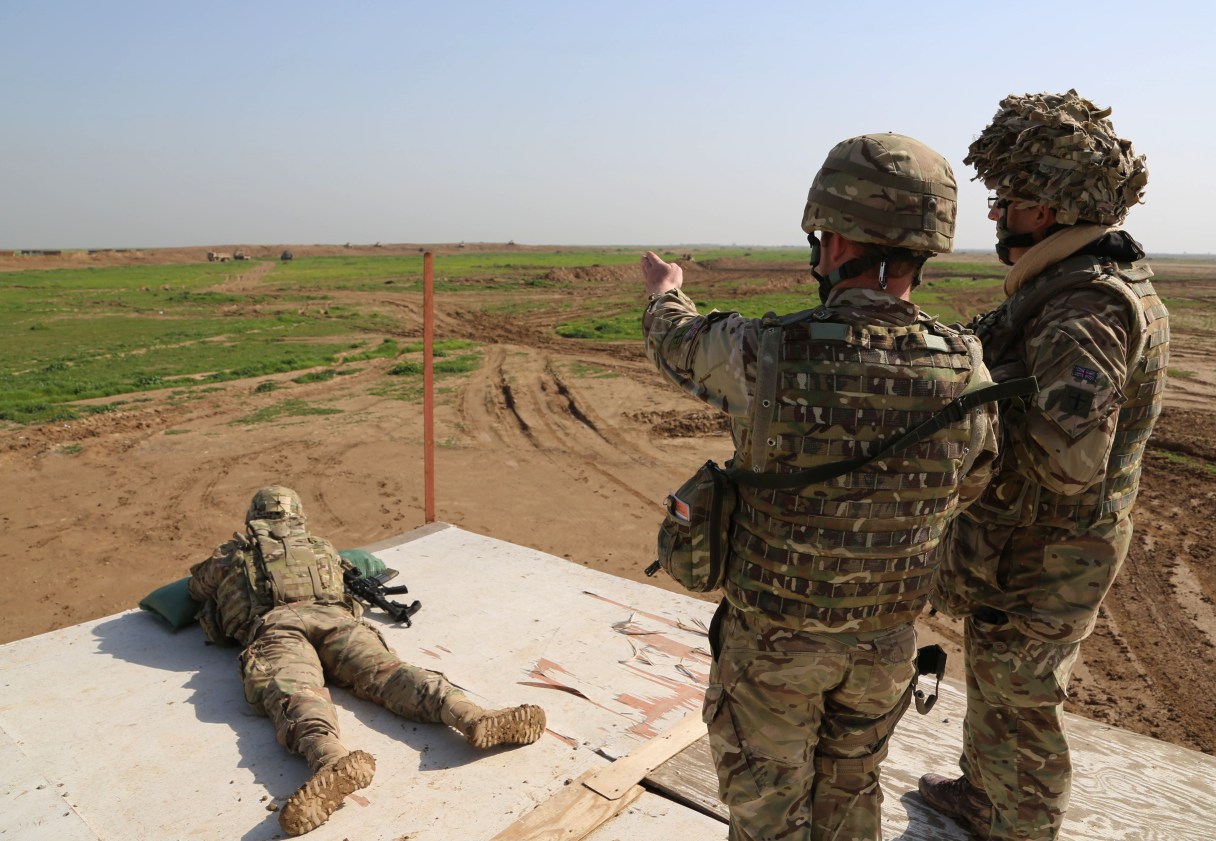
FILE - In this Sunday, Jan. 24, 2016 file photo, American and Spanish trainers use live ammunition in training exercises at Basmaya base, 40 kilometers southeast of Baghdad, Iraq. U.S. and Iraqi officials cast Ramadi as proof that coalition training efforts have paid off and the Iraqi military has improved since its catastrophic collapse in the summer of 2014. But analysts and former US trainers say the fight that wrested the city from the Islamic State group highlights the military’s lingering shortcomings and isn’t a model for trying to retake the bigger prize, the IS-held city of Mosul. (AP Photo/Karim Kadim, File)
FILE - In this Sunday, Jan. 24, 2016 file photo, American and Spanish trainers use live ammunition in training exercises at Basmaya base, 40 kilometers southeast of Baghdad, Iraq. U.S. and Iraqi officials cast Ramadi as proof that coalition training efforts have paid off and the Iraqi military has improved since its catastrophic collapse in the summer of 2014. But analysts and former US trainers say the fight that wrested the city from the Islamic State group highlights the military’s lingering shortcomings and isn’t a model for trying to retake the bigger prize, the IS-held city of Mosul. (AP Photo/Karim Kadim, File) FILE - In this Sunday, Jan. 24, 2016 file photo, American and Spanish trainers use live ammunition in training exercises at Basmaya base, 40 kilometers southeast of Baghdad, Iraq. U.S. and Iraqi officials cast Ramadi as proof that coalition training efforts have paid off and the Iraqi military has improved since its catastrophic collapse in the summer of 2014. But analysts and former US trainers say the fight that wrested the city from the Islamic State group highlights the military’s lingering shortcomings and isn’t a model for trying to retake the bigger prize, the IS-held city of Mosul. (AP Photo/Karim Kadim, File)

BASMAYA, Iraq (AP) – Iraq’s 72nd Brigade was slowly moving through a live-fire exercise recently under the watchful eyes of U.S., Spanish and British coalition trainers when things began to go wrong.

One part of the unit moved forward too quickly across the open field of the military base, putting a team of Iraqi engineers in danger of being hit by friendly fire. A coalition trainer noticed the error, radioed to his counterpart embedded with the formation, and the men were shifted to take the engineers out of harm’s way.

Such battlefield adaptations are difficult to learn and almost impossible to teach with simulations alone, experts say, and that is one of the problems still plaguing the Iraqi army.

Washington and Baghdad have cast the recent victory over Islamic State extremists in Ramadi as proof that training efforts are paying off and that the Iraqi military has improved. But analysts and former U.S. trainers say that despite some significant advances, the battle highlighted the troops’ lingering shortcomings. And they say that last month’s success isn’t a model for retaking the much-bigger IS-held city of Mosul.

Just over a year and a half ago, Iraq’s military was in tatters.