
Wednesday, November 11, 2026Nov 11

3-2-1: A look at NASA’s Jupiter mission by the numbers

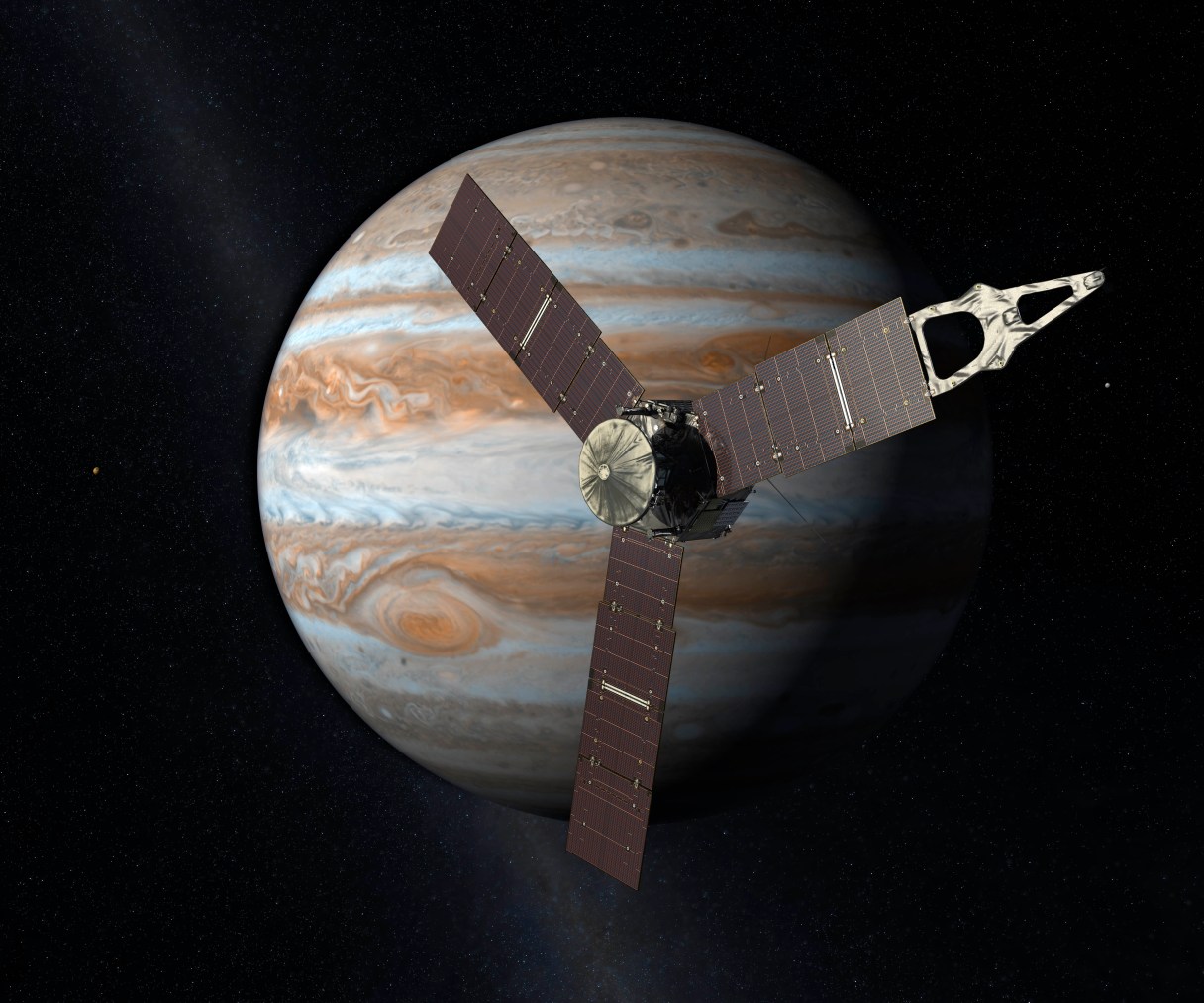
This artist's rendering provided by NASA and JPL-Caltech shows the Juno spacecraft above the planet Jupiter. Five years after its launch from Earth, Juno is scheduled to go into orbit around the gas giant on Monday, July 4, 2016. (NASA/JPL-Caltech via AP)
This artist's rendering provided by NASA and JPL-Caltech shows the Juno spacecraft above the planet Jupiter. Five years after its launch from Earth, Juno is scheduled to go into orbit around the gas giant on Monday, July 4, 2016. (NASA/JPL-Caltech via AP) This artist's rendering provided by NASA and JPL-Caltech shows the Juno spacecraft above the planet Jupiter. Five years after its launch from Earth, Juno is scheduled to go into orbit around the gas giant on Monday, July 4, 2016. (NASA/JPL-Caltech via AP)

LOS ANGELES (AP) – Since launching in 2011, NASA’s Juno spacecraft has been cruising toward the biggest planet in the solar system. On Monday, Juno is scheduled to perform a nail-biting move designed to enter orbit around Jupiter to explore its cloud-covered atmosphere and interior makeup.

Here are a few key numbers about the $1.1 billion mission:

– 1.8 billion miles (2.8 billion kilometers)

That’s the total distance traveled from launch to arrival. Juno’s journey wasn’t a straight shot. Since the rocket that carried Juno wasn’t powerful enough to boost it directly to Jupiter, it took a longer route. It looped around the inner solar system and then swung by Earth, using our planet as a gravity slingshot to hurtle toward the outer solar system.

– 3,100 miles (5,000 kilometers)