
Wednesday, November 11, 2026Nov 11

Helicopters and GPS to spot floating trash at Rio Olympics

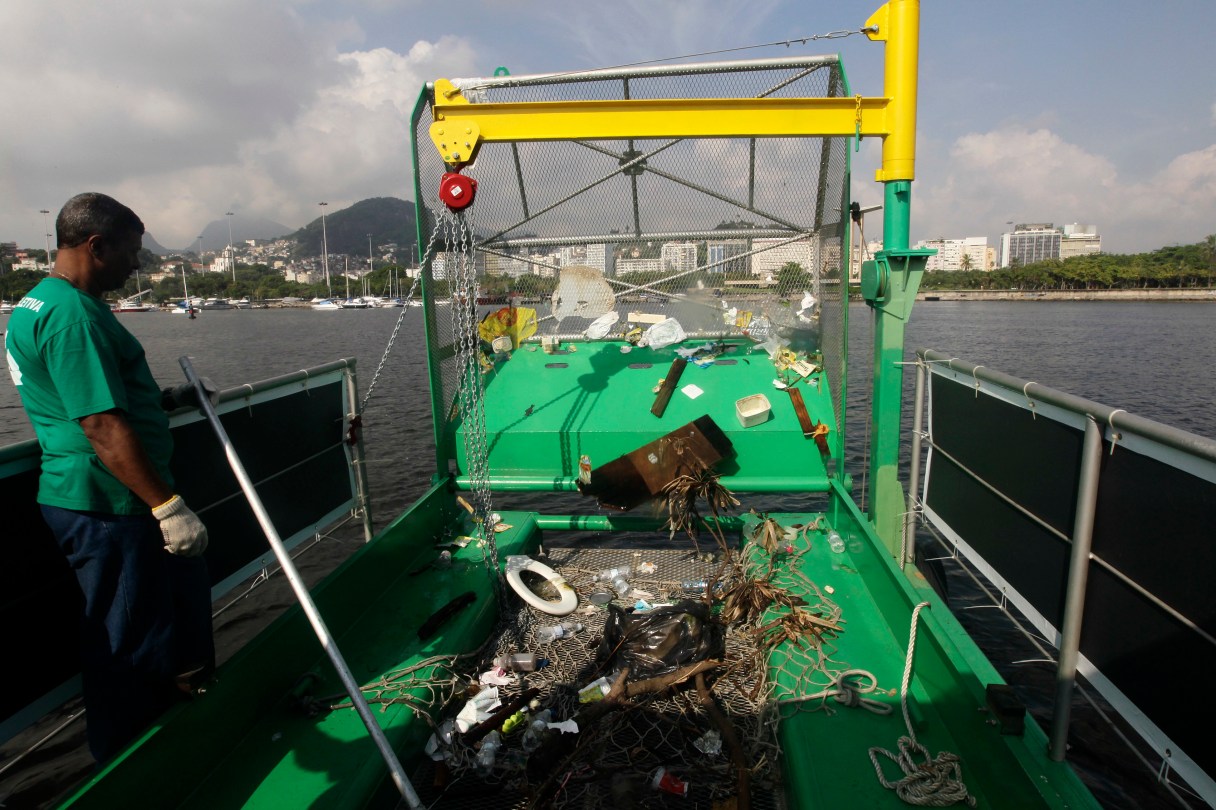
FILE - In this Jan. 6, 2016 file photo, a worker stands next to trash collected by a garbage-collecting barge in Guanabara Bay in Rio de Janeiro, Brazil. The head of World Sailing said in an interview on Wednesday, July 6, 2016 that the 
boats will be critical in keeping the bay safe and fair for Olympic racing. (AP Photo/Silvia Izquierdo, File)
FILE - In this Jan. 6, 2016 file photo, a worker stands next to trash collected by a garbage-collecting barge in Guanabara Bay in Rio de Janeiro, Brazil. The head of World Sailing said in an interview on Wednesday, July 6, 2016 that the boats will be critical in keeping the bay safe and fair for Olympic racing. (AP Photo/Silvia Izquierdo, File) FILE - In this Jan. 6, 2016 file photo, a worker stands next to trash collected by a garbage-collecting barge in Guanabara Bay in Rio de Janeiro, Brazil. The head of World Sailing said in an interview on Wednesday, July 6, 2016 that the boats will be critical in keeping the bay safe and fair for Olympic racing. (AP Photo/Silvia Izquierdo, File)

RIO DE JANEIRO (AP) – Helicopters will circle overhead starting at 6 a.m. to spot any floating rubbish. Below, trash-collection boats receiving GPS coordinates will sweep up debris before each day of Olympic sailing kicks off in Rio de Janeiro’s Guanabara Bay.

The head of sailing’s world governing body Andy Hunt acknowledges that holding the Olympics in the polluted bay requires “numerous unusual contingency plans to make sure the field of play is fair and safe.”

He says these include floating barriers to keep rubbish from entering the bay, and hygiene briefings for sailors and staff.

Hunt acknowledges to the Associated Press that Rio is difficult, raising a comparison with the yacht-filled New England harbor of Newport.

Hunt says: “We wouldn’t be out sailing in Newport with spotting helicopters and eco-boats.”