
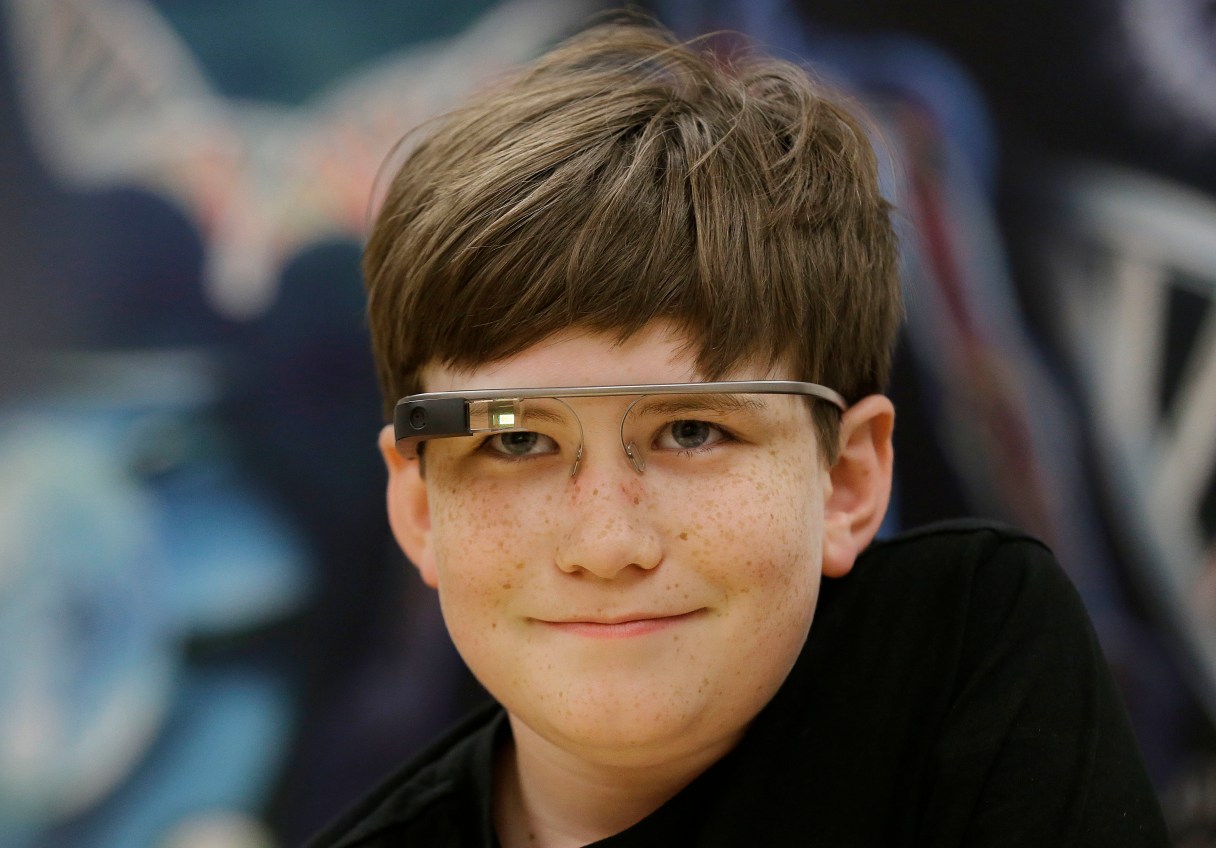
SAN JOSE, Calif. (AP) – Like many autistic children, Julian Brown has trouble reading emotions in people’s faces, one of the biggest challenges for people with the neurological disorder.
Now the 10-year-old San Jose boy is getting help from “autism glass” – an experimental device that records and analyzes faces in real time and alerts him to the emotions they’re expressing.
The facial recognition software was developed at Stanford University and runs on Google Glass, a computerized headset with a front-facing camera and a tiny display just above the right eye.
Julian is one of about 100 autistic children participating in a Stanford study to see if “autism glass” therapy can improve their ability to interpret facial expressions.
“There’s not a machine that can read your mind, but this helps with the emotions, you know, recognizing them,” Julian said.