
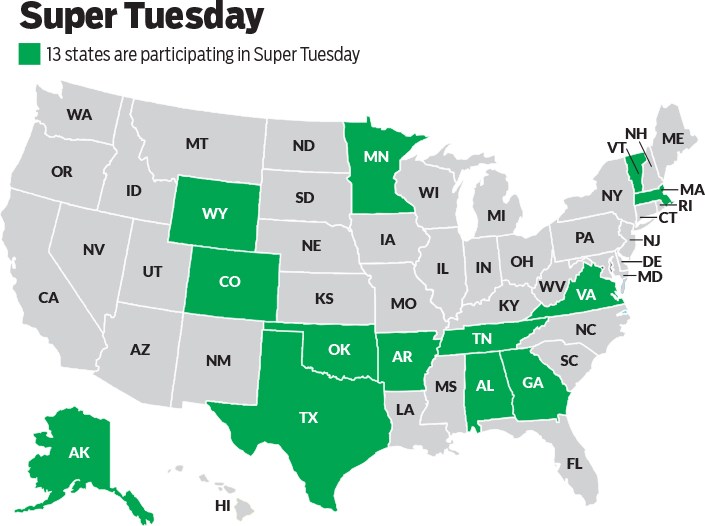
MADISON, Wisc. – The Super Tuesday primaries underscore how super Southern our presidential nominating process has become. This makes our way of picking standard-bearers unrepresentative of the country as a whole. In particular, it sharply reduces the influence of the great American Midwest even though the region’s states are among the most important general-election battlegrounds.
Southernization is a special problem for Republicans because their Southern supporters tend to be far more socially conservative than the rest of the party or the country. Southern politics is also more deeply polarized around race, giving backlash candidates a leg up. The GOP’s slide rightward creates electoral difficulties for it in presidential elections and is the central factor in Washington’s inability to find consensus on much of anything.
True, the whole carnival starts in Iowa, which is as Midwestern as you can get. But the caucus system gives more conservative Iowa Republicans an outsized influence because white evangelicals play a disproportionate role in what is a relatively low-turnout contest.
It is to the evangelicals’ credit as democratic citizens that they organize, mobilize and participate. But their civic virtuousness only makes the final result less reflective of opinion in the party, in Iowa itself and elsewhere.
New Hampshire comes next, and its voters frequently reach verdicts at odds with those Iowa renders. This means that South Carolina often plays a tie-breaking role on the GOP side. Talk about shifting the dialogue right: The site of the opening skirmish of the Civil War is not only one of the most conservative states in the nation; it is also one of our most racially divided polities.