
Wednesday, November 11, 2026Nov 11

Police begin wider body camera use after months of testing

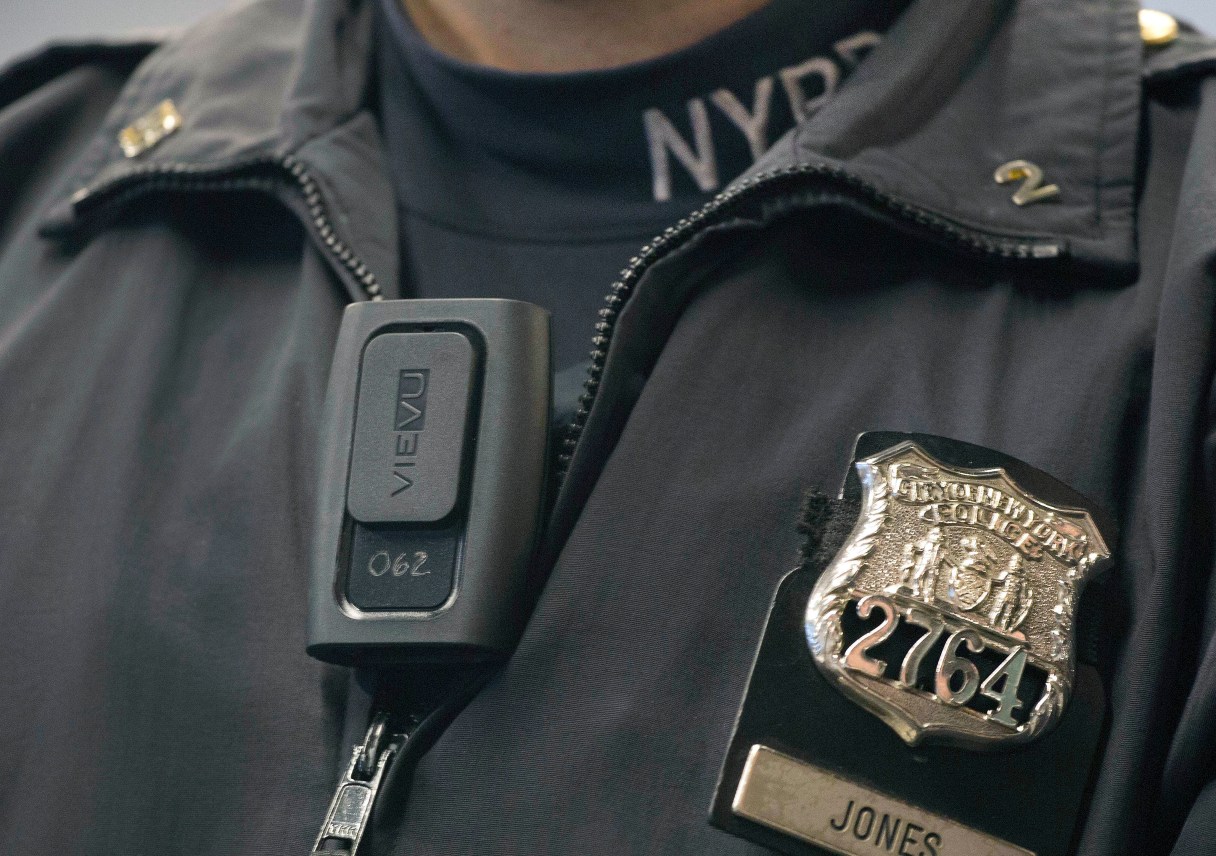
FILE - In this Dec. 3, 2014 file photo, New York Police Department officer Joshua Jones wears a VieVu body camera on his chest during a news conference in New York. Boston police had promised to launch a pilot program to outfit officers with body cameras by April 2016, but now are saying it will be closer to June. It's superintendent is publicly doubting whether the cameras are needed at all, and Community meetings are being held to debate the matter. (AP Photo/Mark Lennihan, File)
FILE - In this Dec. 3, 2014 file photo, New York Police Department officer Joshua Jones wears a VieVu body camera on his chest during a news conference in New York. Boston police had promised to launch a pilot program to outfit officers with body cameras by April 2016, but now are saying it will be closer to June. It's superintendent is publicly doubting whether the cameras are needed at all, and Community meetings are being held to debate the matter. (AP Photo/Mark Lennihan, File) FILE - In this Dec. 3, 2014 file photo, New York Police Department officer Joshua Jones wears a VieVu body camera on his chest during a news conference in New York. Boston police had promised to launch a pilot program to outfit officers with body cameras by April 2016, but now are saying it will be closer to June. It's superintendent is publicly doubting whether the cameras are needed at all, and Community meetings are being held to debate the matter. (AP Photo/Mark Lennihan, File)

BOSTON (AP) – After months of testing, many of the nation’s big-city police forces are planning to expand their use of body cameras by the summer, but the number of officers with such gear will still be relatively small, an Associated Press review found.

The 2014 killing of Michael Brown in Ferguson, Missouri, and other deaths at the hands of police around the U.S. have led to demands that officers be issued wearable cameras to deter misconduct and document shootings and other clashes. But because of cost concerns, union resistance and other factors, the rollout has been slower than some cities envisioned.

An AP look at the nation’s 20 largest local departments found that Chicago has begun issuing the devices to over 2,000 officers, or less than 17 percent of its roughly 12,000-member force, though it says it will eventually offer them across the department. Philadelphia has begun equipping about 5 percent of its force and Houston nearly 6 percent.

New York, the nation’s largest city police force, says it plans to purchase 1,000 cameras by the summer, or enough to outfit less than 3 percent of its 34,000-plus officers. But the department said Tuesday there is no date for when those will be put to use, and no plan as yet to equip more officers.

For some cities, the expansion comes in anticipation of the summer, when crime typically rises. For others, the availability of federal money to help pay for the technology is a driving factor.