
Thursday, November 12, 2026Nov 12

Tennessee approves $106 million phase of renovations to Neyland Stadium

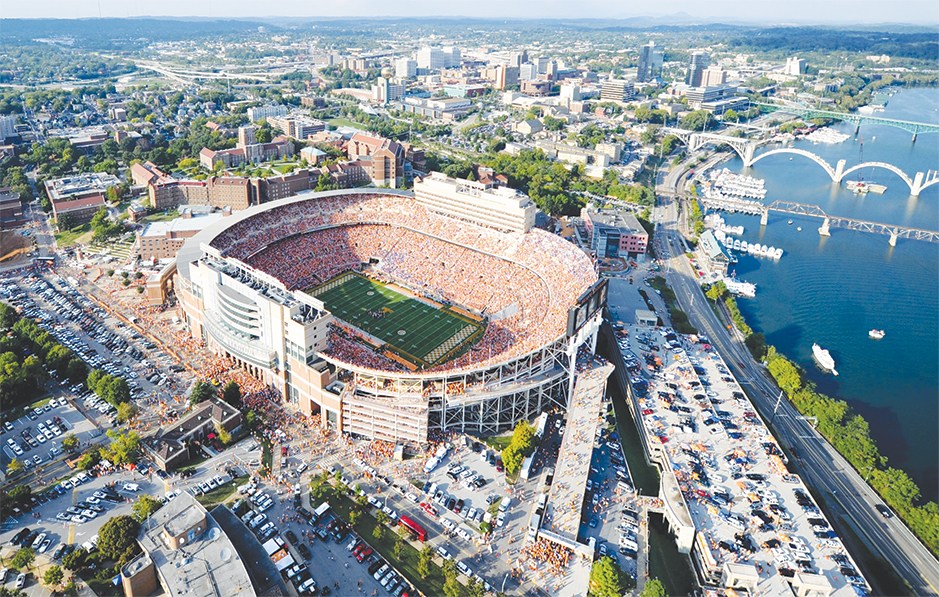
Following the completion of a nine-month feasibility study, the University of Tennessee's board of trustees last week approved a $106 million initial phase of renovations and upgrades to the south and east sections of the Volunteers' 95-year-old Neyland Stadium, and the school unveiled the visuals of its planned changes Tuesday.
Following the completion of a nine-month feasibility study, the University of Tennessee's board of trustees last week approved a $106 million initial phase of renovations and upgrades to the south and east sections of the Volunteers' 95-year-old Neyland Stadium, and the school unveiled the visuals of its planned changes Tuesday. Following the completion of a nine-month feasibility study, the University of Tennessee's board of trustees last week approved a $106 million initial phase of renovations and upgrades to the south and east sections of the Volunteers' 95-year-old Neyland Stadium, and the school unveiled the visuals of its planned changes Tuesday.

KNOXVILLE – Needed changes are coming to Neyland Stadium, Tennessee’s venerable football home.

Following the completion of a nine-month feasibility study, the university’s board of trustees last week approved a $106 million initial phase of renovations and upgrades to the south and east sections of the Volunteers’ 95-year-old stadium, and the school unveiled the visuals of its planned changes Tuesday.

The work still requires approval at the state’s legislative and building commissions levels, but the university hopes to complete the first phase, which will be funded privately by donor gifts and athletic department revenue, before the start of the 2019 season.

“The generosity of our donors and our fans has been unbelievable,” Chris Fuller, Tennessee’s associate athletic director for external operations, said Tuesday.

Three of five renovation phases developed in 2004 were completed prior to the 2010 season for nearly $150 million, but those upgrades applied to only 35 percent of the stadium, said Brett Huebner, the associate athletic director for business operations.