
Thursday, November 12, 2026Nov 12

Florida finds Zika in trapped mosquitoes, 1st in US mainland

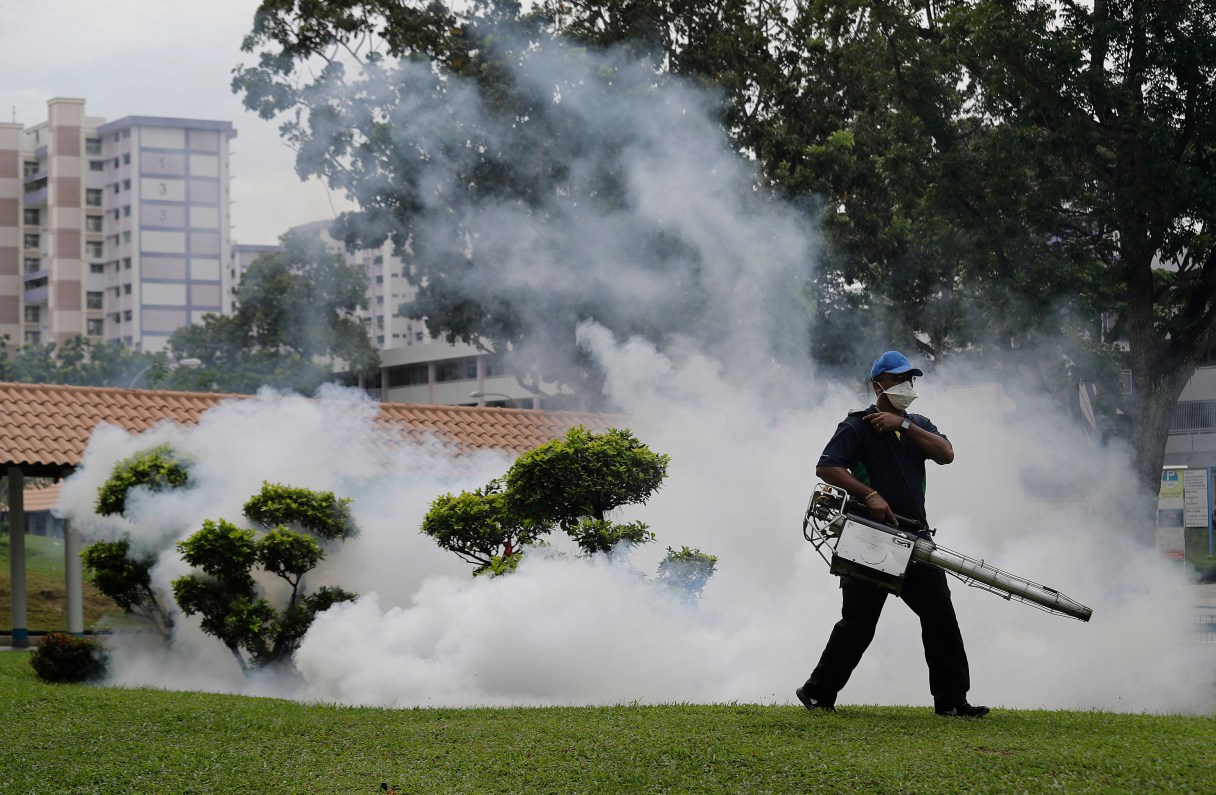
A pest control worker fumigates drains and the gardens at a local housing estate where the latest case of Zika infections were reported from on Thursday, Sept. 1, 2016, in Singapore. Indonesia is screening travelers from neighboring Singapore for the mosquito-borne Zika virus as the city-state reports a growing number of infections and its first case of a pregnant woman testing positive. (AP Photo/Wong Maye-E)
A pest control worker fumigates drains and the gardens at a local housing estate where the latest case of Zika infections were reported from on Thursday, Sept. 1, 2016, in Singapore. Indonesia is screening travelers from neighboring Singapore for the mosquito-borne Zika virus as the city-state reports a growing number of infections and its first case of a pregnant woman testing positive. (AP Photo/Wong Maye-E) A pest control worker fumigates drains and the gardens at a local housing estate where the latest case of Zika infections were reported from on Thursday, Sept. 1, 2016, in Singapore. Indonesia is screening travelers from neighboring Singapore for the mosquito-borne Zika virus as the city-state reports a growing number of infections and its first case of a pregnant woman testing positive. (AP Photo/Wong Maye-E)

MIAMI (AP) – Authorities in Florida said Thursday they have found the Zika virus in three groups of trapped mosquitoes in Miami Beach, the first time this has happened in the continental U.S.

The Zika-carrying mosquitoes were trapped in a touristy 1.5-square-mile area of Miami Beach that had been identified as an active zone of active transmission of the virus, the Florida Department of Agriculture and Consumer Services said in a news release.

“This is the first time we have found a Zika virus-positive mosquito pool in the continental United States,” said Erin Sykes, a spokeswoman for the U.S. Centers for Disease Control.

Finding the virus in mosquitoes has been likened by the CDC to finding a needle in a haystack, but the testing helps mosquito controllers target their efforts, and it confirms that the insects are indeed a mode of transmission, as suspected. The illness spreads from people to mosquitoes to people again through bites, but the insects do not spread the disease among their own population, and their lifespan is just a few weeks.

The announcement was made Thursday as a poll was released suggesting nearly 48 percent of Americans are wary of traveling to U.S. destinations where people have been infected with Zika through mosquito bites.