
Tuesday, November 10, 2026Nov 10

APNewsBreak: Docs detail government damage of Trail of Tears

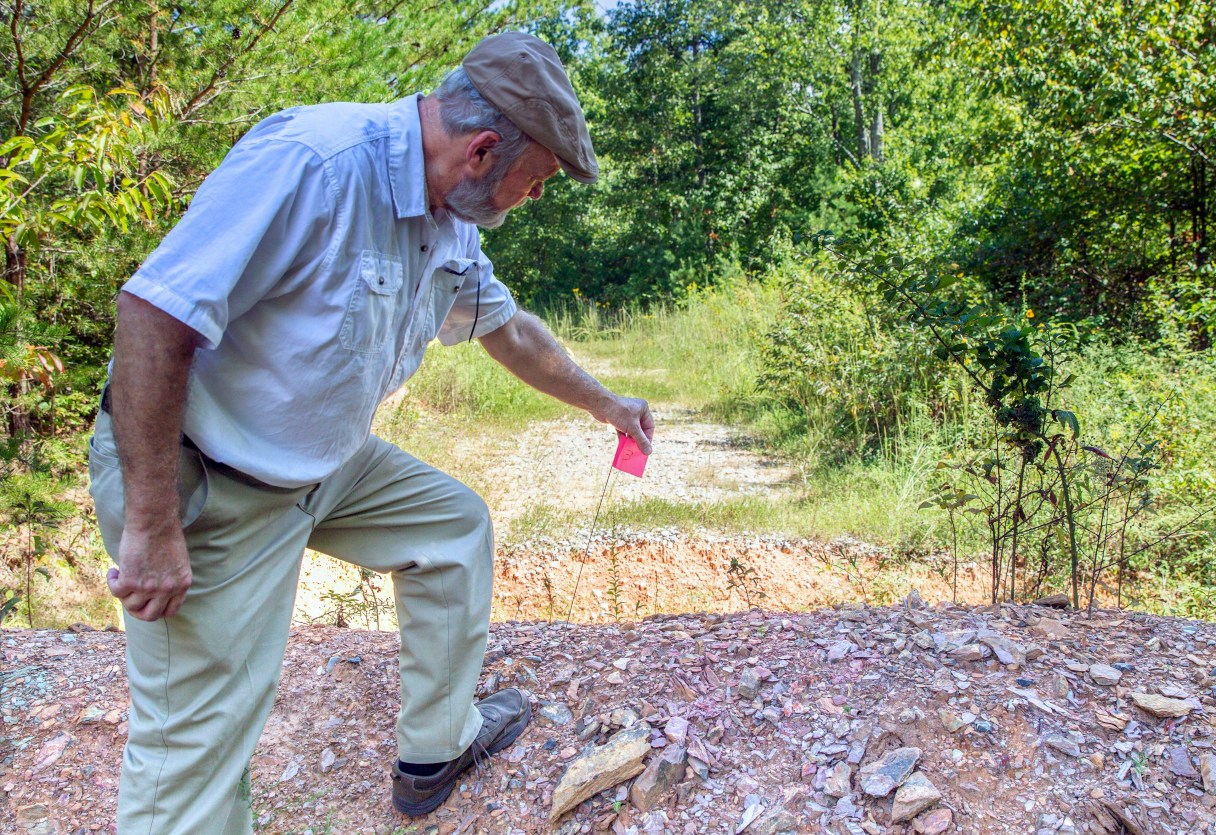
In this Thursday, Sept. 15, 2016, photo, Coker Creek, Tenn., resident and historical preservationist Marvin Harper observes damage to a section of the Trail of Tears in the Appalachian Mountains. The flag indicates a spot where the U.S. Forest Service used heavy equipment to make trenches and berms in what agency officials now say was in violation of federal laws, The U.S. Forest Service is apologizing after it ripped up a portion of the Trail of Tears in the Appalachian Mountains. The damage has reopened wounds for Native Americans who consider the land sacred.  (AP Photo/Erik Schelzig)
In this Thursday, Sept. 15, 2016, photo, Coker Creek, Tenn., resident and historical preservationist Marvin Harper observes damage to a section of the Trail of Tears in the Appalachian Mountains. The flag indicates a spot where the U.S. Forest Service used heavy equipment to make trenches and berms in what agency officials now say was in violation of federal laws, The U.S. Forest Service is apologizing after it ripped up a portion of the Trail of Tears in the Appalachian Mountains. The damage has reopened wounds for Native Americans who consider the land sacred. (AP Photo/Erik Schelzig) In this Thursday, Sept. 15, 2016, photo, Coker Creek, Tenn., resident and historical preservationist Marvin Harper observes damage to a section of the Trail of Tears in the Appalachian Mountains. The flag indicates a spot where the U.S. Forest Service used heavy equipment to make trenches and berms in what agency officials now say was in violation of federal laws, The U.S. Forest Service is apologizing after it ripped up a portion of the Trail of Tears in the Appalachian Mountains. The damage has reopened wounds for Native Americans who consider the land sacred. (AP Photo/Erik Schelzig)

COKER CREEK, Tenn. (AP) – The U.S. Forest Service has ripped up a portion of the Trail of Tears in the Appalachian Mountains, reopening wounds for Native Americans who consider sacred the land where thousands of their ancestors died during their forced migration westward.

The man-made trenches and berms were discovered last summer but the details about how it happened and those responsible hadn’t been publicly identified. In documents obtained recently by The Associated Press, the Forest Service acknowledged that an employee approved construction along a ¾-mile section of the trail in eastern Tennessee without authorization, an embarrassing blunder for an agency that was supposed to be protecting the trail for future generations.

The $28,500 in contracting work done in 2014 involved using heavy equipment to dig three deep trenches called “tank traps” and a series of 35 berms. It was meant to keep out all-terrain vehicles and prevent erosion, but agency officials now say it was done in violation of federal laws.

Sheila Bird of the Cherokee Nation said she cried when she was asked at a meeting with Forest Service officials to talk about the impact of the damage.

“The trail is part of our history, of why we are here in Oklahoma,” said Bird, who is the special projects officer for the nation’s Tribal Historic Preservation Office.