
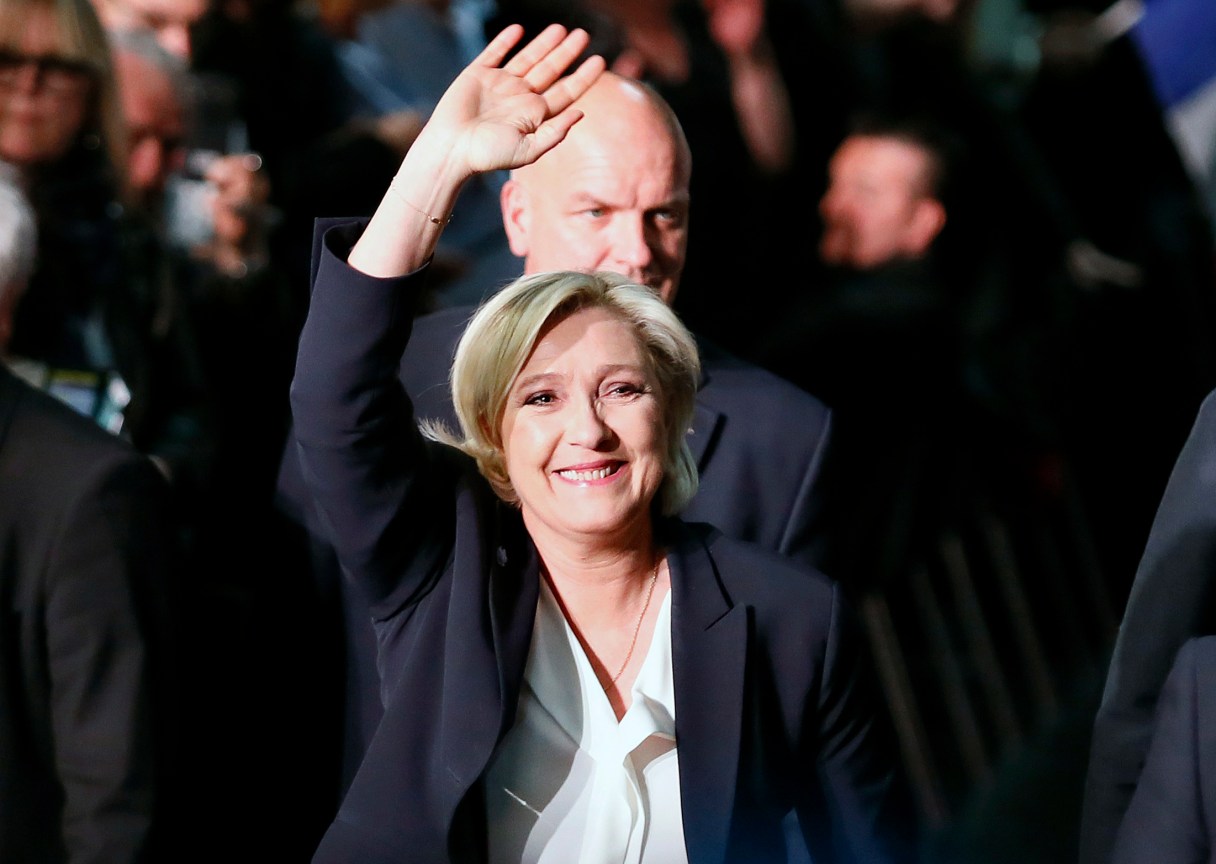
LYON, France (AP) – There’s no doubt that an extreme-right French group known for violence and large doses of anti-Semitism doesn’t like journalists or the establishment.
“You lie … you spend your time at society soirees … you are the system!” Steven Bissuel, the boss of the Lyon chapter of the Union Defense Group (GUD), hissed at an Associated Press journalist.
Marine Le Pen, the far-right French presidential candidate, may not personally know Bissuel or his “black rats,” as GUD members call themselves. She also many not individually know their extreme-right brothers down the cobblestone street in old Lyon, the militants of Identity Generation, whose speeches and shock tactics can have strong racist overtones.
But members of France’s extreme-right subculture have a growing footprint in Le Pen’s anti-immigration National Front party and in her campaign. Le Pen’s willingness to bring them into her fold runs counter to her efforts to purge National Front ranks – including her own father, the party’s co-founder – to transform the longtime pariah party into a mainstream political force.
Leading figures who once hailed from both extremist groups are donning suits and taking on roles in Le Pen’s bid for victory in France’s two-round April 23-May 7 presidential election.