
Wednesday, November 11, 2026Nov 11

1st drug OK’d for movement disorder caused by certain meds

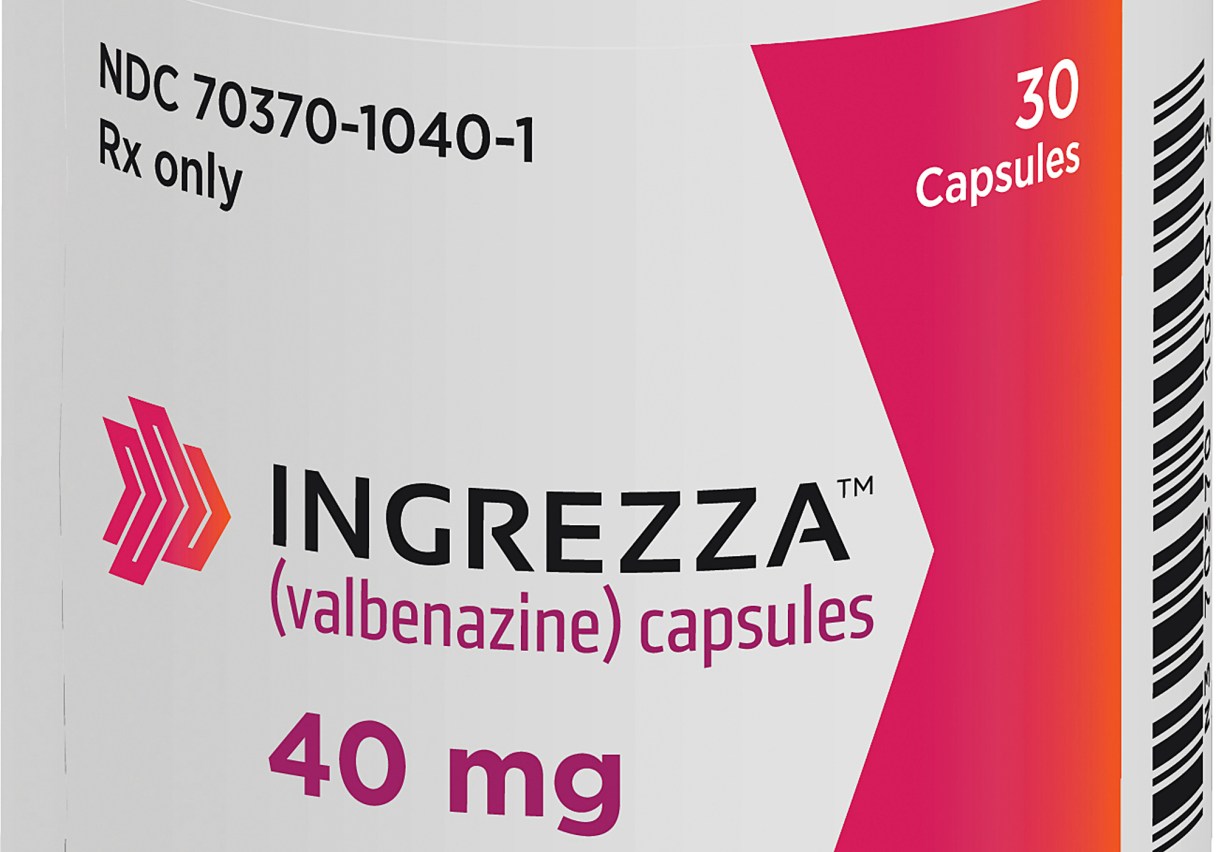
This photo provided by Neurocrine Biosciences, Inc. shows the label on a bottle of the drug Ingrezza. On Tuesday, April 11, 2017, the Food and Drug Administration approved Ingrezza, the first drug for treating a neurological syndrome that causes uncontrollable body movements that can also interfere with speech, swallowing and breathing. (Neurocrine Biosciences, Inc. via AP)
This photo provided by Neurocrine Biosciences, Inc. shows the label on a bottle of the drug Ingrezza. On Tuesday, April 11, 2017, the Food and Drug Administration approved Ingrezza, the first drug for treating a neurological syndrome that causes uncontrollable body movements that can also interfere with speech, swallowing and breathing. (Neurocrine Biosciences, Inc. via AP) This photo provided by Neurocrine Biosciences, Inc. shows the label on a bottle of the drug Ingrezza. On Tuesday, April 11, 2017, the Food and Drug Administration approved Ingrezza, the first drug for treating a neurological syndrome that causes uncontrollable body movements that can also interfere with speech, swallowing and breathing. (Neurocrine Biosciences, Inc. via AP)

TRENTON, N.J. (AP) – U.S. regulators have approved the first drug for treating a neurological syndrome that causes uncontrollable body movements that can also interfere with speech, swallowing and breathing.

The sometimes-disabling disorder, tardive dyskinesia, is caused by some widely used prescription medicines for psychiatric and gastrointestinal disorders. It can surface while patients are on those medicines or years after they stop. It affects about 500,000 U.S. patients.

The Food and Drug Administration on Tuesday approved Ingrezza, developed by Neurocrine Biosciences, for treating adult patients. The San Diego-based biotech company didn’t disclose the drug’s list price, but said it will when it begins offering the once-a-day capsule for sale in May.

A second drug for the disorder, from Israel’s Teva Pharmaceuticals, is expected to win FDA approval in late August.

Tardive dyskinesia causes repetitive, involuntary movements, including rapid eye blinking, grimacing, lip-smacking and rapid movements of the trunk, arms and legs. It can be embarrassing for patients and lead to social withdrawal and job loss.