
Tuesday, November 10, 2026Nov 10

Crash that sent pilot to closed runway prompts FAA changes

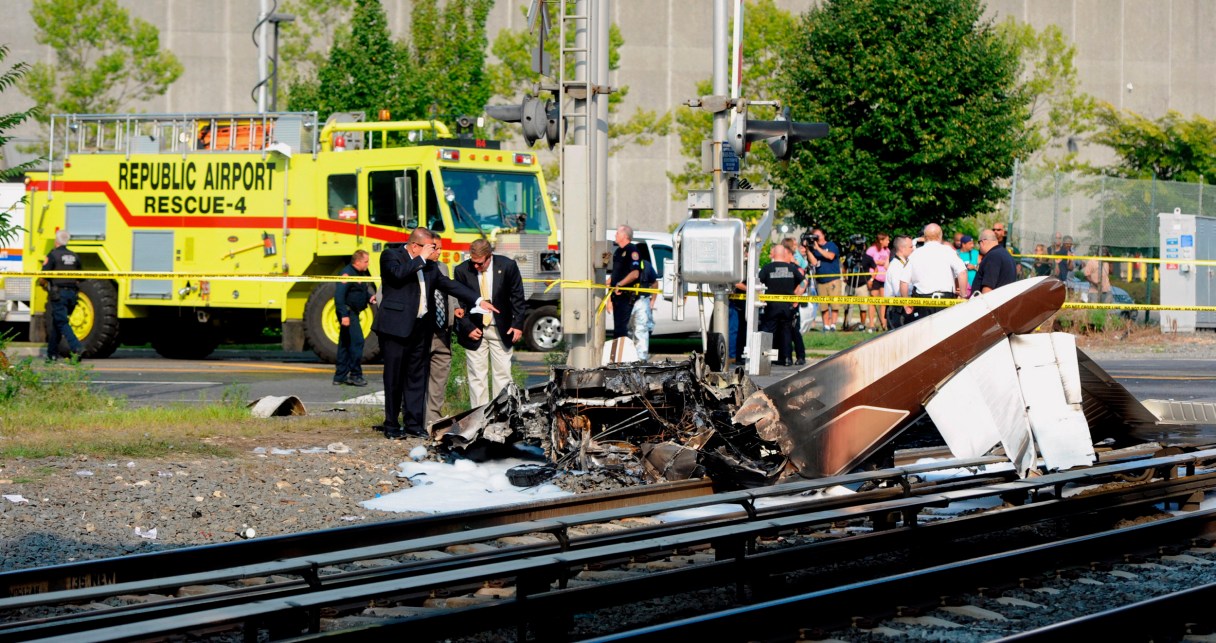
FILE- In this Aug. 16, 2015 file photo, investigators examine the scene where one person died and another was injured in the crash of a single-engine plane on Long Island Rail Road tracks on the line between Bethpage and Hicksville, NY. As a result of this crash, the Federal Aviation Administration now regularly check the accuracy of its radar video maps after an air traffic controller directed the pilot with engine trouble to a closed airport moments before the plane went down. (James Carbone/Newsday via AP, File)
FILE- In this Aug. 16, 2015 file photo, investigators examine the scene where one person died and another was injured in the crash of a single-engine plane on Long Island Rail Road tracks on the line between Bethpage and Hicksville, NY. As a result of this crash, the Federal Aviation Administration now regularly check the accuracy of its radar video maps after an air traffic controller directed the pilot with engine trouble to a closed airport moments before the plane went down. (James Carbone/Newsday via AP, File) FILE- In this Aug. 16, 2015 file photo, investigators examine the scene where one person died and another was injured in the crash of a single-engine plane on Long Island Rail Road tracks on the line between Bethpage and Hicksville, NY. As a result of this crash, the Federal Aviation Administration now regularly check the accuracy of its radar video maps after an air traffic controller directed the pilot with engine trouble to a closed airport moments before the plane went down. (James Carbone/Newsday via AP, File)

MINEOLA, N.Y. (AP) – When pilot Joseph Milo reported engine trouble, an air traffic controller directed him to a nearby airfield.

But the airfield had actually closed 25 years earlier, and industrial buildings occupied its former runway. Milo crashed a quarter-mile away and died.

His death has prompted the Federal Aviation Administration to update its procedures to include weekly accuracy checks of its radar video maps.

The erroneous information was one of several factors cited by the National Transportation Safety Board in its investigation of the Aug. 16, 2015, crash. It also said Milo had several drugs in his system and was slow to react to the emergency.

The NTSB said the probable causes were a “controller’s provision of erroneous emergency divert airport information to the pilot” and Milo’s “improper decision to delay turning toward a suitable runway once he realized that an engine failure had occurred.”