
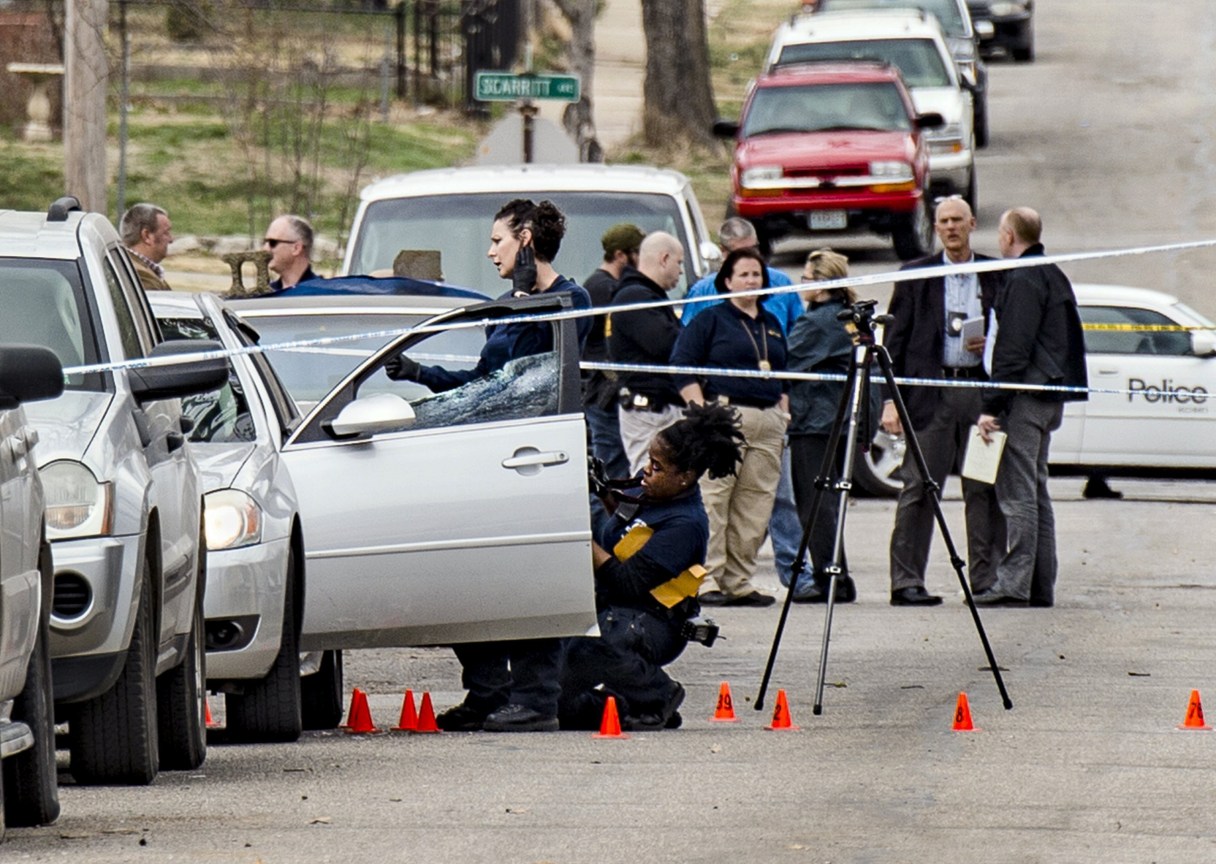
KANSAS CITY, Mo. (AP) – Kansas City already was marching toward its worst homicide year in decades when three men were slain in separate shootings over four hours one day last month. One was gunned down on a porch, another in a vehicle. The third man was shot in a front yard.
The bloodshed has the city in an unwanted spotlight and on the defensive, with the mayor, police brass and a local anti-crime task force official grasping for answers as homicides have soared by more than 43 percent so far over last year. The federal government already had put Kansas City on a list of communities to help.
The city’s 86 homicides as of Tuesday are 26 more than the same period in 2016 – a year that ended with 130, the most here since 1998. The 82 local homicides in 2014 were the fewest in 42 years, though the 111 the next year returned the city to its 10-year average, police figures show.
The city’s homicide rate actually dropped significantly from 1993 through 2015, mirroring a nationwide decline in violent crime during that run, a recent Kansas City Star analysis showed. But that same analysis found the homicide rate in 481,400-resident Kansas City is higher than the national rate – typical of big cities with large concentrations of people and economic deprivation – but is also decreasing at a slower rate than the rest of the country.
But what’s happened lately has Mayor Sly James pinning considerable hopes on a new, soon-to-be-filled position meant to build coalitions among local, diverse crime-fighting interests.