
Wednesday, November 11, 2026Nov 11

Trio of military men gain growing influence with Trump

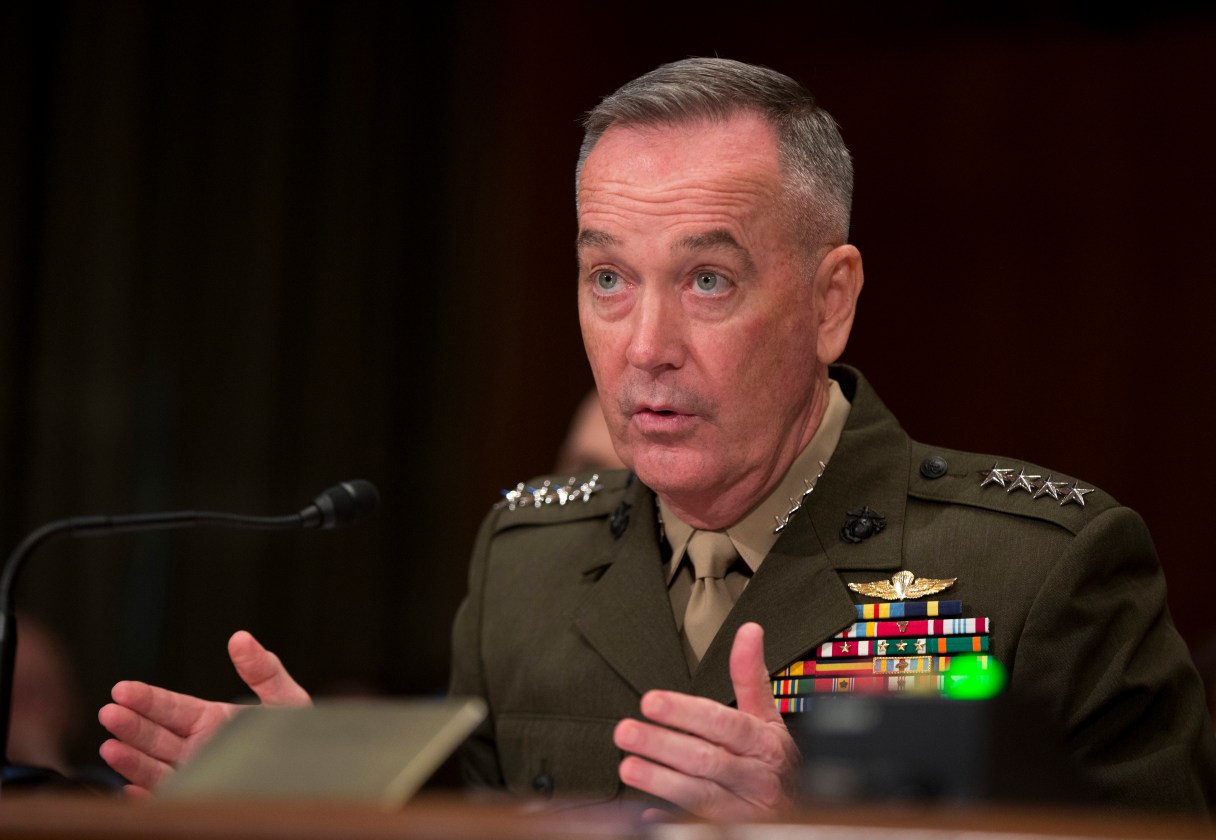
FILE - In this April 27, 2016 file photo, Joint Chiefs Chairman Gen. Joseph Dunford Jr. testifies on Capitol Hill in Washington. Dunford said Thursday, Feb. 23, 2017, a Pentagon-led review of strategy for defeating the Islamic State group will present President Donald Trump with options not just to speed up the fight against IS but also to combat al-Qaida and other extremist groups beyond Iraq and Syria.  (AP Photo/Manuel Balce Ceneta, File)
FILE - In this April 27, 2016 file photo, Joint Chiefs Chairman Gen. Joseph Dunford Jr. testifies on Capitol Hill in Washington. Dunford said Thursday, Feb. 23, 2017, a Pentagon-led review of strategy for defeating the Islamic State group will present President Donald Trump with options not just to speed up the fight against IS but also to combat al-Qaida and other extremist groups beyond Iraq and Syria. (AP Photo/Manuel Balce Ceneta, File) FILE - In this April 27, 2016 file photo, Joint Chiefs Chairman Gen. Joseph Dunford Jr. testifies on Capitol Hill in Washington. Dunford said Thursday, Feb. 23, 2017, a Pentagon-led review of strategy for defeating the Islamic State group will present President Donald Trump with options not just to speed up the fight against IS but also to combat al-Qaida and other extremist groups beyond Iraq and Syria. (AP Photo/Manuel Balce Ceneta, File)

WASHINGTON (AP) – In a White House laden with competing power centers, a trio of military men has emerged as a force to be reckoned with.

Defense Secretary Jim Mattis, Homeland Security Secretary John Kelly and Joint Chiefs Chairman Joseph Dunford have quickly formed a stabilizing alliance in an administration whose earliest days have been marked by turmoil. At working dinners and meetings with President Donald Trump, the men – all retired or current generals -have sought to guide the new leader and foreign policy novice.

And they have increasingly represented Trump around the world, seeking to allay concerns about the new president and his nascent foreign policy.

Their fingerprints can increasingly be seen on the president’s early national security moves, from the reworking of his controversial refugee and immigration order to the walking back of his talk of a “military operation” for deportations to his search for a national security adviser after the first was ousted.

All three are notable for their independence from Trump. None had a prior relationship with him but all have long histories with each other.