
Wednesday, November 11, 2026Nov 11

Not black and white: Fees that threaten march unite Selma

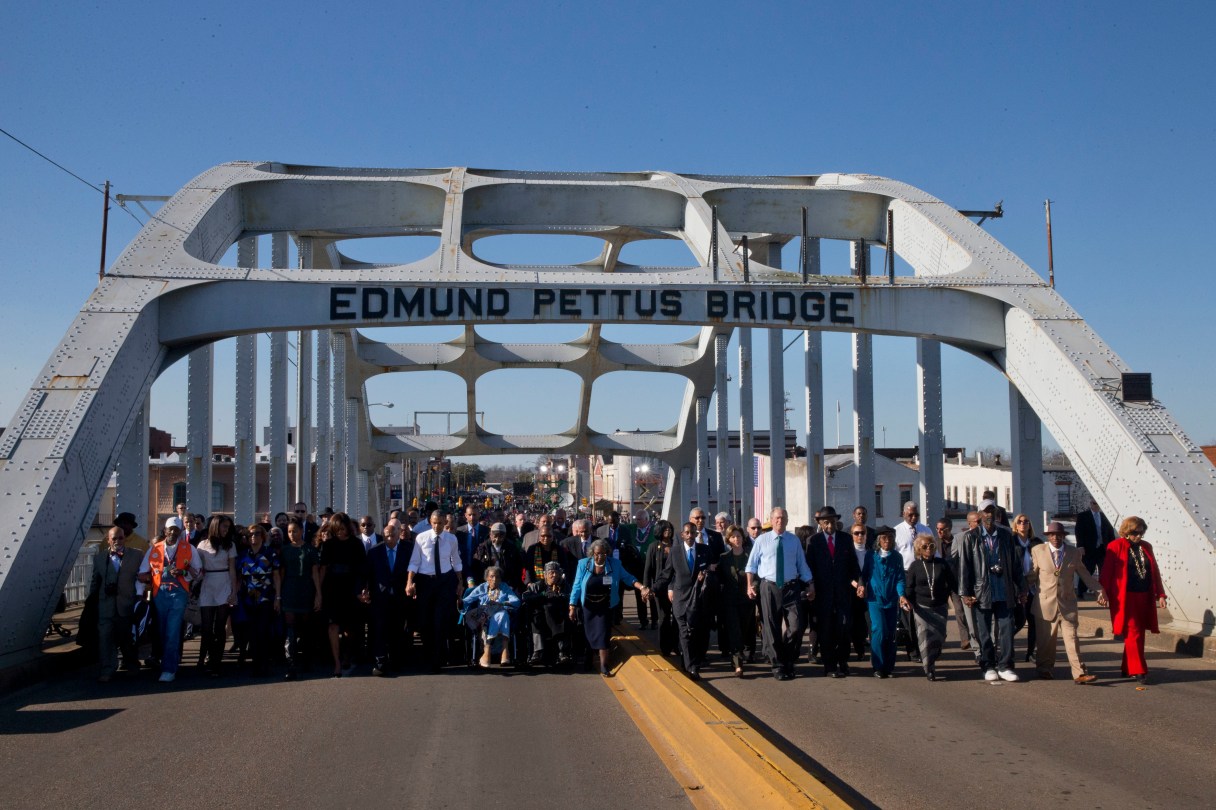
FILE - In this March 7, 2015, file photo, President Barack Obama, first lady Michelle Obama, their daughters Malia and Sasha, as well as members of Congress, former President George W. Bush, and civil rights leaders make a symbolic walk across the Edmund Pettus Bridge in Selma, Ala., on the 50th anniversary of "Bloody Sunday," a civil rights march in which protestors were beaten, trampled and tear-gassed by police at the site. Blacks who celebrate the civil rights movement and whites who commemorate the Civil War are suddenly finding themselves fighting on the same side in historic Selma, Alabama: against City Hall. (AP Photo/Jacquelyn Martin, File)
FILE - In this March 7, 2015, file photo, President Barack Obama, first lady Michelle Obama, their daughters Malia and Sasha, as well as members of Congress, former President George W. Bush, and civil rights leaders make a symbolic walk across the Edmund Pettus Bridge in Selma, Ala., on the 50th anniversary of "Bloody Sunday," a civil rights march in which protestors were beaten, trampled and tear-gassed by police at the site. Blacks who celebrate the civil rights movement and whites who commemorate the Civil War are suddenly finding themselves fighting on the same side in historic Selma, Alabama: against City Hall. (AP Photo/Jacquelyn Martin, File) FILE - In this March 7, 2015, file photo, President Barack Obama, first lady Michelle Obama, their daughters Malia and Sasha, as well as members of Congress, former President George W. Bush, and civil rights leaders make a symbolic walk across the Edmund Pettus Bridge in Selma, Ala., on the 50th anniversary of "Bloody Sunday," a civil rights march in which protestors were beaten, trampled and tear-gassed by police at the site. Blacks who celebrate the civil rights movement and whites who commemorate the Civil War are suddenly finding themselves fighting on the same side in historic Selma, Alabama: against City Hall. (AP Photo/Jacquelyn Martin, File)

BIRMINGHAM, Ala. (AP) – Black people who celebrate the civil rights movement and white people who commemorate the Civil War are suddenly finding themselves fighting on the same side in historic Selma, Alabama: against City Hall.

Both groups say the city is squeezing them with demands for thousands of dollars in up-front payments to stage annual events that bring tens of thousands of visitors to an otherwise sleepy community where unemployment is high and boarded-up homes and businesses are a common sight.

Plans for next month’s Selma Bridge Crossing Jubilee, which commemorates the Selma-to-Montgomery voting rights march of 1965, are up in the air over the city’s demand. And the re-enactment of the 1865 Battle of Selma, involving hundreds of history buffs in Civil War garb, has been canceled because organizers couldn’t afford the tab.

The jubilee draws mostly black people, the battle re-enactment mostly white people. So now, two groups with different interests and membership rosters are united in being upset with Mayor Darrio Melton and other leaders who say the city can’t afford the police overtime, fire protection and cleanup the events require.

For a change in Selma, where race sometimes seems like a factor in everything, something isn’t solely black and white.