
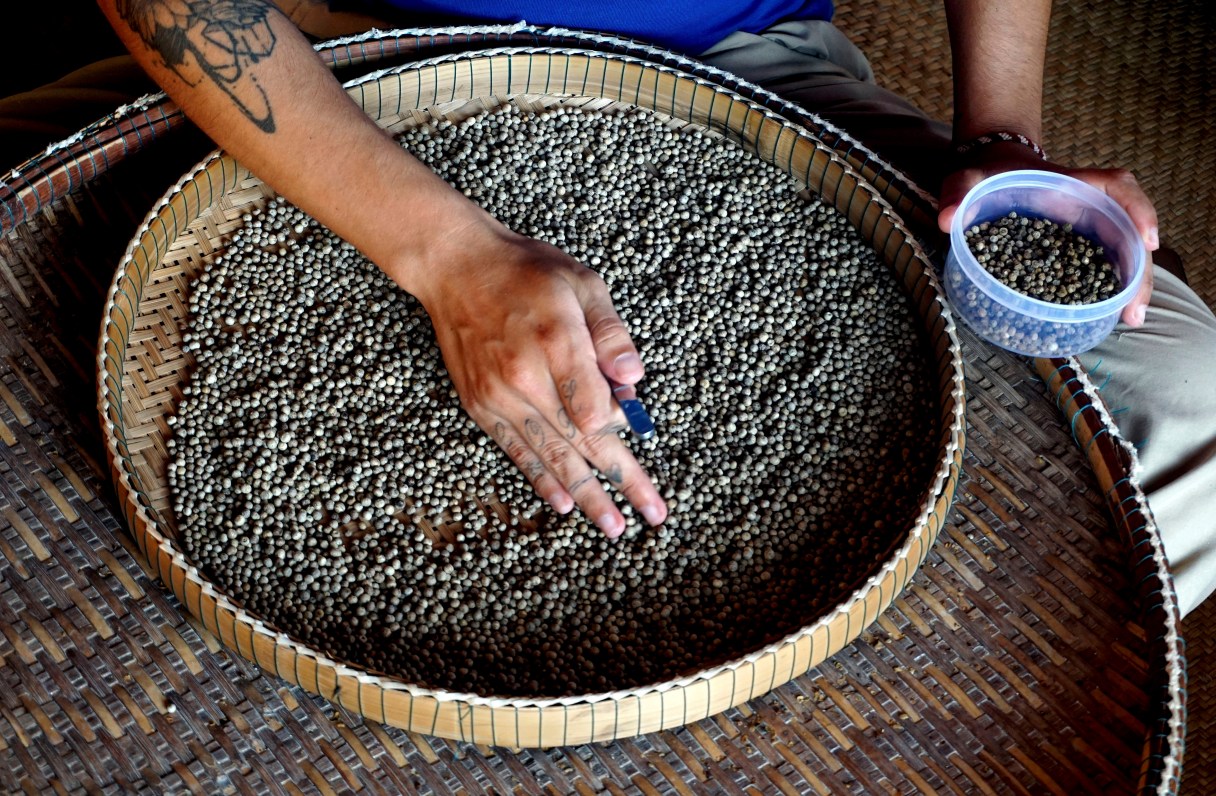
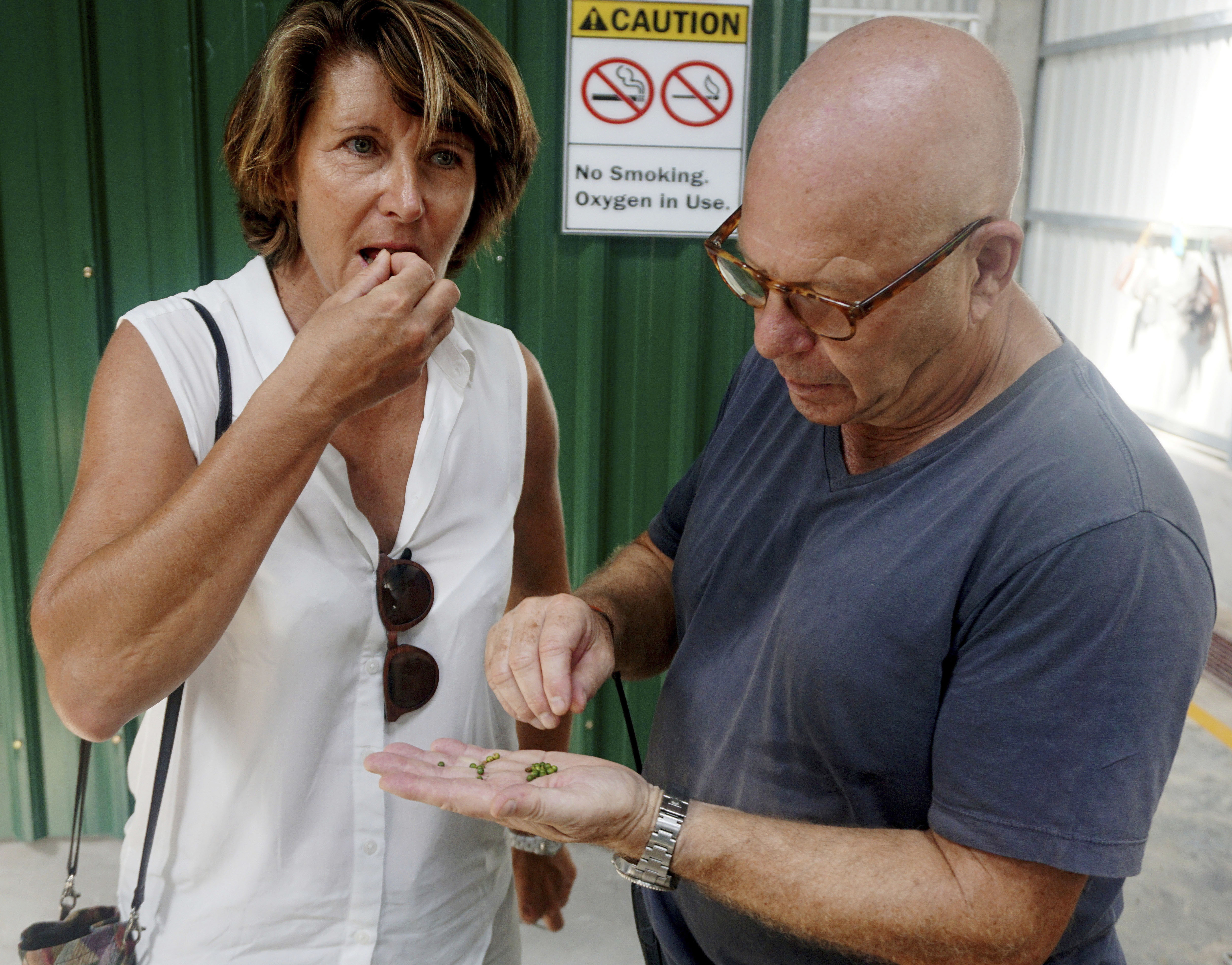
 Nathalie Chaboche and her husband Guy Porre sample some peppers at their La Plantation in Kampot, Cambodia. Lauded by celebrity chefs and exorbitantly priced, Cambodia’s Kampot pepper is enjoying a renaissance, aided by special recognition and protection from the European Union.(AP Photo/Denis Gray)
KAMPOT, Cambodia – A nearby sea, flanking mountains, a quartz-rich soil: It’s the perfect spot on earth, devotees say, to yield a product they describe in that rapturous vocabulary usually reserved for fine wines: “aristocratic, virile, almost aphrodisiacal,” with subtle notes of caramel, gingerbread and mild tobacco.
Celebrity chefs from Paris to Los Angeles swear by Kampot pepper, a southwestern Cambodian spice with a tragic past that is now reclaiming its global pre-eminence. It is also proving to be “black gold” for some of its once-impoverished farmers, thanks in part to Kampot pepper last year being awarded a Protected Geographical Indication by the European Union. This identifies unique products – like Stilton cheese, Champagne or Darjeeling tea – as originating in a very specific region.
So far Kampot pepper production is a mere dusting – just 70 tons last year. Vietnam, the world’s top pepper producer, churned out some 145,000 tons of the spice. But more plantations are springing up while Kampot quality is rated as high as ever and hitherto slack markets, like the United States, are getting hooked on the spice. A New York chef has even concocted a Kampot pepper ice cream while Michelin three-starred French chef Olivier Roellinger rhapsodizes about its “olfactory richness” and broad spectrum of flavors.
The spice’s EU designation “has permitted a renaissance of pepper in Kampot. This not only recognizes the singularity of this pepper but helps protect it from imitations,” says Nathalie Chaboche, a Frenchwoman who with her Belgian husband, Guy Porre, owns La Plantation, where pepper plants entwine 20,000 posts on a rolling green landscape fronted by the Gulf of Thailand.
The couple, who started the enterprise four years ago after lucrative careers in the computer industry, aim to boost production from 6 tons last year to 50 tons in 2018. They intend to grow without weakening quality control or endangering Kampot’s status as a “premier cru,” a French term for wine and other produce signifying impeccable quality – and hefty price.