
Wednesday, November 11, 2026Nov 11

Police, fire heroics prompt anti-austerity push in Britain

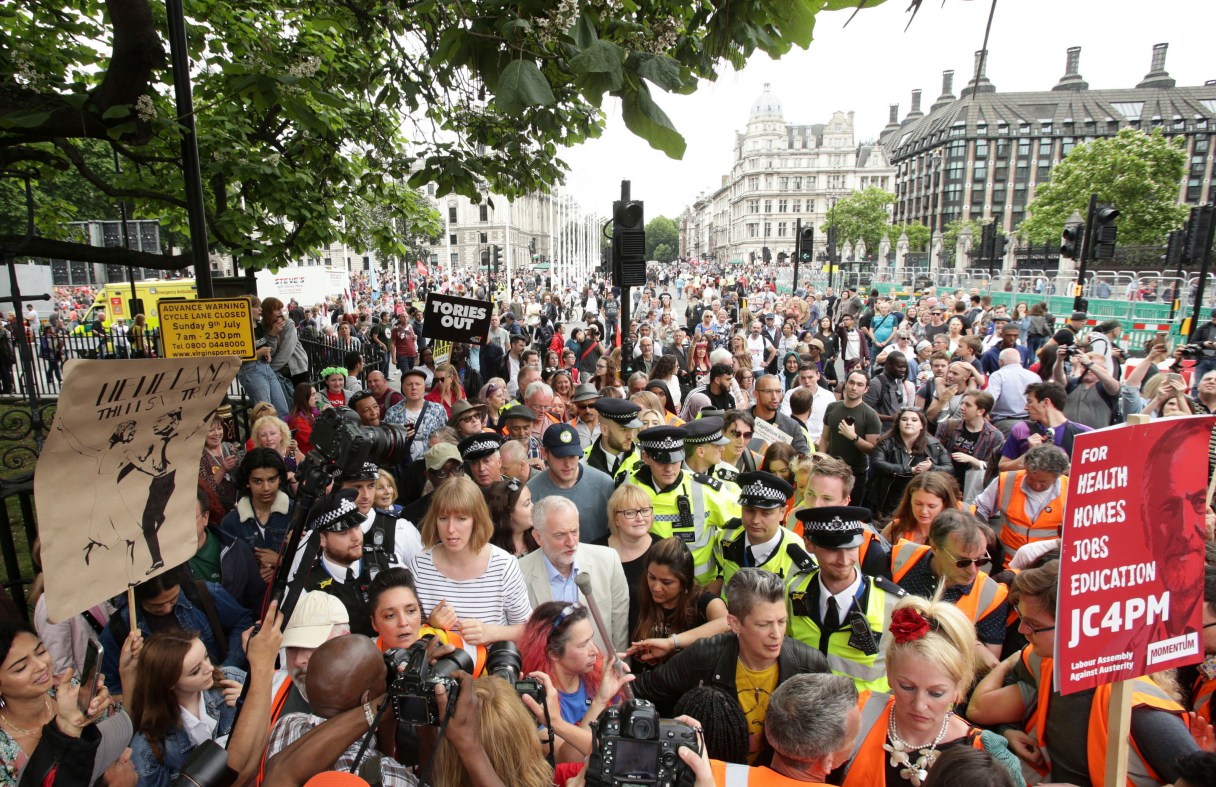
A Saturday July 1, 2017 photo of Labour Party leader Jeremy Corbyn, centre in white jacket, being mobbed by the crowd after addressing an anti-austerity rally in Parliament Square, London, following a march through the city as part of an anti-austerity protest. Corbyn made emergency services the focus of the march on Parliament Saturday when demonstrators called for an end to the 1 percent cap on pay increases for public employees. With the inflation rate now at 2.9 percent, the cap means the spending power of government workers is shrinking. (Yui Mok/PA via AP)
A Saturday July 1, 2017 photo of Labour Party leader Jeremy Corbyn, centre in white jacket, being mobbed by the crowd after addressing an anti-austerity rally in Parliament Square, London, following a march through the city as part of an anti-austerity protest. Corbyn made emergency services the focus of the march on Parliament Saturday when demonstrators called for an end to the 1 percent cap on pay increases for public employees. With the inflation rate now at 2.9 percent, the cap means the spending power of government workers is shrinking. (Yui Mok/PA via AP) A Saturday July 1, 2017 photo of Labour Party leader Jeremy Corbyn, centre in white jacket, being mobbed by the crowd after addressing an anti-austerity rally in Parliament Square, London, following a march through the city as part of an anti-austerity protest. Corbyn made emergency services the focus of the march on Parliament Saturday when demonstrators called for an end to the 1 percent cap on pay increases for public employees. With the inflation rate now at 2.9 percent, the cap means the spending power of government workers is shrinking. (Yui Mok/PA via AP)

LONDON (AP) – Britain’s police and firefighters, repeatedly hailed as heroes in recent months for facing down extremists and rushing into burning buildings, have become the symbol of a new anti-austerity drive in the country.

Their exploits are adding to the pressure on Prime Minister Theresa May to ease seven years of belt-tightening after a disastrous election that cost the government its majority in Parliament and led to calls for her to step down. Over the past few days, key ministers have broken with government policy on the issue amid a change in public mood.

Opposition leader Jeremy Corbyn made emergency services the focus of a march on Parliament last weekend when demonstrators called for an end to the 1 percent cap on pay increases for public employees. With the inflation rate now at 2.9 percent, the cap means the spending power of government workers is shrinking.