
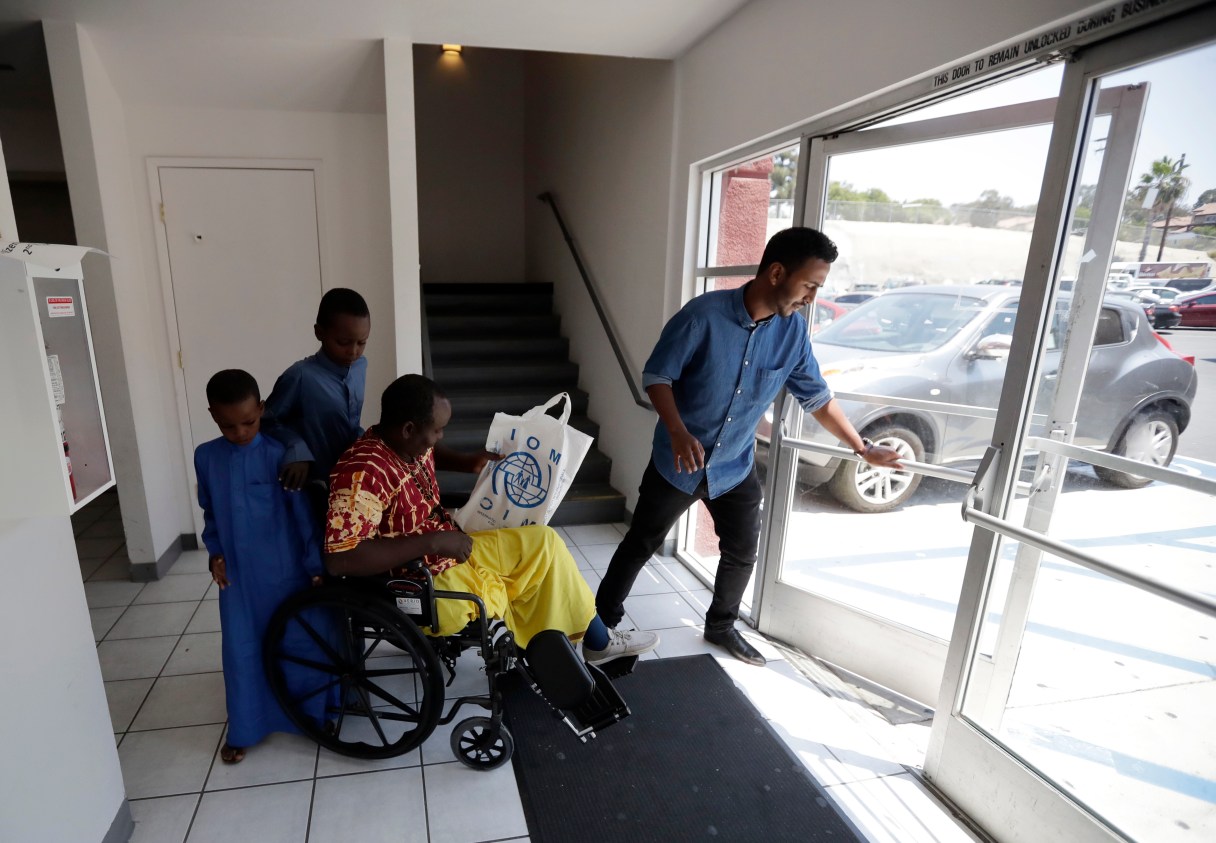
SAN DIEGO (AP) – Ali Said fled his war-torn Somalia two decades ago after his right leg was blown off by a grenade. Last year, the father of seven was shot in his other leg by robbers while living in a Kenyan refugee camp.
As Said rolled his wheelchair up to a desk in a San Diego office hours after arriving in California from Kenya, he felt unbelievably lucky: He and his family are among the last refugees allowed into the United States before the Trump administration’s latest travel ban rules kick in.
“Until this moment, in this interview, I still don’t believe that I’m in the United States,” Said told The Associated Press through a translator on Thursday, smiling while his two sons hung at the back of his wheelchair. “So during the flight, we all were saying that we are in a dream and it’s not true yet until we finally landed at LAX and we all said to each other: ‘Yeah, we’re finally here. We made it.'”
The U.S. refugee admissions program will be suspended July 12 when a cap of 50,000 refugee admissions for the current fiscal year – the lowest in a decade- is expected to be reached, according to the U.S. State Department.
Once the cap is hit, only refugees who have a relationship with an immediate family member or ties to a business in the United States will be eligible for admission during the 120-day suspension, the State Department guidelines say.