
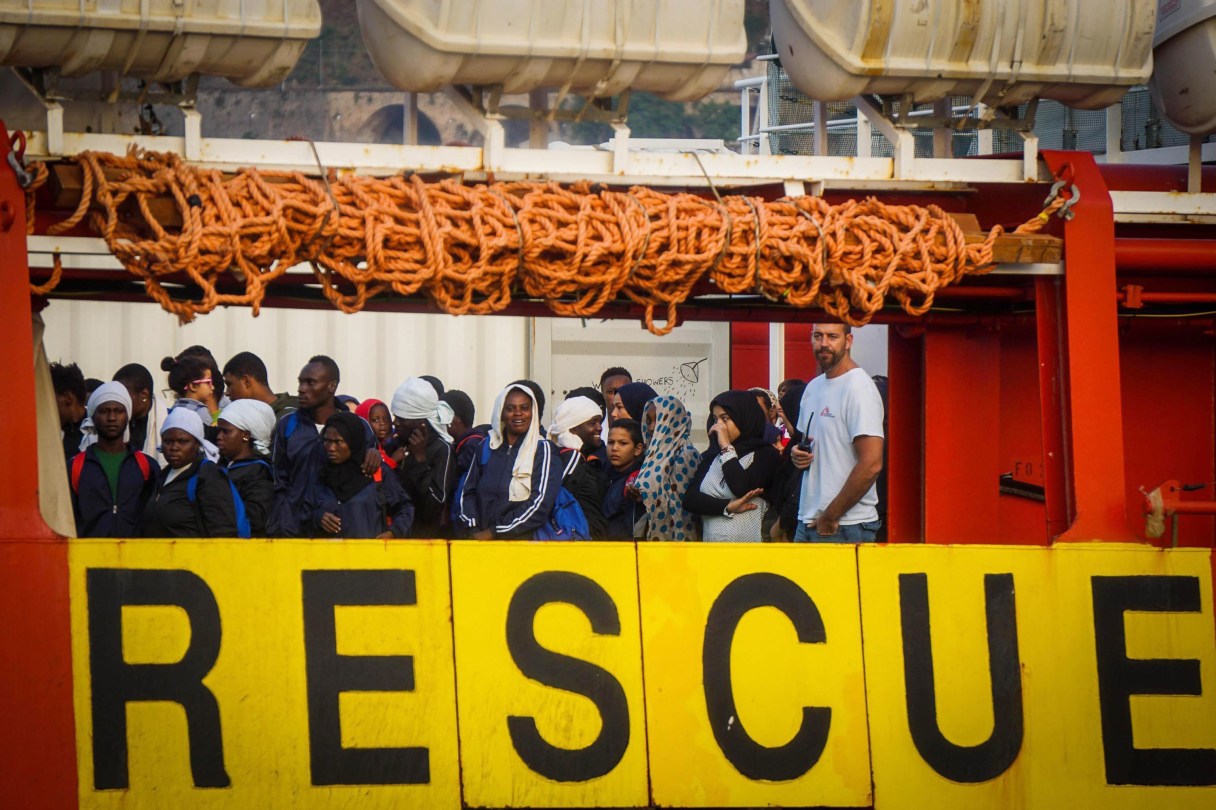
ROME (AP) – Humanitarian organizations that rescue migrants in the Mediterranean are voicing concern over proposed rules to govern their operations that Italy has drafted amid accusations that some agencies are complicit with the Libyan-based traffickers.
Rescue boats could be refused port in Italy if they don’t sign onto the proposed code of conduct, which the Italian government is to present to the nongovernmental organizations in the coming days.
Michele Trainiti, search and rescue coordinator of Doctors Without Borders, told The Associated Press on Friday that the draft rules seem to violate the aid groups’ independence and neutrality and could hamper their ability to rescue migrants.
“The fact that some ships may be barred from disembarking in Italian ports worries us very much, because there are no clear alternative ports,” Trainiti said. As an example he pointed to one recent rescue involving a newborn who was still attached to his mother via the umbilical cord. “Imagine if this baby had to travel some three or four days more to reach another country.”
Under the proposed rules, boats would be barred from entering Libyan waters to rescue migrants, except in cases of imminent emergency. NGOs would have to let police investigating traffickers board their rescue vessels, and declare the sources of their financing. They would be barred from communicating by phone with smugglers or using light signals to indicate their locations.