
Wednesday, November 11, 2026Nov 11

China fires back at US accusations over aerial encounter

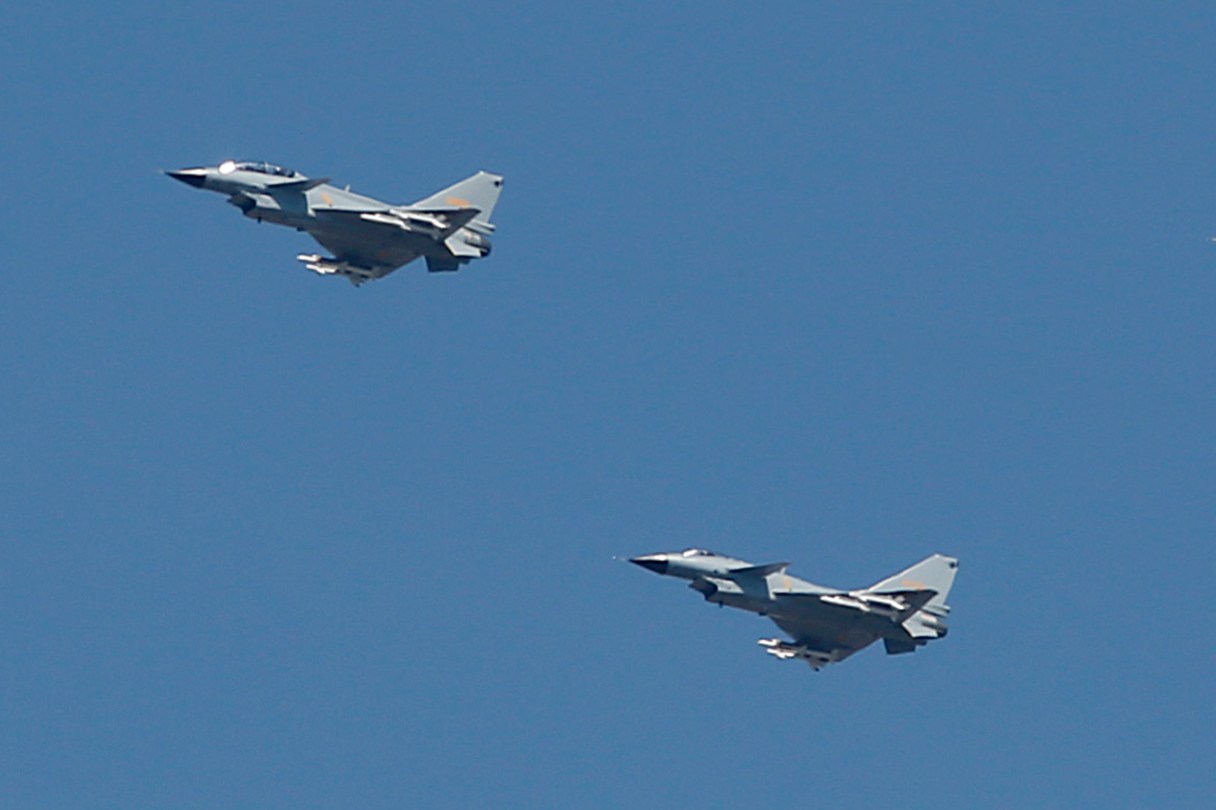
In this Sept. 3, 2015, file photo, two Chinese J-10 fighter jets fly in formation during a parade commemorating the 70th anniversary of Japan's surrender during World War II in Beijing. China on Tuesday, July 25, 2017, denied that two of its J-10 fighter jet pilots operated dangerously during an encounter with a U.S. surveillance plane in international airspace in which the American pilot took evasive action to avoid a possible collision. (AP Photo/Mark Schiefelbein, File)
In this Sept. 3, 2015, file photo, two Chinese J-10 fighter jets fly in formation during a parade commemorating the 70th anniversary of Japan's surrender during World War II in Beijing. China on Tuesday, July 25, 2017, denied that two of its J-10 fighter jet pilots operated dangerously during an encounter with a U.S. surveillance plane in international airspace in which the American pilot took evasive action to avoid a possible collision. (AP Photo/Mark Schiefelbein, File) In this Sept. 3, 2015, file photo, two Chinese J-10 fighter jets fly in formation during a parade commemorating the 70th anniversary of Japan's surrender during World War II in Beijing. China on Tuesday, July 25, 2017, denied that two of its J-10 fighter jet pilots operated dangerously during an encounter with a U.S. surveillance plane in international airspace in which the American pilot took evasive action to avoid a possible collision. (AP Photo/Mark Schiefelbein, File)

BEIJING (AP) – China on Tuesday denied its fighter jet pilots operated dangerously during an encounter with a U.S. surveillance plane in international airspace in which the American pilot took evasive action to avoid a possible collision.

Spokesman Ren Guoqiang said in a statement on the defense ministry’s microblog that the performance of the pilots of the two J-10 fighters was “legal, necessary and professional.”

Ren criticized frequent close-in surveillance runs by U.S. planes as raising the chance of accidents, saying such missions “threatened China’s national security, harmed China-U.S. sea-air military safety, endangered the safety of pilots from the two sides and were the root cause of China-U.S. sea-air unexpected incidents.”

The U.S. should stop such “unsafe, unprofessional and unfriendly military activities,” Ren said, in a repetition of China’s standard policy toward U.S. surveillance missions intended at collecting Chinese computer and voice data in hopes of gaining insight into the workings of the People’s Liberation Army.

Asked about the incident at a daily briefing, Chinese foreign ministry spokesman Lu Kang said Beijing objected to such missions but remained “committed to building military mutual trust with other countries.”