
Wednesday, November 11, 2026Nov 11

GOP grapples as it shifts from opposition party to governing

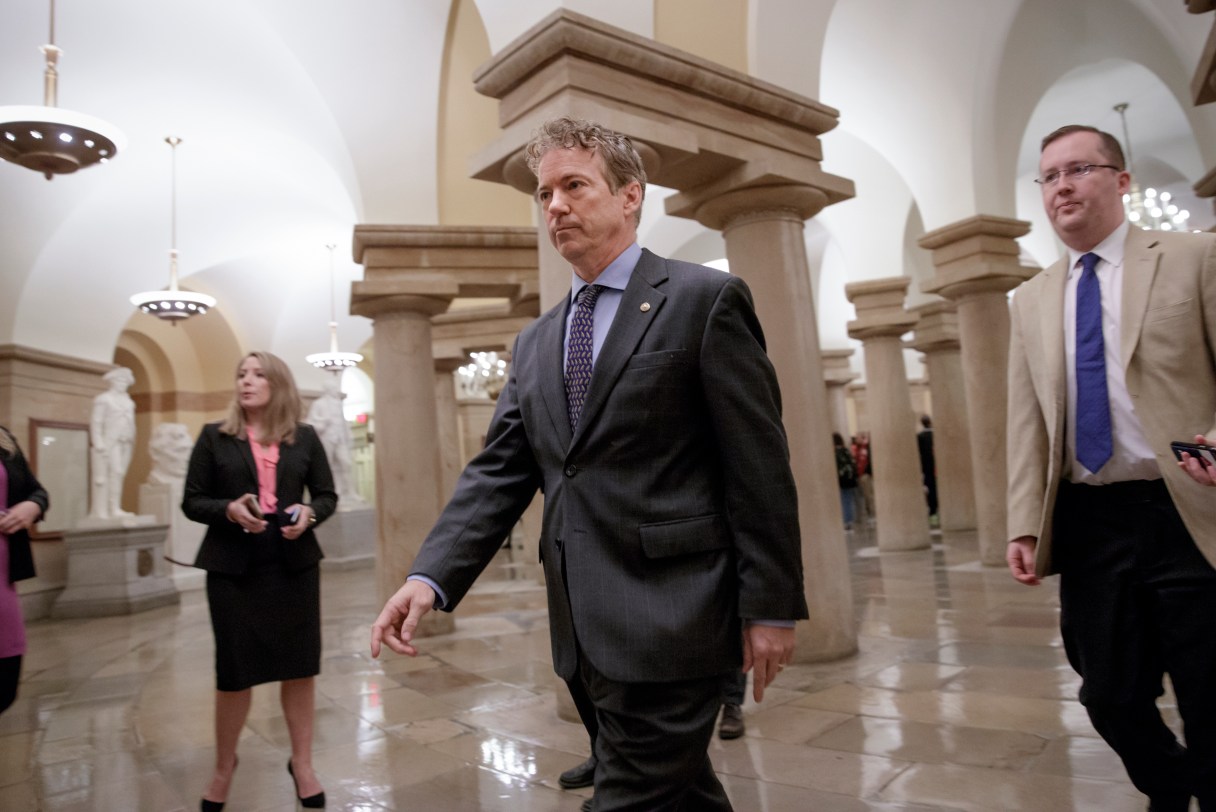
FILE - in this March 2, 2017 file photo, Sen. Rand Paul, R-Ky. walks on Capitol Hill in Washington. Republican ranks in Congress are thick with hard-right lawmakers elected to thwart former President Barack Obama and light on nuts-and-bolts legislators, especially those experienced in working with a GOP president. That could prove to be a formidable challenge as Republicans transition from an opposition party to a governing one.  (AP Photo/J. Scott Applewhite, File)
FILE - in this March 2, 2017 file photo, Sen. Rand Paul, R-Ky. walks on Capitol Hill in Washington. Republican ranks in Congress are thick with hard-right lawmakers elected to thwart former President Barack Obama and light on nuts-and-bolts legislators, especially those experienced in working with a GOP president. That could prove to be a formidable challenge as Republicans transition from an opposition party to a governing one. (AP Photo/J. Scott Applewhite, File) FILE - in this March 2, 2017 file photo, Sen. Rand Paul, R-Ky. walks on Capitol Hill in Washington. Republican ranks in Congress are thick with hard-right lawmakers elected to thwart former President Barack Obama and light on nuts-and-bolts legislators, especially those experienced in working with a GOP president. That could prove to be a formidable challenge as Republicans transition from an opposition party to a governing one. (AP Photo/J. Scott Applewhite, File)

WASHINGTON (AP) – Republican ranks in Congress are thick with hard-right lawmakers elected to thwart former President Barack Obama and light on nuts-and-bolts legislators, especially those experienced in working with a GOP president.

That could prove to be a formidable challenge as Republicans transition from an opposition party to a governing one.

Tea party lawmakers who are used to fighting Obama – and sometimes their own leaders – now have to pull together as a team to try to advance President Donald Trump’s agenda into law, starting this week with repeal of the 2010 health care law and a possible replacement.

Conservative purity tests must get tossed out the window; instead the mandate is to figure out what can actually get enacted into law. That requires forging consensus, working within parameters set by Trump – and willingly accepting lumps and losses in intra-GOP debates and voting for what compromise eventually emerges. These are realities that some Republicans are learning more quickly than others.

“When you’re in the opposition, you get to judge every proposal against the ideal …. When you’re governing, you first have to ask, ‘Can it pass?’ And then you’ve got to ask, ‘Well, how does it compare to doing nothing?'” said Neil Bradley, a former House GOP aide who’s now a top policy expert at the U.S. Chamber of Commerce. “They haven’t quite made the adjustment from judging things against the ideal to judging proposals against doing nothing.”