
Wednesday, November 11, 2026Nov 11

EU border agency chief sees spike in Spain migrant arrivals

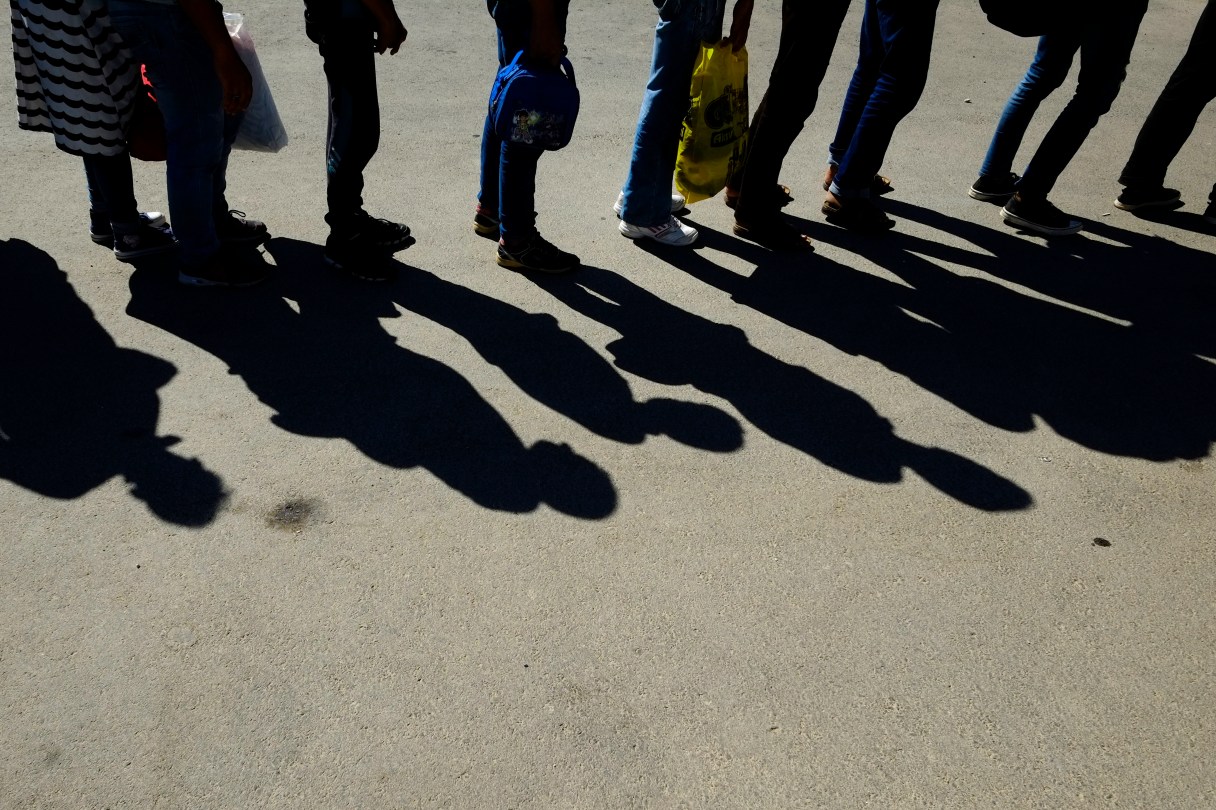
Migrants from Syria wait in a line as they arrive at a refugee camp at Kokkinotrimithia, outside of the capital Nicosia, in the eastern Mediterranean island of Cyprus, on Sunday, Sept. 10, 2017. Cyprus police say a 36-year-old man was arrested Sunday for allegedly driving one of a pair of boats that brought 305 Syrian refugees to the island's northwestern coast. (AP Photo/Petros Karadjias)
Migrants from Syria wait in a line as they arrive at a refugee camp at Kokkinotrimithia, outside of the capital Nicosia, in the eastern Mediterranean island of Cyprus, on Sunday, Sept. 10, 2017. Cyprus police say a 36-year-old man was arrested Sunday for allegedly driving one of a pair of boats that brought 305 Syrian refugees to the island's northwestern coast. (AP Photo/Petros Karadjias) Migrants from Syria wait in a line as they arrive at a refugee camp at Kokkinotrimithia, outside of the capital Nicosia, in the eastern Mediterranean island of Cyprus, on Sunday, Sept. 10, 2017. Cyprus police say a 36-year-old man was arrested Sunday for allegedly driving one of a pair of boats that brought 305 Syrian refugees to the island's northwestern coast. (AP Photo/Petros Karadjias)

BRUSSELS (AP) – The head of the European Union’s border agency says the number of migrants arriving in Europe through Spain has more than doubled this year.

Frontex Director Fabrice Leggeri said Monday that “we have registered almost 14,000 arrivals in Spain, arriving from Morocco, from the western part of the Maghreb.”

Leggeri said it “means that the figures were multiplied by more than 2.5 this year” compared to the same January-August period last year. He said this included sea and land arrivals, via Spain’s enclaves in northern Africa – Ceuta and Melilla, and that most migrants were Moroccan citizens.

He said arrivals to Europe from Libya through the central Mediterranean have dropped but could he not say whether the rise in Spain was due to tougher migrant controls around Libya.

“Frontex has no indication of such displacement,” he said.