
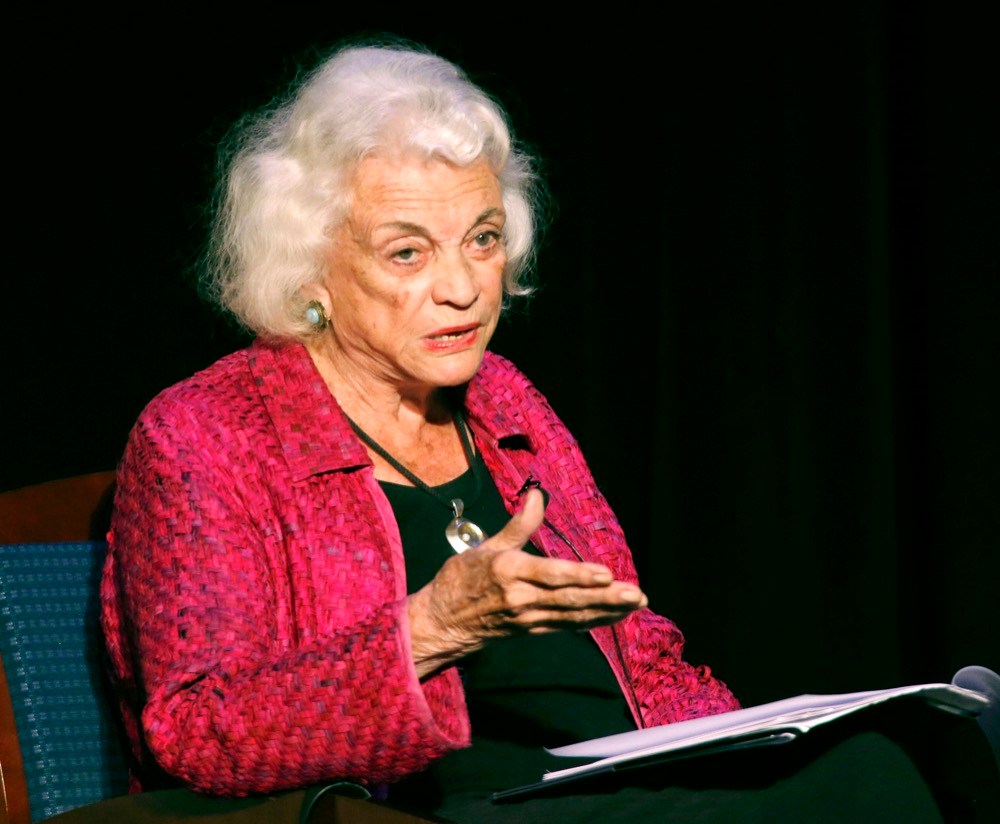
WASHINGTON (AP) – Sandra Day O’Connor, the first woman on the Supreme Court, announced Tuesday in a frank and personal letter that she has been diagnosed with “the beginning stages of dementia, probably Alzheimer’s disease.”
The 88-year-old’s letter was addressed to “Friends and fellow Americans.” And it was a farewell of sorts from a woman who was not only a trailblazer for women in the law but also for much of her quarter century on the high court a key vote on issues central to American life.
O’Connor said doctors diagnosed her some time ago and that as her condition has progressed she is “no longer able to participate in public life.” After her 2006 retirement from the high court O’Connor had appeared around the country championing an educational organization she founded and serving as a visiting appeals court judge, among other activities. But she stopped speaking publicly more than two years ago.
“While the final chapter of my life with dementia may be trying, nothing has diminished my gratitude and deep appreciation for the countless blessings in my life,” she wrote. She added: “As a young cowgirl from the Arizona desert, I never could have imagined that one day I would become the first woman justice on the U.S. Supreme Court.”
O’Connor’s announcement of her diagnosis came a day after an Associated Press story in which her son Jay O’Connor said that his mother had begun to have challenges with her short term memory. The story noted that O’Connor had stopped making public appearances and recently turned over an office she had kept at the Supreme Court to newly retired Justice Anthony Kennedy. Jay O’Connor also said that hip issues have meant his mother now primarily uses a wheelchair and stays close to her home in Phoenix.