
Wednesday, November 11, 2026Nov 11

Advocates already see fallout from immigration rule change

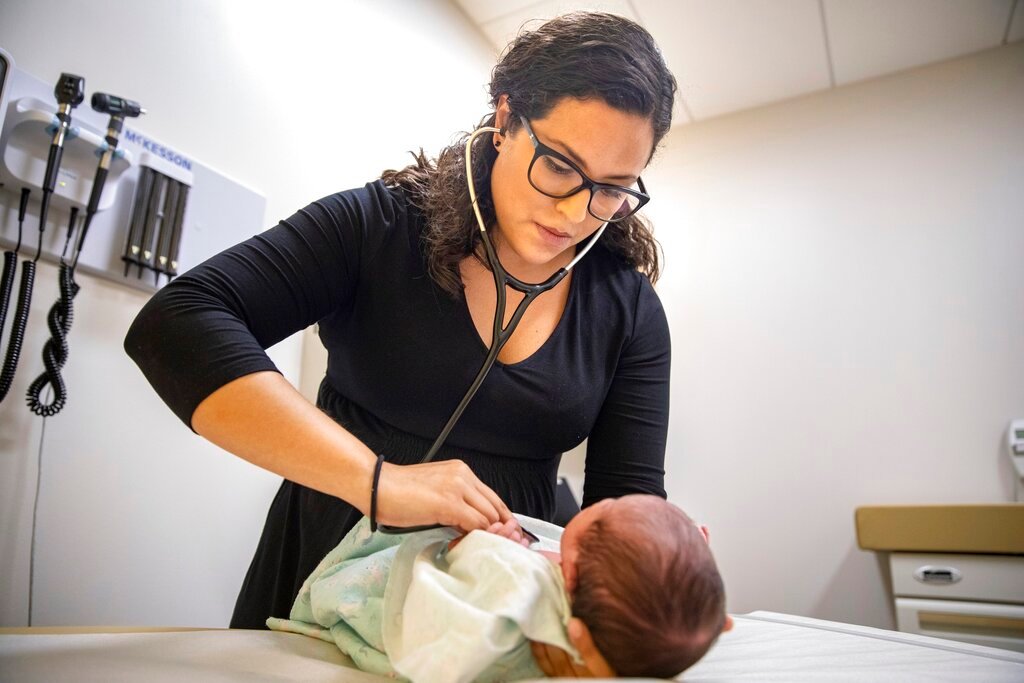
In this Tuesday, Aug. 13, 2019, photo, Dr. Jasmine Saavedra, a pediatrician at Esperanza Health Centers whose parents emigrated from Mexico in the 1980s, examines Alondra Marquez, a newborn baby in her clinic in Chicago. Doctors and public health experts warn of poor health outcomes and rising costs they say will come from sweeping changes that would deny green cards to many immigrants who use Medicaid, as well as food stamps and other forms of public assistance. Saavedra is convinced that if new Trump administration criteria were in effect for her parents three decades ago, she wouldn't have become a pediatrician.
In this Tuesday, Aug. 13, 2019, photo, Dr. Jasmine Saavedra, a pediatrician at Esperanza Health Centers whose parents emigrated from Mexico in the 1980s, examines Alondra Marquez, a newborn baby in her clinic in Chicago. Doctors and public health experts warn of poor health outcomes and rising costs they say will come from sweeping changes that would deny green cards to many immigrants who use Medicaid, as well as food stamps and other forms of public assistance. Saavedra is convinced that if new Trump administration criteria were in effect for her parents three decades ago, she wouldn't have become a pediatrician. In this Tuesday, Aug. 13, 2019, photo, Dr. Jasmine Saavedra, a pediatrician at Esperanza Health Centers whose parents emigrated from Mexico in the 1980s, examines Alondra Marquez, a newborn baby in her clinic in Chicago. Doctors and public health experts warn of poor health outcomes and rising costs they say will come from sweeping changes that would deny green cards to many immigrants who use Medicaid, as well as food stamps and other forms of public assistance. Saavedra is convinced that if new Trump administration criteria were in effect for her parents three decades ago, she wouldn't have become a pediatrician.

CHICAGO (AP) – Diabetics skipping regular checkups. Young asthmatics not getting preventive care. A surge in expensive emergency room visits.

Doctors and public health experts warn of poor health and rising costs they say will come from sweeping Trump administration changes that would deny green cards to many immigrants who use Medicaid, as well as food stamps and other forms of public assistance. Some advocates say they’re already seeing the fallout even before the complex 837-page rule takes effect in October.

President Donald Trump’s administration trumpeted its aggressive approach this past week as a way to keep only self-sufficient immigrants in the country, but health experts argue it could force potentially millions of low-income migrants to choose between needed services and their bid to stay legally in the U.S.

“People are going to be sicker. They’re not going to go get health care, or not until they have to go to an emergency room,” said Lisa David, president and CEO of Public Health Solutions, New York’s largest public health organization. “It’s going to cost the system a lot of money.”

Immigrants who want permanent legal status, commonly called a green card, have long been required to prove they won’t be “a public charge.” The Trump administration announced Monday that would redefine the term to mean those who are “more likely than not” to receive public benefits over a certain period. U.S. Citizenship and Immigration Services will also now consider other factors, including income, education and English proficiency.