
In the world of autonomous vehicles, Pittsburgh and Silicon Valley are bustling hubs of development and testing. But ask those involved in self-driving vehicles when we might actually see them carrying passengers in every city, and you’ll get an almost universal answer: Not anytime soon.
An optimistic assessment is 10 years. Many others say decades as researchers try to conquer a number of obstacles. The vehicles themselves will debut in limited, well-mapped areas within cities and spread outward.
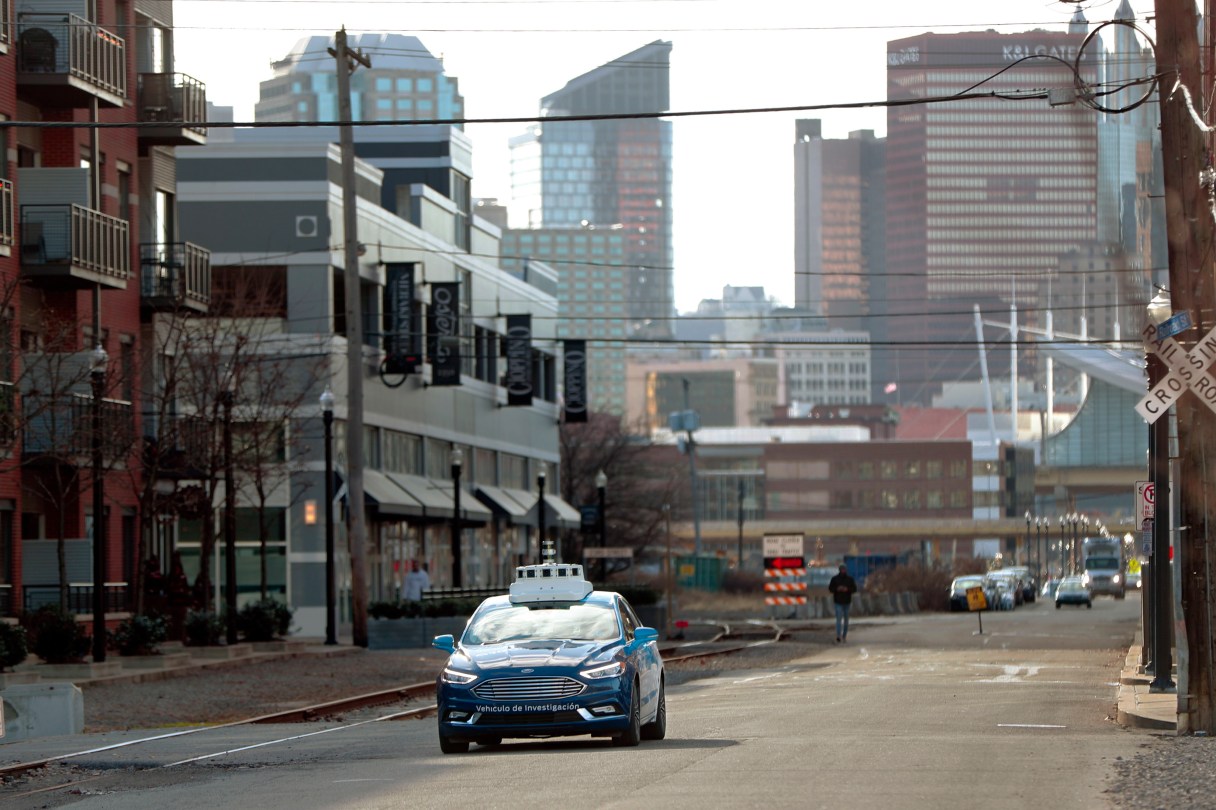
 In this Dec. 18, 2018, photo one of the test vehicles from Argo AI, Ford’s autonomous vehicle unit, navigates through the strip district near the company offices in Pittsburgh. Even the most optimistic experts say it will be 10 years before self-driving vehicles are everywhere, but others believe it will take decades. The biggest reasons are camera and laser sensors that can’t see through heavy snow or figure out where to go if lane lines are covered. (AP Photo/Keith Srakocic)
The fatal crash in Arizona involving an Uber autonomous vehicle in March slowed progress, largely because it hurt the public’s perception of the safety of vehicles. Companies slowed research to be more careful. Google’s Waymo, for instance, decided not to launch a fully autonomous ride-hailing service in the Phoenix area and will rely on human backup drivers to ferry passengers, at least for now.
Here are the problems that researchers must overcome to start giving rides without humans behind the wheel:
SNOW AND WEATHER