
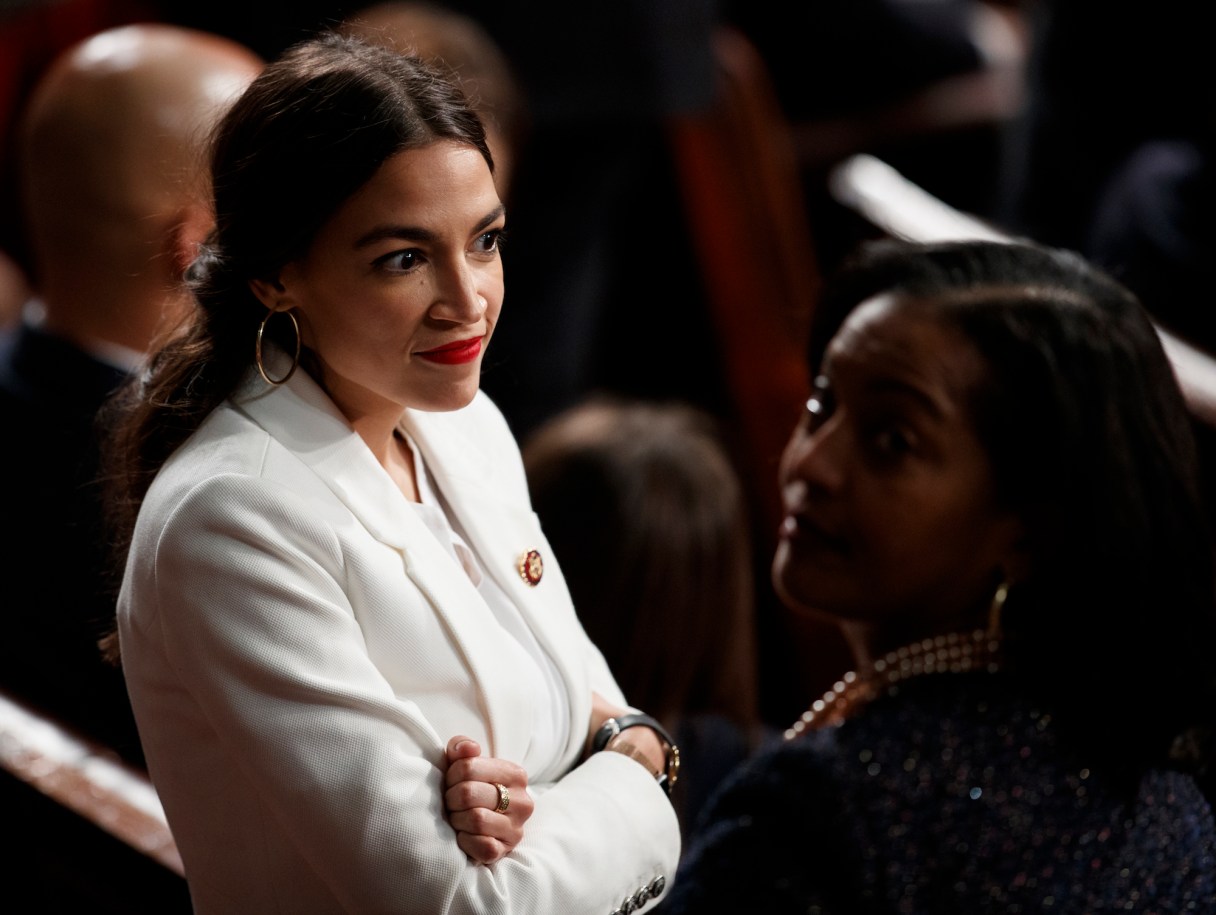
Back in 2007, I wrote a column calling for a “Green New Deal,” and I later expanded on the idea in a book, “Hot, Flat and Crowded.” Barack Obama picked up the theme and made a Green New Deal part of his 2008 platform, but the idea just never took off. So I’m excited that the new Democratic Congresswoman Alexandria Ocasio-Cortez and others have put forward their own takes on a Green New Deal, and it’s now getting some real attention.
The Green New Deal that Ocasio-Cortez has laid out aspires to power the U.S. economy with 100 percent renewable energy within 12 years and calls for “a job guarantee program to assure a living wage job to every person who wants one,” “basic income programs” and “universal health care,” financed, at least in part, by higher taxes on the wealthy. Critics argue that this is technically unfeasible and that combining it with democratic socialist proposals will drive off conservatives needed to pass it.
My own definition of a Green New Deal, which has evolved since 2007 as the technology has gotten better and the climate problem has gotten worse, remains focused on how a green revolution in America can drive innovation, spur new industries and enhance our security.
For too long “green” was viewed as a synonym for a project that was boutique, uneconomical, liberal, sissy and vaguely French. I wanted to recast green as geostrategic, capitalistic, economical, innovative and patriotic.
To achieve scale, though, my view was that a Green New Deal had to be embraced by more than liberals. You had to reach conservatives and even climate deniers. My way of doing that was to focus on something we can all agree on: math. There are about 7.6 billion people on the planet today and, according to the United Nations, there will be 8.6 billion in 2030. A billionmore people driving, flying, eating protein, building homes and drinking water in just more than a decade.