
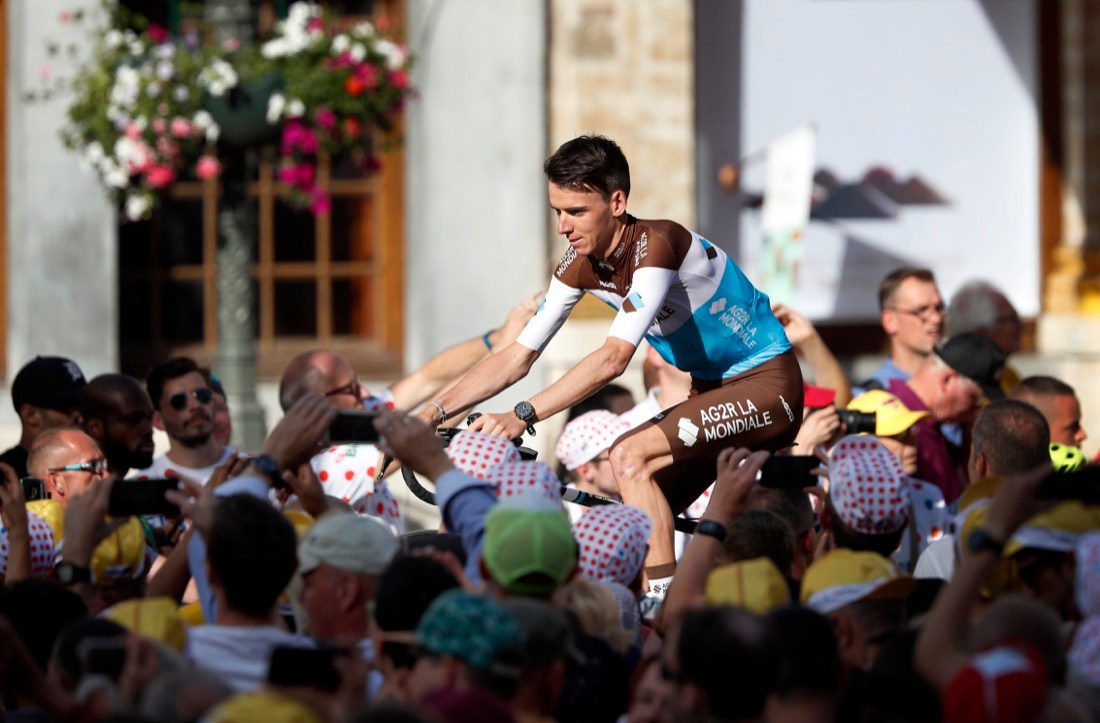
PARIS – With each crank of their pedals this month, Tour de France participants will climb ever higher into the unknown.
For the first time in its 116-year history, cycling’s most famous race features three stages that finish on mountain climbs to above 2,000 meters (6,500 feet). The unprecedented assault on altitude likely will prove decisive in deciding the winner of the always grueling test, set to start Saturday with a flat stage in Belgium and finish on July 28 with a traditionally ceremonial cruise into Paris and along the Champs-Élysées.
There are 19 stages in between, though, and they will provide plenty of chances for dreams to be realized or crushed.
The thinning mountain air, with scarcer oxygen, will trigger a cascade of physiological reactions, right down to the cellular level, in the riders’ aching bodies and sap their strength as they fight to not get left behind amid the peaks of the Pyrenees and the Alps.
Their lungs will heave, breathing harder and quicker to try to compensate for the falling air pressure. Their hearts will pump faster, to increase flows of oxygen-carrying red blood cells to the lungs so they can pick up more of their precious cargo and rush it urgently to straining muscles.