
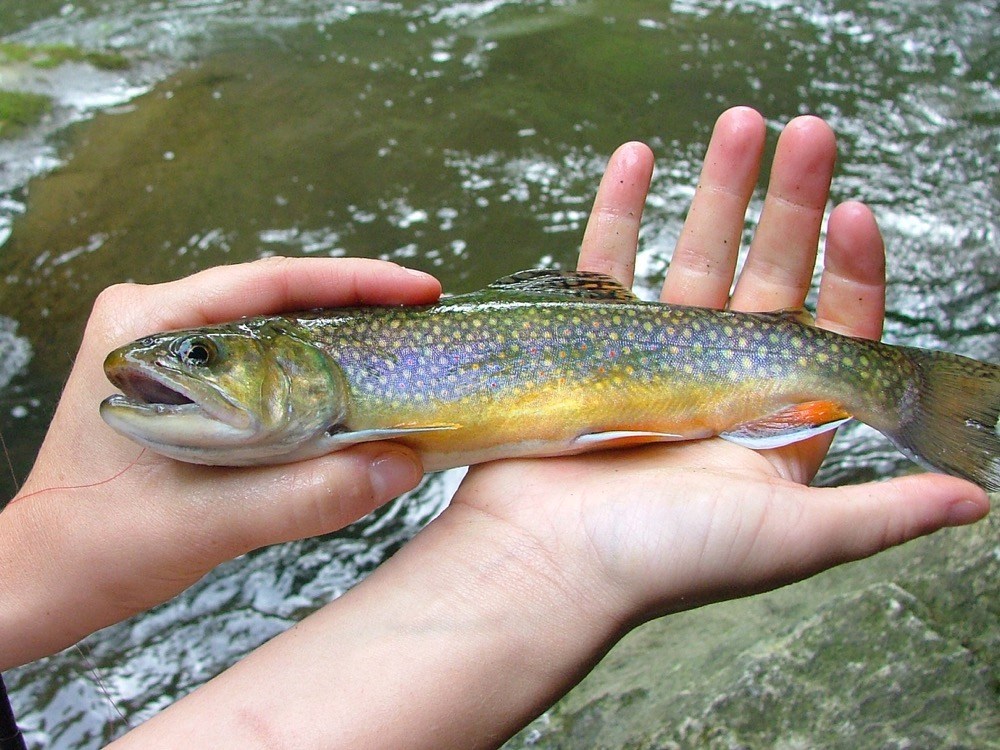
Last June, 280 fingerling brook trout were released into Little Stony Creek on Cherokee National Forest northeast of Elizabethton, Tennessee. Propagated by the Tennessee Aquarium Conservation Institute, these little fish represent the latest contribution in a decades-long effort to reclaim territory for the Southeast’s only native trout.
Brook trout are char, more closely related to species like arctic char than the familiar rainbow and brown trout of our mountain streams. Painted up in their spawning regalia, brookies are beautiful and delicate. They rarely grow longer than 10 inches in our infertile high-altitude streams, yet they are a favorite for certain anglers who enjoy long walks into the gorgeous places where brookies live.
Historically, brook trout were much more widespread across the Appalachians. Jim Habera, a fisheries biologist with Tennessee Wildlife Resources Agency, says brook trout currently inhabit only 25% of their historic range in Tennessee. Restoration since the 1980s is responsible for about 15% of that figure.
Across the East, in the species’ native range from Maine to North Georgia, less than 9% of historic brook trout water remains intact, according to a 2006 estimate from the Eastern Brook Trout Joint Venture. Habera is on the steering committee for EBTJV, which is an organization working to restore brook trout populations.
The history and decline