
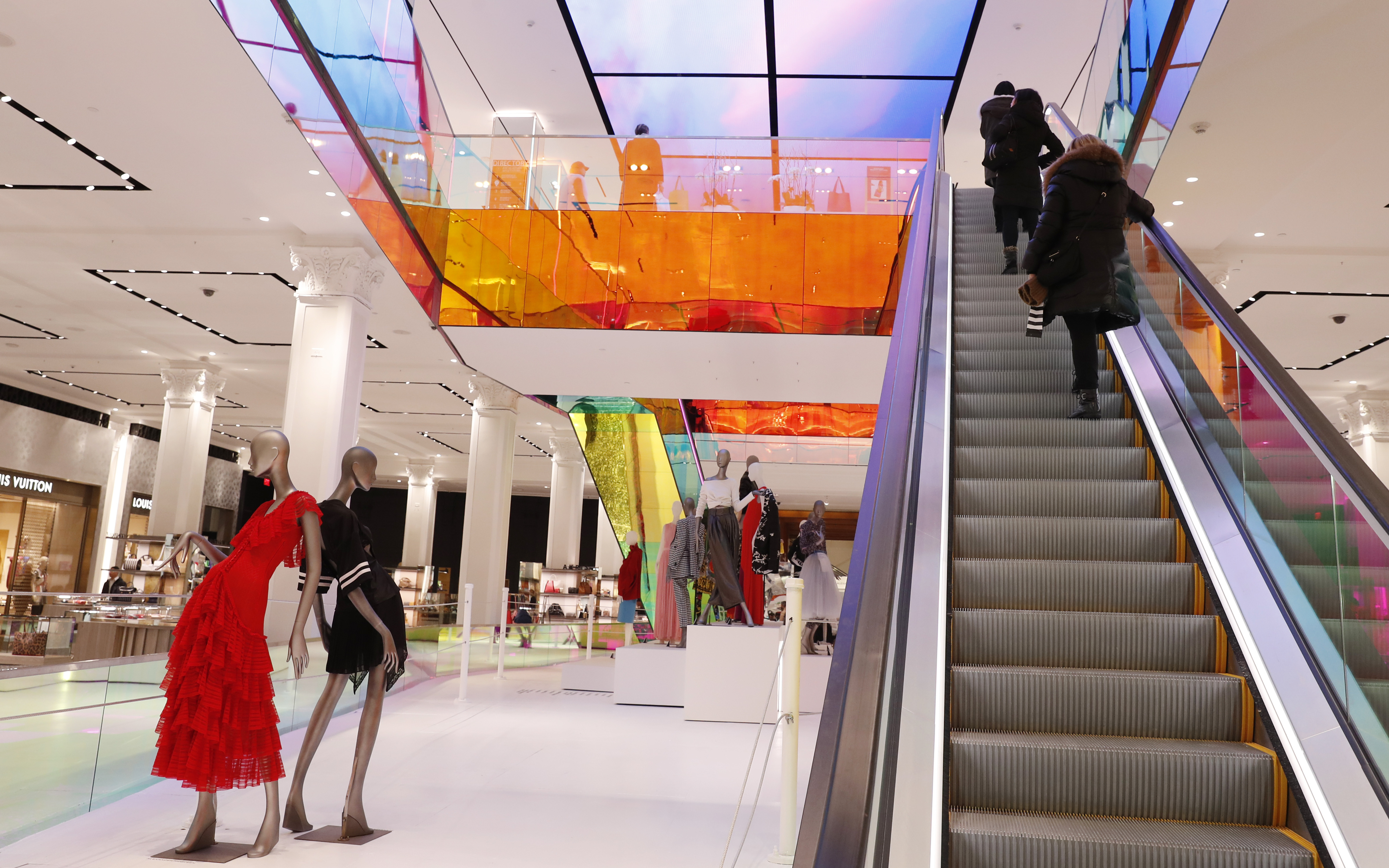
 FILE- In this Feb. 20, 2019, file photo shoppers ride the escalator at Saks Fifth Avenue’s flagship midtown Manhattan store in New York. On Monday, March 11, the Commerce Department releases U.S. retail sales data for December and January. (AP Photo/Kathy Willens, File)
U.S. retail sales rose slightly in January after a sharp drop in December, reflecting caution taken by consumers amid a government shutdown and volatile stock market.
Retail sales increased just 0.2 percent, the Commerce Department said Monday, after a sharp fall of 1.6 percent in December, the biggest drop in 9 years.
The economy has stumbled after healthy growth last summer and fall. Weaker economies overseas, the U.S.-China trade fight, and the 35-day government shutdown dented consumer and business confidence. Economists believe growth could fall to a 1 percent annual rate or below in the first three months of this year.
Still, economists were relieved that sales rebounded after December’s huge decline. Excluding sales at gas stations, which are affected by price changes, and car sales, which are a much larger purchase than those covered by the rest of the report, retail sales actually rose 1.2 percent in January.
The increase “provides some reassurance that consumer spending isn’t falling off a cliff,” Andrew Hunter, an economist at consulting firm Capital Economics, said.