
BEIRUT (AP) – In his last months on the run, Islamic State group leader Abu Bakr al-Baghdadi was agitated, fearful of traitors, sometimes disguised as a shepherd, sometimes hiding underground, always dependent on a shrinking circle of confidants.
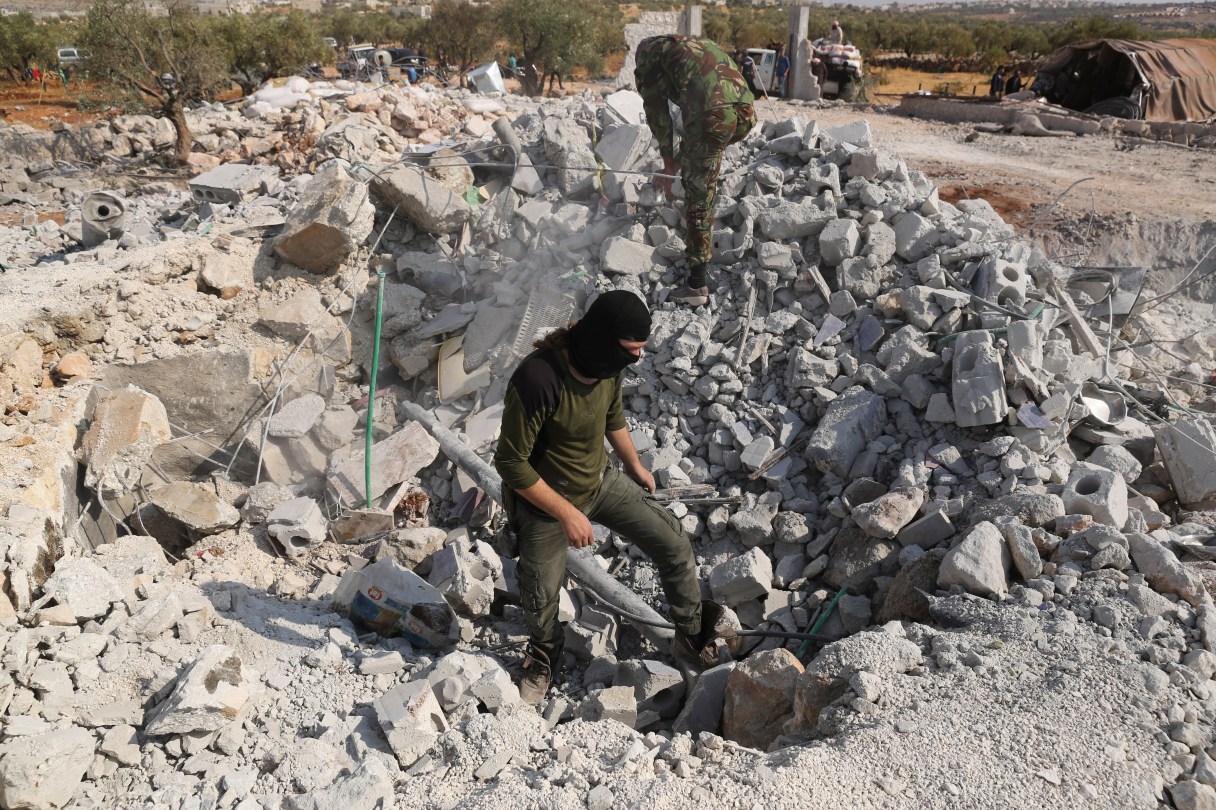
Associates paint a picture of a man obsessed with his security and well-being and trying to find safety in towns and deserts in eastern Syria near the Iraqi border as the extremists’ domains crumbled. In the end, the brutal leader once hailed as “caliph” left former IS areas completely, slipping into hostile territory in Syria’s northwestern Idlib province run by the radical group’s al-Qaida-linked rivals. There, he blew himself up during an Oct. 26 raid by U.S. special forces on his heavily fortified safe house.
For months, he kept a Yazidi teen as a slave, and she told The Associated Press how he brought her along as he moved, traveling with a core group of up to seven close associates. Months ago, he delegated most of his powers to a senior deputy who is likely the man announced by the group as his successor.
The Yazidi girl, who was freed in a U.S.-led raid in May, said al-Baghdadi first tried to flee to Idlib in late 2017. She said one night she was loaded into a three-vehicle convoy that included the IS leader, his wife and his security entourage, headed for the province. The convoy reached a main road but then turned around, apparently fearing it would come under attack, said the girl, who was 17 at the time.
For about a week they stayed in the southeastern Syrian town of Hajin, near the Iraqi border. Then they moved north to Dashisha, another border town in Syria within IS-held territory.