
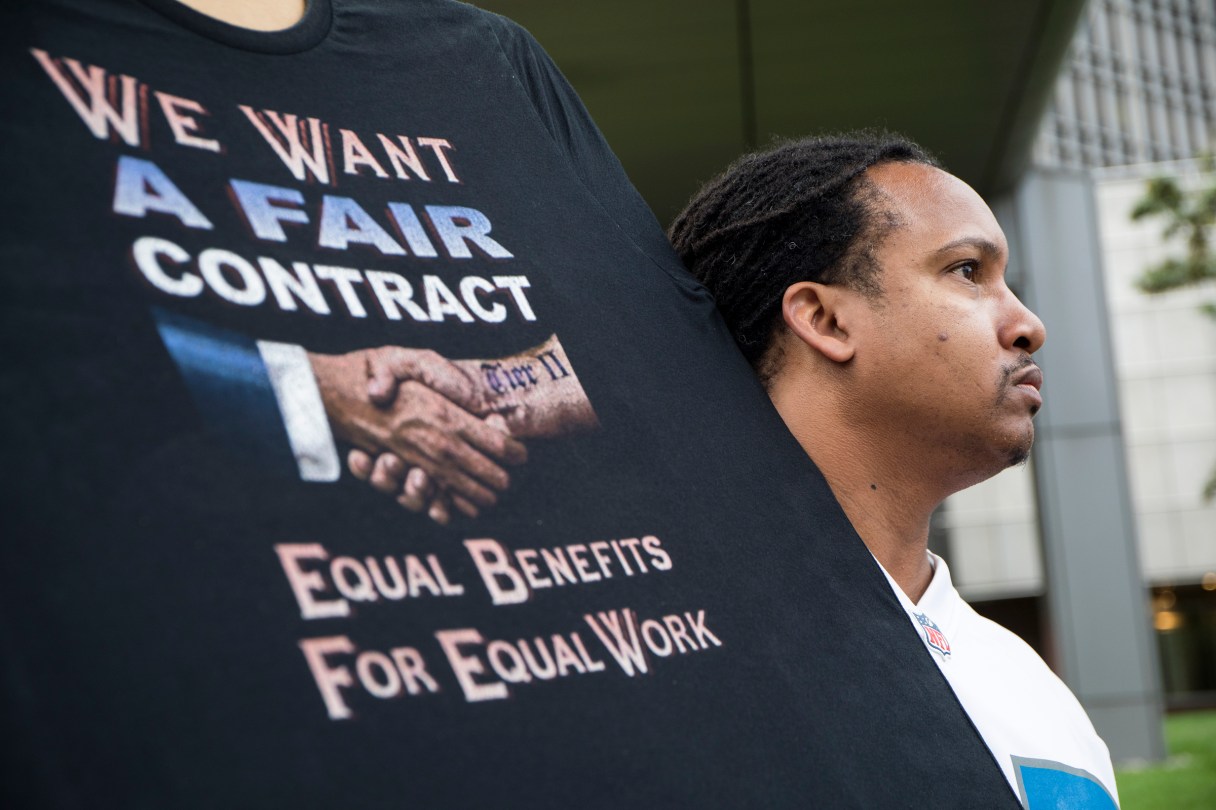
A decade ago, high labor costs helped drag a bloated and debt-ridden General Motors into a government-funded bankruptcy.
Now, a contract deal reached this week with the United Auto Workers union will raise the company’s costs once again, at a time when the auto industry is facing the uncertainty of tariffs and trade wars, slowing global sales and rising capital expenses to develop autonomous and electric vehicles.
Analysts say the four-year deal, if approved next week by 49,000 striking workers, will hit GM’s bottom line, but not badly enough to send it back into financial trouble like 2009, when it ran out of cash and was cleansed of $54 billion in debt during a 40-day trip through bankruptcy protection.
“Across the board, it’s a company that is leaps-and-bounds healthier than it was during the Great Recession,” said Jeff Schuster, a senior vice president at the forecasting firm LMC Automotive.
Before contract talks opened with the union last summer, GM had hoped to cut labor costs to bring them closer to those at U.S. factories run by foreign automakers. That didn’t happen. Instead, the union went on strike, silencing GM’s U.S. factories and costing the company an estimated $2 billion due to lost vehicle production.