
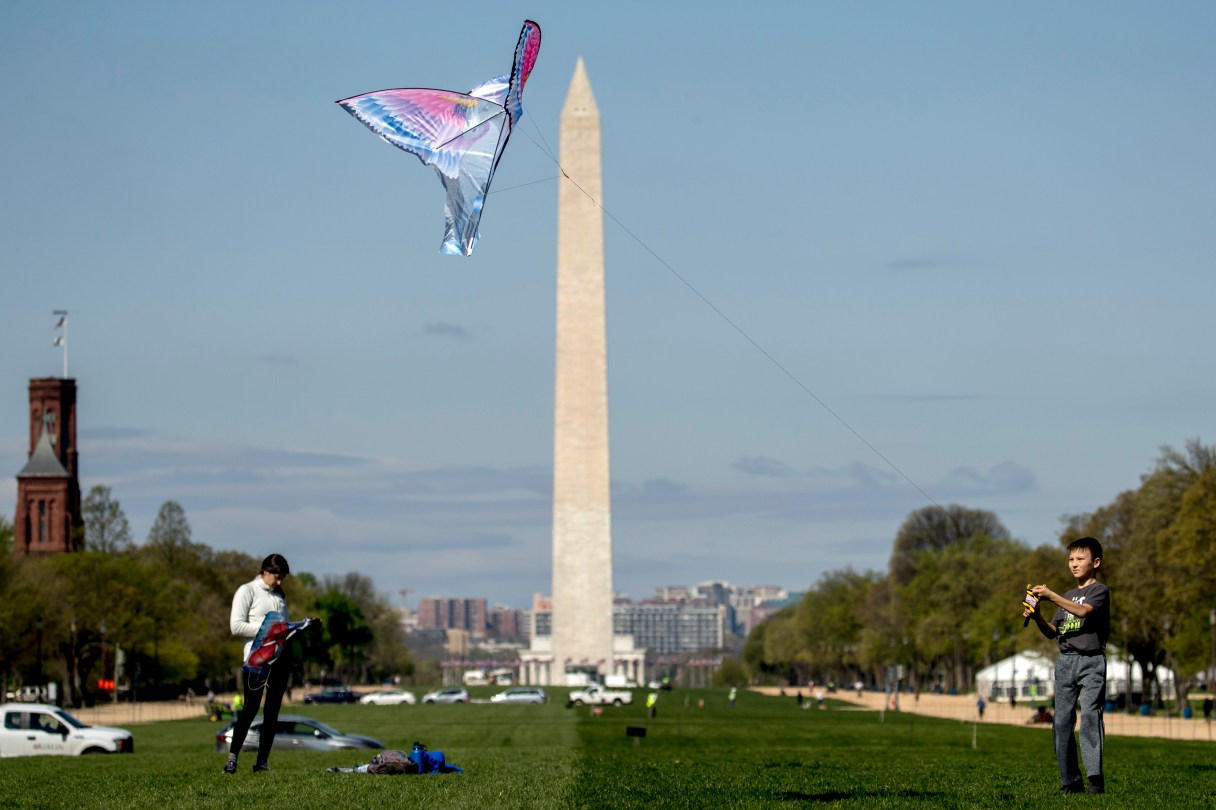
WASHINGTON (AP) – Pick-up basketball games. Crowds gathering at an outdoor fish market. Family hikes along trails in Rock Creek Park. The warmer weather is bringing violations of social distance guidelines in the nation’s capital, even as health officials predict the city could become one of the next U.S. hot spots in the coronavirus pandemic.
More than 1,200 people have tested positive, with 22 deaths, in Washington. But national and local health officials predict that the worst is yet to come.
Last week, Mayor Muriel Bowser announced that models predict the virus would peak in the District of Columbia in May or June and would result in nearly 1 in 7 Washington residents infected by the end of the year and a high-end death toll over 1,000.
“We are concerned that the next wave that D.C. could be in the second wave,” Bowser said. “We want the message to get in everybody’s head – that we see a level of infection in our city that if we aren’t strict in our social distancing, the community spread will continue and we will have more people succumb to illness and perhaps death.”
Dr. Deborah Birx, coordinator of the White House coronavirus task force, has repeatedly mentioned the District of Columbia as a potential looming hot spot, along with Chicago, Detroit, Colorado and Pennsylvania. Birx said national health officials have “developing concerns” about the capital, noting that Washington appears to be in the early stages of a now-familiar pattern: a steady daily rise in reported infections that precedes a massive spike that overloads local health systems.