
WASHINGTON (AP) – America’s entrenched political divide is now playing out over matters of life and death.
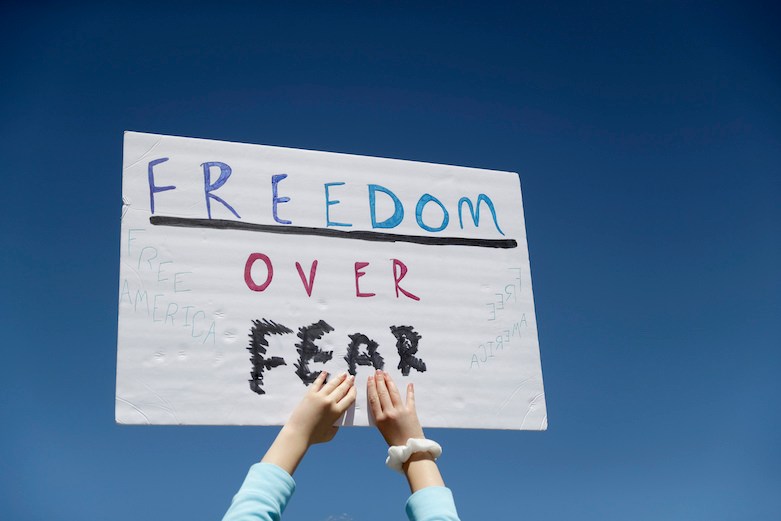
Republican governors, urged on by President Donald Trump, are taking the first steps toward reopening parts of their states’ economies in the midst of the coronavirus pandemic, and without adhering to the president’s own guidelines. Democratic governors are largely keeping strict stay-at-home orders and nonessential business closures in place, resisting small pockets of Trump-aligned protesters and public pressure from the president.
The fault lines are familiar, exposing many of the same regional and demographic divisions that have increasingly come to define U.S. politics, as well as the stark differences in the ways the parties view the role of government in American life. But the stakes go far beyond the normal risks and rewards of an election cycle, instead putting the health and well-being of millions of Americans in the balance.
“We do imagine that in times of crisis, that will alleviate some of the political divisions we see in normal times. But every time we go through a crisis, small ones and severe ones, the political divisions re-emerge right away,” said Julian Zelizer, a professor of political history at Princeton University.
It could be months before the ultimate consequences of the various shutdown and reopen orders are known. Public health officials concede no one-size-fits all approach exists, and the decisions being made by states are dependent on factors such as the density of major population areas, the capacity of medical resources and the availability of testing.