
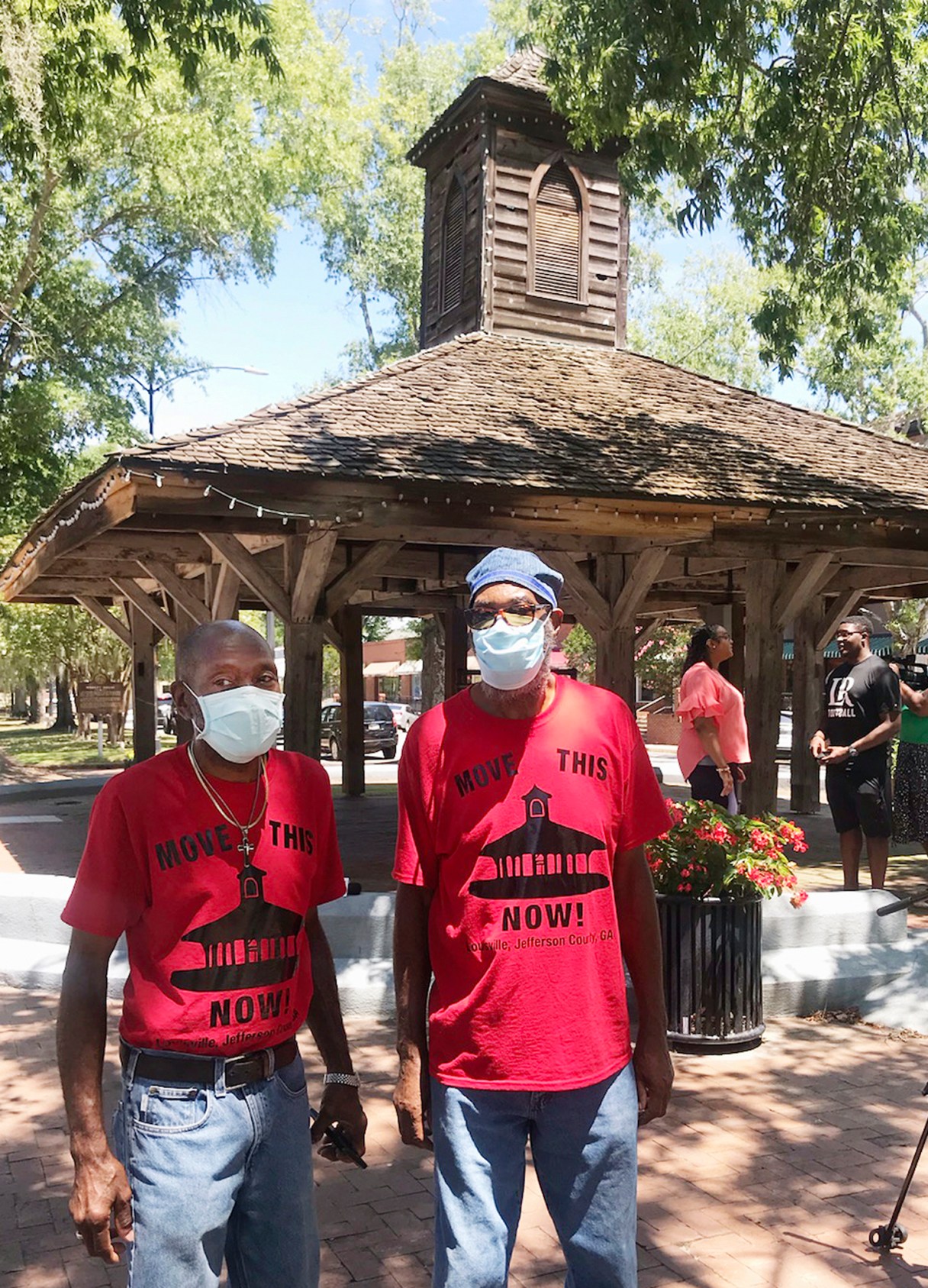
ATLANTA (AP) – Amid a renewed push to remove Confederate monuments following the death of George Floyd, a rural Georgia city is confronting the fate of a rare, 18th-century pavilion where slaves were once sold.
The Market House, or Slave Market, in Louisville is on the National Register of Historic Places and has been held up as a cultural site by county officials. The open-air, gazebo-like structure dates back to the late 1790s and is among just a few buildings of its kind still standing in the U.S., according to historic documents filed with the U.S. Department of Interior.
Critics say it is a constant reminder of a painful part of the country’s history and needs to be taken away from downtown Louisville – a city of roughly 2,500 people about 50 miles (80 kilometers) southwest of Augusta where the majority of residents are Black.
The City Council is expected to make a decision about the future of the structure at its meeting Tuesday.
“When I ride by there, I see women with their children being torn apart and sold to other white men as their property,” said James Ivery, a former Louisville resident who is pushing for the structure’s removal. “I see that Black people in this country are no more than three-fifths of a human. It’s telling me that I am less than a dog or a cow or a horse that’s being sold.”