
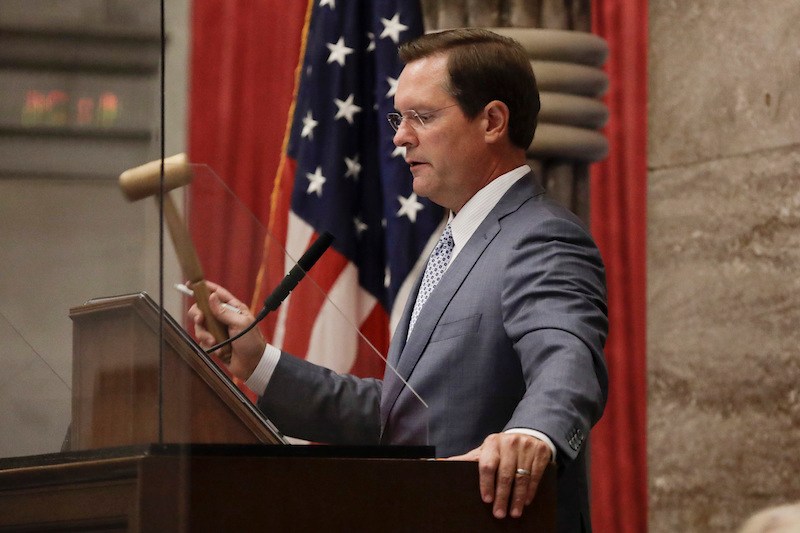
NASHVILLE, Tenn. (AP) – Tennessee lawmakers launched a special session Monday to work on legislation that would provide health care providers, schools and businesses broad protections against coronavirus lawsuits.
However, the GOP-dominant Statehouse is already raising eyebrows by also crafting legislation that would both significantly increase penalties against protesters and those who illegally camp on state property.
The proposal comes after weeks of protests at all hours of the day by demonstrators decrying police brutality and racial injustice in the U.S. State troopers have consistently seized equipment and made multiple rounds of misdemeanor arrests, but that has yet to deter the protesters from dispersing.
Republican Gov. Bill Lee convened the special legislative session after lawmakers failed to advance a handful of key bills in the final moments before adjourning in mid-June. Along with protest and COVID liability legislation, Lee is also seeking to pass a bill that would expand telemedicine access as the state battles its COVID-19 outbreak.
The main dividing line over the liability bill was whether to make its protections retroactive to early March, which the Senate supported and the House opposed. The telemedicine bill was spiked as a response to the failure to pass the liability bill.