
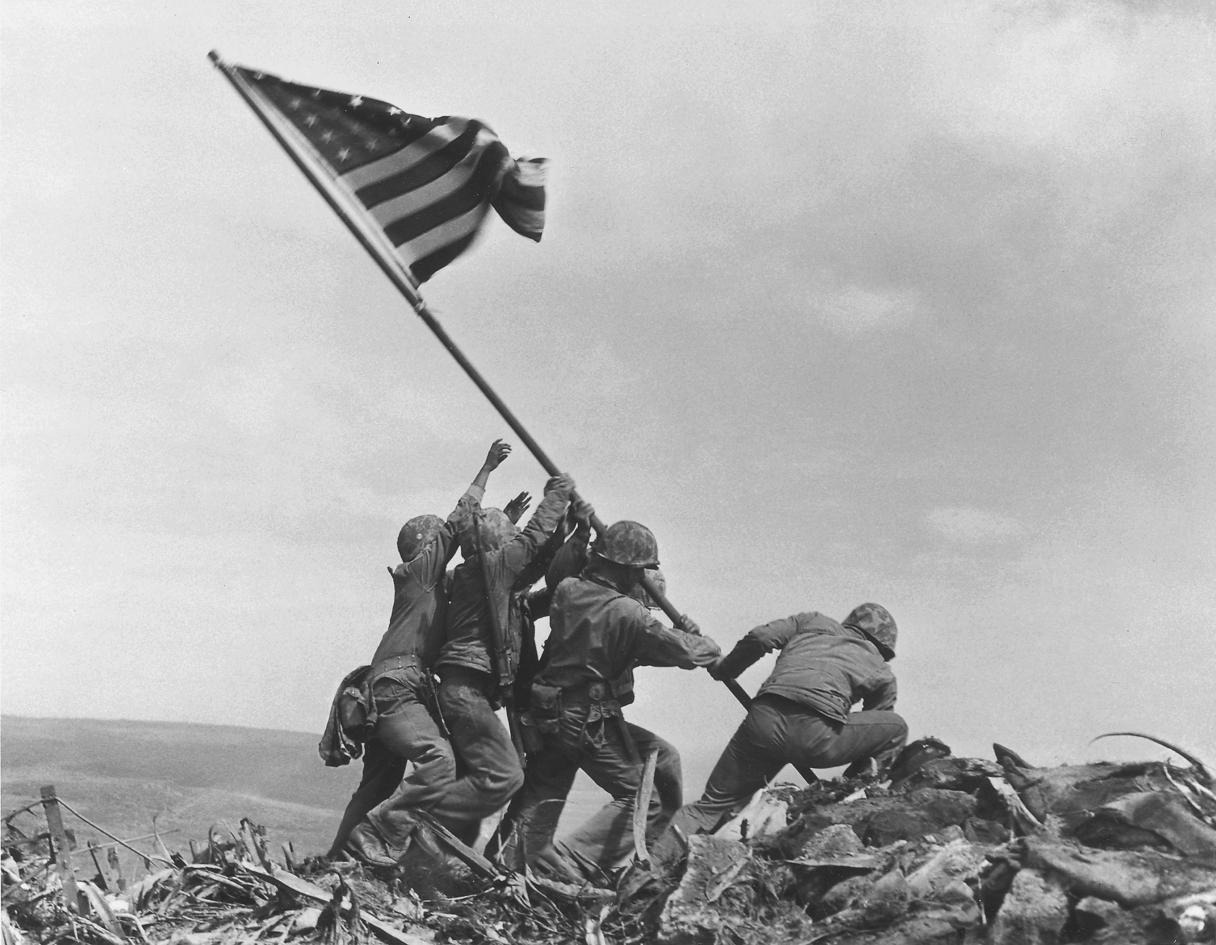
Seventy-five years ago, on Feb. 19, 1945, U.S. Marines began amphibious landings on the tiny volcanic island of Iwo Jima in a battle code-named Operation Detachment. The island’s strategic value resided in two airfields at its midsection. Capture of the island resulted in one of the bloodiest battles for American forces during World War II.
U.S. intelligence significantly underestimated the Japanese defensive force and predicted victory within a week. Ten days of planned pre-invasion, heavy bombardment from sea and air were reduced to three days.
For months, 18,000 U.S. and Japanese troops had constructed miles of interconnected tunnels that linked heavily fortified pillboxes and gun positions. Rather than attack the invaders at the shoreline, the Japanese held their fire until U.S. forces had come ashore. Defenders could attack with artillery, mortars and heavy machine guns and quickly withdraw before sustaining damage from U.S. bombardment. Defensive weapons could be moved from site to site.
About 30,000 U.S. and Marines of an eventual force of 70,000 landed on the first day of the attack on beaches along the island’s southeast coast. At the perimeter of the beaches, they encountered an unexpected, steep wall of soft volcanic ash, which slowed their planned advance for days and limited the use of armored vehicles. Because of links among fortifications, defenders could emerge behind U.S. lines, attack and disappear.
On Feb. 21, a kamikaze aerial attack led to the sinking of the escort carrier U.S.S. Bismarck Sea, which was providing close air support for the invasion, with the loss of 316 crew. Legendary carrier U.S.S Saratoga suffered severe damage and heavy casualties in the same attack and was forced to withdraw to Hawaii for repairs.