
Wednesday, November 11, 2026Nov 11

Design of AR-15 could derail charges tied to popular rifle

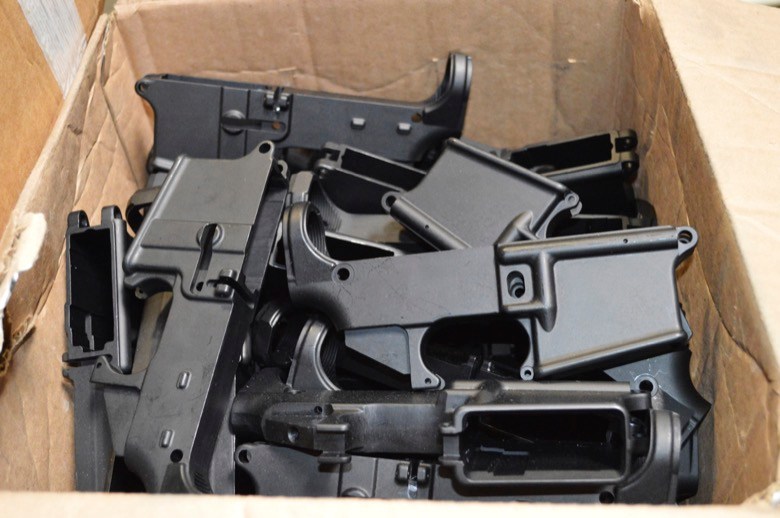
This photo provided by the U.S. Department of Justice shows AR-15 lower receivers, which federal agents have seized, including these unfinished ones taken in 2014 in California, for firearms investigations nationwide. For decades, the federal government has treated the mechanism called the lower receiver as the essential piece of the semiautomatic rifle, which has been used in some of the nation's deadliest mass shootings. But some defense attorneys have recently argued that the part alone does not meet the definition in the law. (U.S. Department of Justice via AP)
This photo provided by the U.S. Department of Justice shows AR-15 lower receivers, which federal agents have seized, including these unfinished ones taken in 2014 in California, for firearms investigations nationwide. For decades, the federal government has treated the mechanism called the lower receiver as the essential piece of the semiautomatic rifle, which has been used in some of the nation's deadliest mass shootings. But some defense attorneys have recently argued that the part alone does not meet the definition in the law. (U.S. Department of Justice via AP) This photo provided by the U.S. Department of Justice shows AR-15 lower receivers, which federal agents have seized, including these unfinished ones taken in 2014 in California, for firearms investigations nationwide. For decades, the federal government has treated the mechanism called the lower receiver as the essential piece of the semiautomatic rifle, which has been used in some of the nation's deadliest mass shootings. But some defense attorneys have recently argued that the part alone does not meet the definition in the law. (U.S. Department of Justice via AP)

DALLAS (AP) – A subtle design feature of the AR-15 rifle has raised a technical legal question that is derailing cases against people who are charged with illegally buying and selling the gun’s parts or building the weapon.

At issue is whether a key piece of one of America’s most popular firearms meets the definition of a gun that prosecutors have long relied on.

For decades, the federal government has treated a mechanism called the lower receiver as the essential piece of the semiautomatic rifle, which has been used in some of the nation’s deadliest mass shootings. Prosecutors regularly bring charges based on that specific part.

But some defense attorneys have recently argued that the part alone does not meet the definition in the law. Federal law enforcement officials, who have long been concerned about the discrepancy, are increasingly worried that it could hinder some criminal prosecutions and undermine firearms regulations nationwide.

“Now the cat is out of the bag, so I think you’ll see more of this going on,” said Stephen Halbrook, an attorney who has written books on gun law and history. “Basically, the government has gotten away with this for a long time.”