
Thursday, October 29, 2026Oct 29

This story is free to read.

Fires set stage for irreversible forest losses in Australia

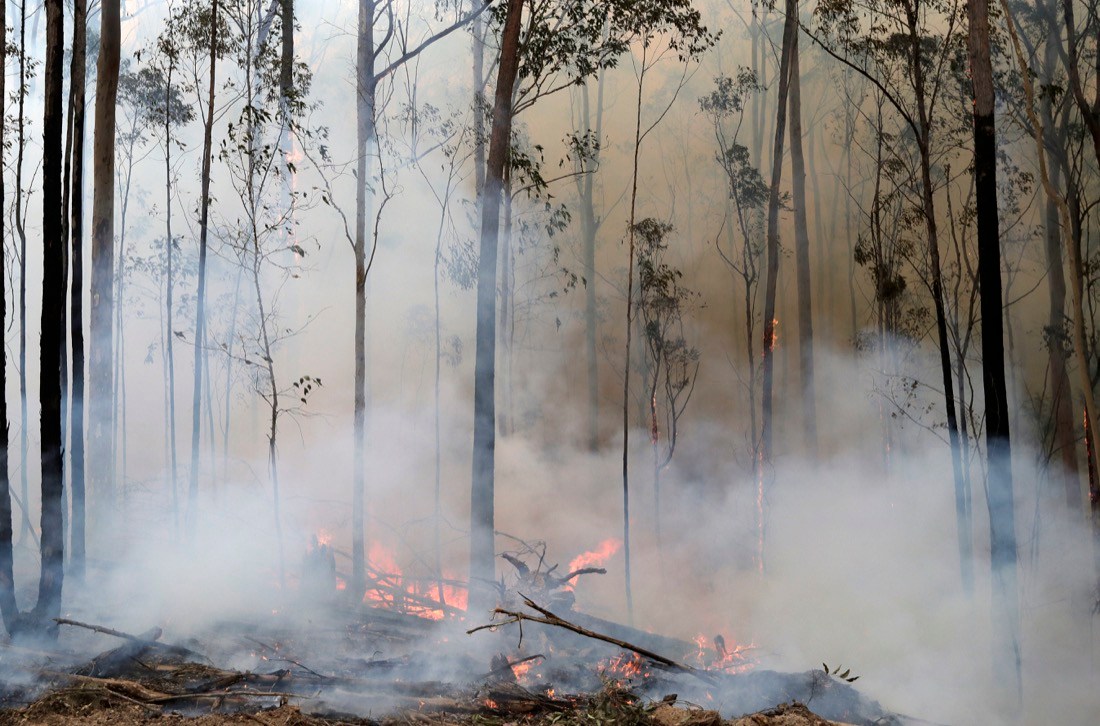
Flames from a controlled fire burn around trees as firefighters work at building a containment line at a wildfire near Bodalla, Australia, Sunday, Jan. 12, 2020. Authorities are using relatively benign conditions forecast in southeast Australia for a week or more to consolidate containment lines around scores of fires that are likely to burn for weeks without heavy rainfall. (AP Photo/Rick Rycroft)
Flames from a controlled fire burn around trees as firefighters work at building a containment line at a wildfire near Bodalla, Australia, Sunday, Jan. 12, 2020. Authorities are using relatively benign conditions forecast in southeast Australia for a week or more to consolidate containment lines around scores of fires that are likely to burn for weeks without heavy rainfall. (AP Photo/Rick Rycroft) Flames from a controlled fire burn around trees as firefighters work at building a containment line at a wildfire near Bodalla, Australia, Sunday, Jan. 12, 2020. Authorities are using relatively benign conditions forecast in southeast Australia for a week or more to consolidate containment lines around scores of fires that are likely to burn for weeks without heavy rainfall. (AP Photo/Rick Rycroft)

Australia’s forests are burning at a rate unmatched in modern times and scientists say the landscape is being permanently altered as a warming climate brings profound changes to the island continent.

Heat waves and drought have fueled bigger and more frequent fires in parts of Australia, so far this season torching some 40,000 square miles (104,000 square kilometers), an area about as big as Ohio.

With blazes still raging in the country’s southeast, government officials are drawing up plans to reseed burned areas to speed up forest recovery that could otherwise take decades or even centuries.

But some scientists and forestry experts doubt that reseeding and other intervention efforts can match the scope of the destruction. The fires since September have killed 28 people and burned more than 2,600 houses.

Before the recent wildfires, ecologists divided up Australia’s native vegetation into two categories: fire-adapted landscapes that burn periodically, and those that don’t burn. In the recent fires, that distinction lost meaning – even rainforests and peat swamps caught fire, likely changing them forever.