
Thursday, November 12, 2026Nov 12

Democrats, Biden look to accelerate Southern political shift

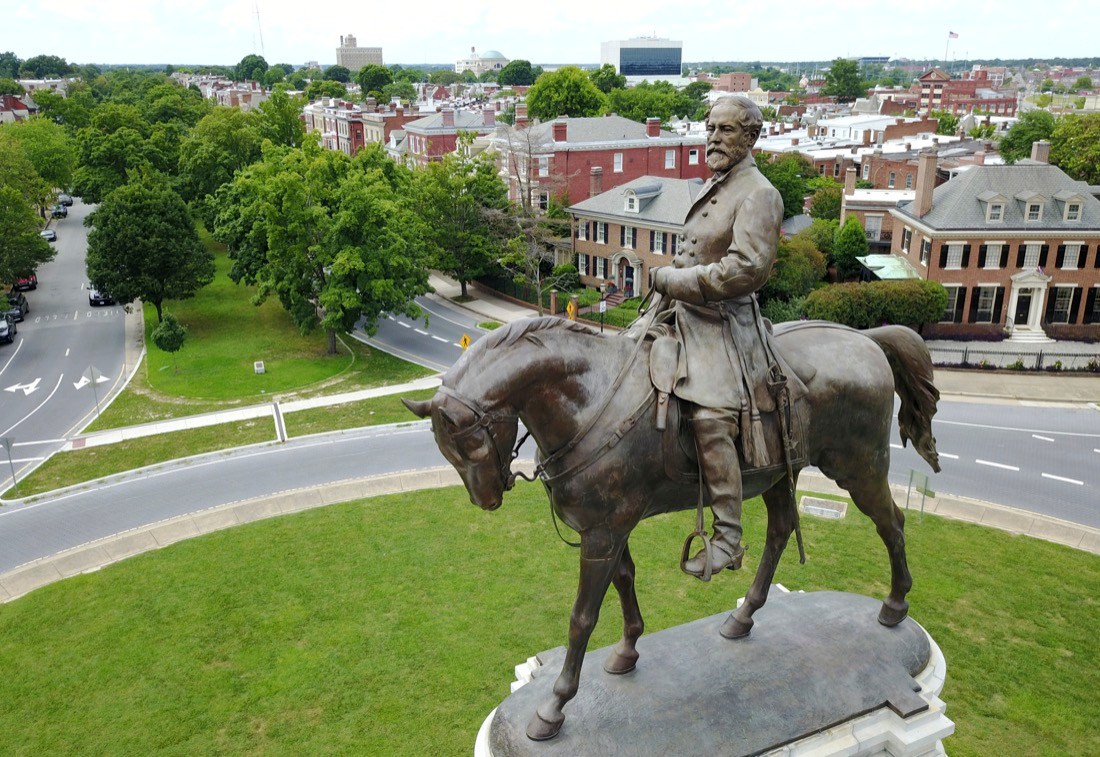
FILE - This June 27, 2017, file photo, shows a statue of Confederate General Robert E. Lee in the middle of a traffic circle on Monument Avenue in Richmond, Va. Vestiges of the Civil War and Jim Crow segregation are coming down across the Old Confederacy as part of a national reckoning on race and white supremacy. A diversifying Democratic Party hopes the changes in symbols are part of a more fundamental shift in a region that dominated by Republicans for a generation – and white conservative Democrats a century before that. (AP Photo/Steve Helber, File)
FILE - This June 27, 2017, file photo, shows a statue of Confederate General Robert E. Lee in the middle of a traffic circle on Monument Avenue in Richmond, Va. Vestiges of the Civil War and Jim Crow segregation are coming down across the Old Confederacy as part of a national reckoning on race and white supremacy. A diversifying Democratic Party hopes the changes in symbols are part of a more fundamental shift in a region that dominated by Republicans for a generation – and white conservative Democrats a century before that. (AP Photo/Steve Helber, File) FILE - This June 27, 2017, file photo, shows a statue of Confederate General Robert E. Lee in the middle of a traffic circle on Monument Avenue in Richmond, Va. Vestiges of the Civil War and Jim Crow segregation are coming down across the Old Confederacy as part of a national reckoning on race and white supremacy. A diversifying Democratic Party hopes the changes in symbols are part of a more fundamental shift in a region that dominated by Republicans for a generation – and white conservative Democrats a century before that. (AP Photo/Steve Helber, File)

ATLANTA (AP) – From Mississippi retiring its state flag to local governments removing Confederate statues from public spaces, a bipartisan push across the South is chipping away at reminders of the Civil War and Jim Crow segregation.

Now, during a national reckoning on racism, Democratic Party leaders want those symbolic changes to become part of a fundamental shift at the ballot box.

Many Southern electorates are getting younger, less white and more urban, and thus less likely to embrace President Donald Trump’s white identity politics. Southern Democrats are pairing a demographically diverse slate of candidates for state and congressional offices with presumptive presidential nominee Joe Biden, a 77-year-old white man they believe can appeal to what remains perhaps the nation’s most culturally conservative region.

“There’s so much opportunity for everyone in this region,” said Jaime Harrison, Democratic challenger to South Carolina Sen. Lindsey Graham and a 44-year-old Black man.

Decades of economic development have coaxed new residents to the area. That includes white people from other parts of the country, Black families returning generations after the Great Migration north during the lynching and segregation era, and a growing Latino population. Harrison noted that even younger native Southerners, Black and white, are less wed to hard-partisan identities than their parents and grandparents were.