
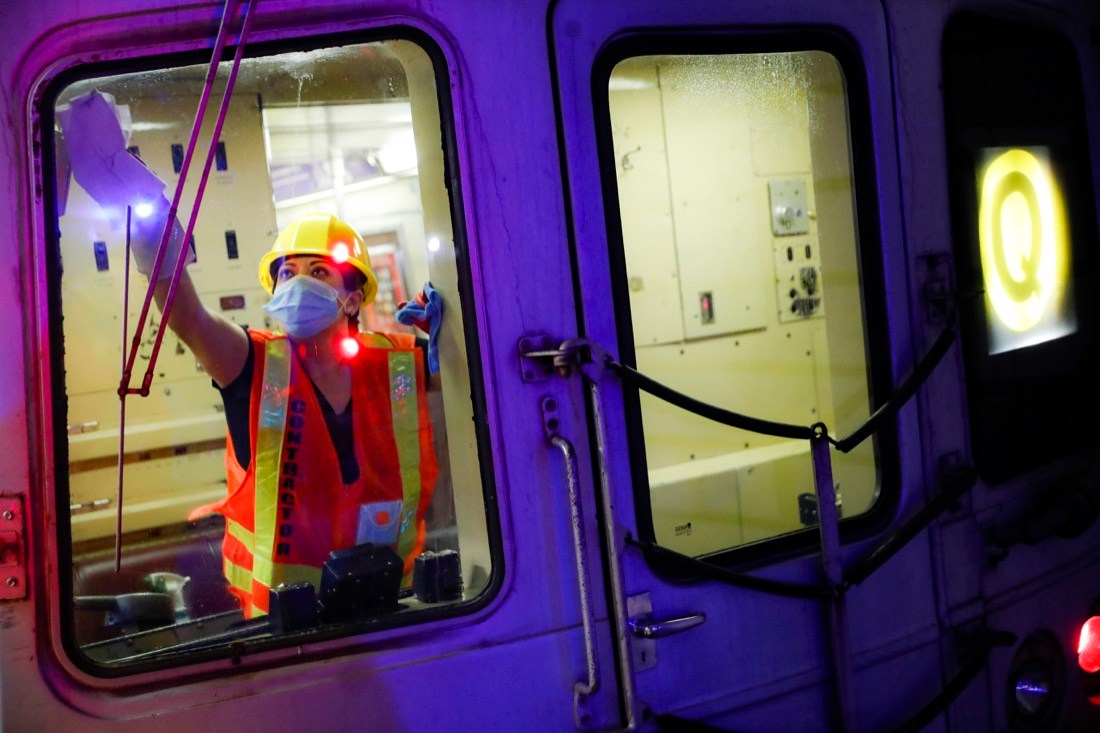
NEW YORK (AP) – Mass transit systems around the world have taken unprecedented – and expensive – steps to curb the spread of the coronavirus, including New York shutting down its subways overnight and testing powerful ultraviolet lamps to disinfect seats, poles and floors.
The cleaning measures produced something commuters have not seen in a while, or possibly ever: thousands of freshly scrubbed cars that look, feel and even smell clean. But experts say those steps solve only part of the problem, and transit officials are studying more advanced methods that might someday automatically disinfect transit systems around the clock.
The Moscow Metro and a public bus company in Shanghai have experimented with germ-killing ultraviolet light. Agencies in Hungary and the Czech Republic have tried using ozone gas as a disinfectant. The public transit system in Dallas tested a “dry fogging” system, and Hong Kong used a robot that sprays a hydrogen peroxide solution, according to a survey by international engineering and professional services firm WSP.
In Chicago, rail cars are cleaned every day before starting service and are prowled at night by crews wearing backpack-style electrostatic sprayers that cover all interior surfaces with disinfectant.
All that cleaning does cut the threat of catching the virus, experts say, but the benefits are limited.