
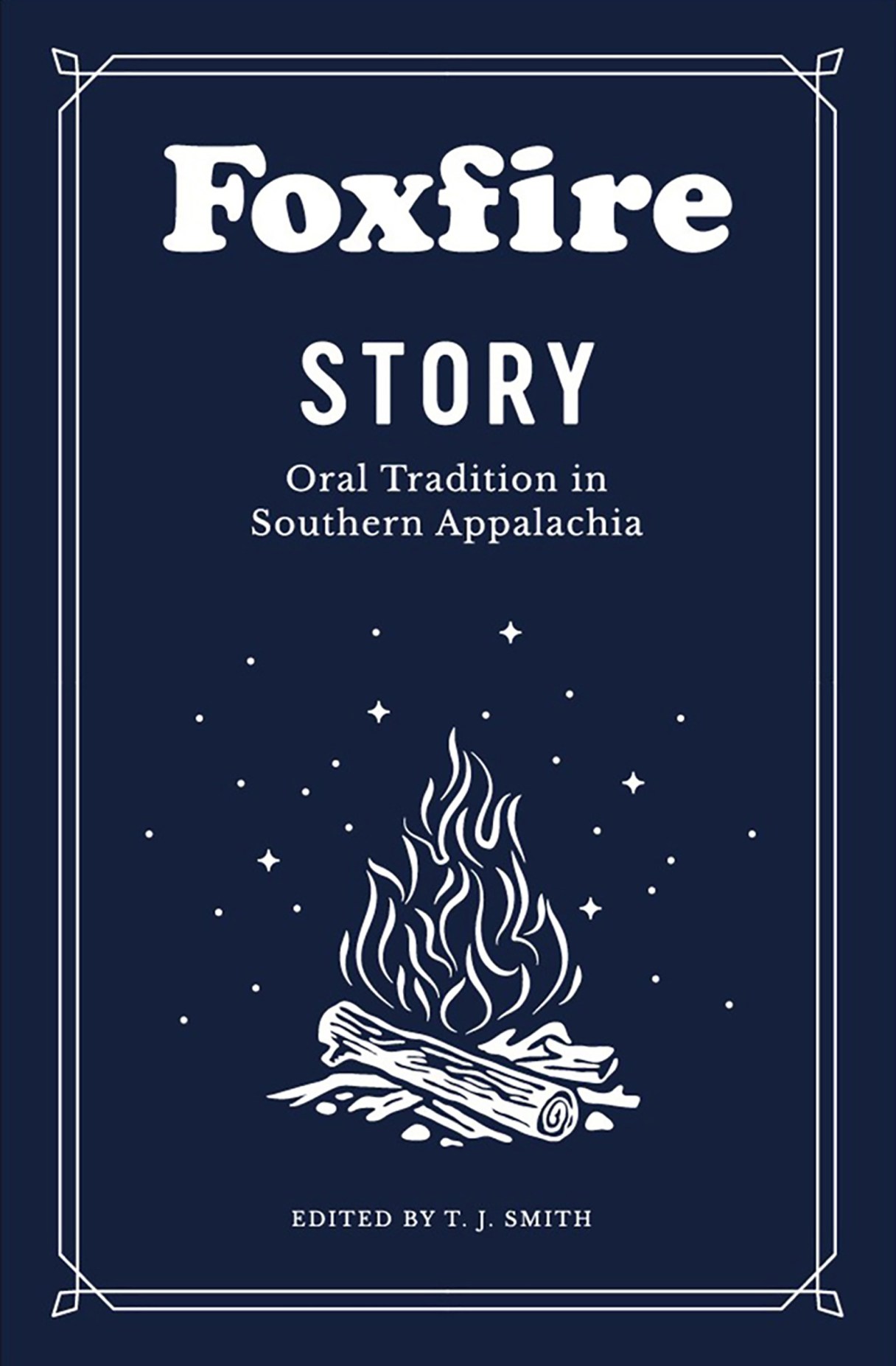
“FOXFIRE STORY: ORAL TRADITION IN SOUTHERN APPALACHIA” by Foxfire Fund Inc., edited by T.J. Smith (Anchor Books, 336 pages, $20).
“I don’t think there is anything quite as intimate or grounding as the ways in which we use narrative in our day-to-day lives and in the grander storytelling contexts we encounter,” writes editor T.J. Smith in the introduction to “Foxfire Story: Oral Tradition in Southern Appalachia.” Smith’s observation is borne out in this rich collection of Appalachian voices and tales that bring mountain culture to life.
Anyone with an interest in the Appalachian South is familiar with the Foxfire program, dedicated to documenting and preserving the traditional folkways of the region, from basket weaving to moonshining to burial customs. Since the program’s inception in the late 1960s, Foxfire’s work has been published in The Foxfire Magazine and the popular Foxfire book series. Oral traditions have always been a major focus of the project, and “Foxfire Story” puts them center stage, bringing together a selection of tales, jokes, anecdotes, oral histories, songs and sayings drawn from material collected over 50 years.
Smith, a folklorist and the executive director of the nonprofit that operates the Foxfire program, has compiled an amazing array of material in “Foxfire Story.” Though it’s a substantial volume, this is not so much a book to dive into as a sampler of genres to savor a little at a time. Some of the material will chiefly interest serious students of Appalachian lore – for example, there are seven pages devoted to variations on traditional butter-churning chants – but you don’t have to be a scholar to take pleasure in the lengthy lists of old-time expressions: “blue as three rainy days,” “mean as a striped snake,” “thick as fiddlers in hell.” And who wouldn’t want to add terms like “lobberin'” (wandering) or “mink-mink” (rabbit) to their vocabulary?
The substance of the book lies in its narratives, which are lively, often funny, sometimes strange, and in one case, eerily timely. Though Smith could not have foreseen our current moment when he was compiling the book, he includes a set of recollections, gathered in the early 1970s, from survivors of the deadly 1918 influenza epidemic. The images of mask-wearing neighbors and groceries left on front porches in order to avoid contact could be lifted from the present day. But medical aid for rural folk was minimal at the time, and the illness hit more swiftly and brutally than COVID-19. “It killed people just like hogs dyin’ from the cholera,” says one man. “They was diggin’ a bunch in the graveyard all the time.” The reliance on community is a frequent refrain in these accounts. “Back in them days,” recalls a woman who lived through the flu as a child, “the neighboring people went in and done for the sick and set up beds and took care of ’em. … People helped each other then.”