
Wednesday, November 11, 2026Nov 11

Coronavirus pandemic hampers raising rare whooping cranes for the wild

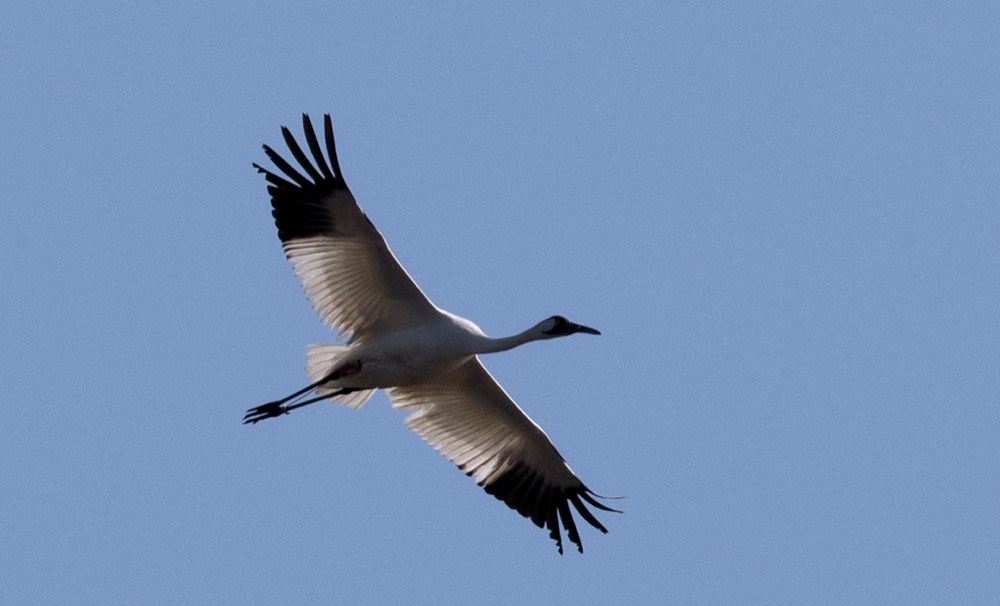
FILE - In this March 23, 2018 file photo, an endangered whooping crane flies over a crawfish pond in St. Landry Parish, La. Louisiana's flock is one of two made up almost entirely of birds raised in captivity and released in the wild to mitigate disaster in case anything happens to the only natural flock. But the COVID-19 pandemic will mean fewer youngsters than usual to release in the wild in fall 2020, helping to bring back the world's rarest cranes. (AP Photo/Gerald Herbert, File)
FILE - In this March 23, 2018 file photo, an endangered whooping crane flies over a crawfish pond in St. Landry Parish, La. Louisiana's flock is one of two made up almost entirely of birds raised in captivity and released in the wild to mitigate disaster in case anything happens to the only natural flock. But the COVID-19 pandemic will mean fewer youngsters than usual to release in the wild in fall 2020, helping to bring back the world's rarest cranes. (AP Photo/Gerald Herbert, File) FILE - In this March 23, 2018 file photo, an endangered whooping crane flies over a crawfish pond in St. Landry Parish, La. Louisiana's flock is one of two made up almost entirely of birds raised in captivity and released in the wild to mitigate disaster in case anything happens to the only natural flock. But the COVID-19 pandemic will mean fewer youngsters than usual to release in the wild in fall 2020, helping to bring back the world's rarest cranes. (AP Photo/Gerald Herbert, File)

NEW ORLEANS (AP) – The COVID-19 pandemic is drastically reducing the number of young whooping cranes to be released this fall to help bring back the world’s rarest cranes. Zoos and other places where the endangered birds are bred have had to cut not only staff size but use of two techniques to boost the birds’ numbers: artificial insemination and hand-rearing — or, rather, costume-rearing — chicks.

Whooping cranes are North America’s tallest birds, 5 feet (1.5 meters) high from their black feet to the little red caps on their heads. They’re white with black tips on wings spanning 7 feet (2.1 meters). They mate for life.

Only about 825 exist. All are descended from 15 that had survived habitat loss and hunters in 1941, breeding in Canada’s largest national park and wintering in Aransas, Texas.

Biologists are trying to establish two more flocks to mitigate disaster should anything happen to the original flock, now 500 strong. There are 75 birds based in Louisiana and 85 in a flock taught to migrate from Wisconsin to Florida by following ultralight aircraft.

In a normal year, breeders in various areas and wildlife agents in Louisiana and Wisconsin would collect some eggs for incubation, knowing the parents will lay a second and even a third clutch. That both increases the number of chicks per year and, in Wisconsin, helps keep wild chicks from hatching during the worst of the bloodsucking black fly season, which has proven dangerous to them.