
Nothing says “Don’t panic” quite like an emergency interest rate cut by the Federal Reserve.
Oh, wait … .
By cutting its target short-term interest rate by half a percentage point Tuesday morning, the Fed’s Federal Open Market Committee told the country that the coronavirus outbreak is such a threat to the U.S. economy, the committee couldn’t hold off acting until its regularly scheduled meeting two weeks from now. That’s an alarming signal, and it’s similar to the one being sent by other central banks around the world.
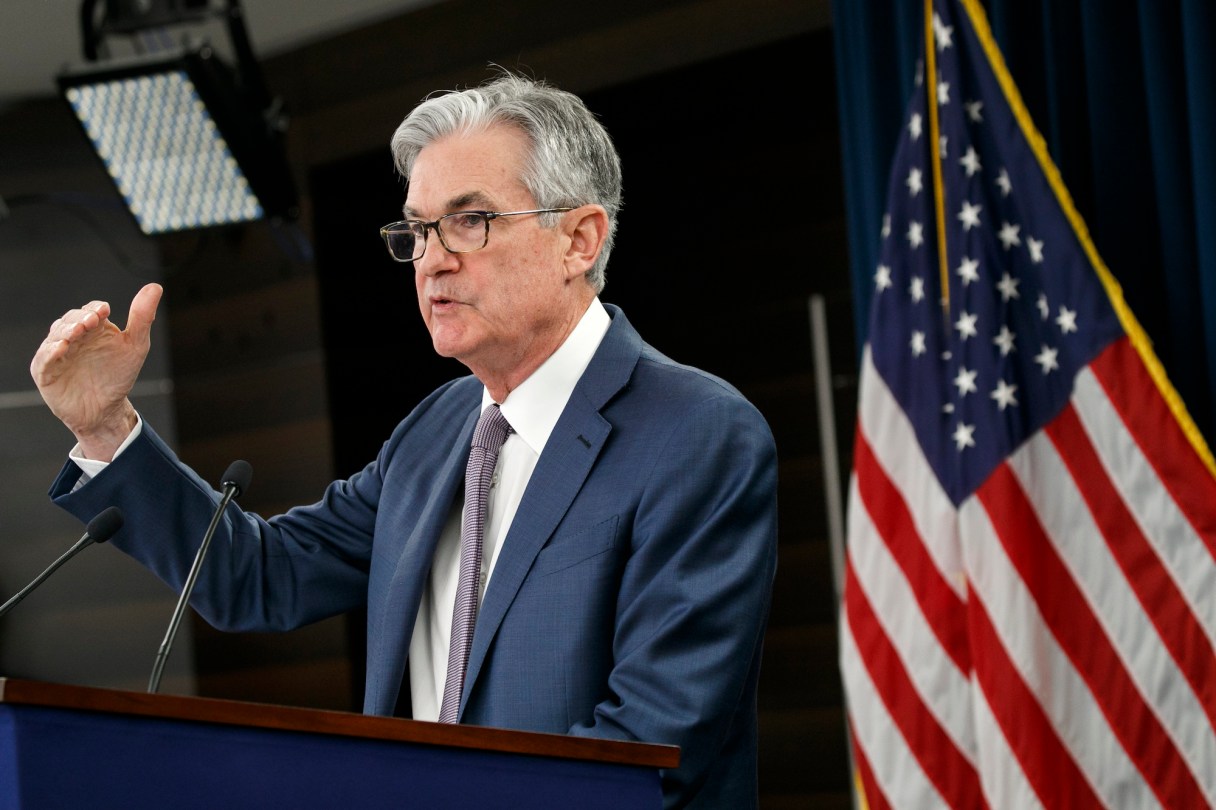
Yet the Fed and its board chairman, Jerome H. Powell, appeared to be trying to do just the opposite. In the Fed’s official statement and Powell’s comments Tuesday morning, the message was that the U.S. economy remains strong even though the situation is “fluid.” The virus is starting to have an effect on a handful of industries like travel and tourism, Powell said, and on some companies that rely on global supply chains. “We saw a risk to the outlook,” he said, “and we chose to act.”
The problem is, it’s really hard to tell from Powell’s comments exactly what motivated the cut, why the Open Market Committee decided to cut by half a percentage point instead of the usual quarter, how the rate cut is expected to ameliorate the situation, and how this meshes with the Fed’s statutory mandate to promote maximum employment and keep prices stable. The lack of clarity just makes it harder for people to decide which signals from Washington and the media to follow – the ones telling them to freak out, or the ones telling them not to?
(MORE: Virus spread prompts Fed to slash rates in surprise move)
Rumors of the Fed’s plan to cut rates were enough to help the jittery stock market recover Monday a big chunk of the value it had lost in recent weeks. Yet the buzz had worn off by Tuesday morning, and stocks began sinking again.
The Fed can’t control expectations. Nor does the incessant hectoring from President Trump help; he makes the Fed’s moves seem timid and politically driven, no matter what Powell says or does. True to form, Trump wasted no time belittling the Fed’s emergency cut Tuesday.
Yet Trump has also complained long and loudly about the coronavirus threat being overhyped. So why isn’t he pounding Powell for overreacting? Because he is forever hungry for more stimulus from the Fed.
The Fed doesn’t have a whale of a lot of room to maneuver because it never quite regained its neutral, nonstimulative positions after the last recession.
If a recession were to hit now – courtesy of the coronavirus or some other forces – the Fed wouldn’t be able to offer much help. But Powell was resolutely hopeful Tuesday about where things are headed. When asked how long the economic threat of the coronavirus outbreak would endure, Powell responded: “I don’t think anybody knows how long it will be. I do know that the U.S. economy is strong and we will get to the other side of this, and I do expect that we will return to solid growth.”
For a meatier view of the potential threat to the economy, check out what Sen. Lamar Alexander, R-Tennessee, had to say at a Senate hearing Tuesday morning on the coronavirus outbreak: “According to the United States trade representative, more than 20% of everything we import is made in China – medicines, car parts, cellphones, televisions, washing machines. China has shut down factories and locked down 16 cities where an estimated 760 million people live. In the short-term this could disrupt American companies’ ability to buy and transport goods and materials. In the long term, the production of these goods could shift, which could affect jobs and prices.”
Now that is clarity. But then, Alexander doesn’t have to worry about how the markets (or the president) will react to every word he says.
The Los Angeles Times