
Wednesday, November 11, 2026Nov 11

US peace deal leaves Afghans to determine post-war landscape

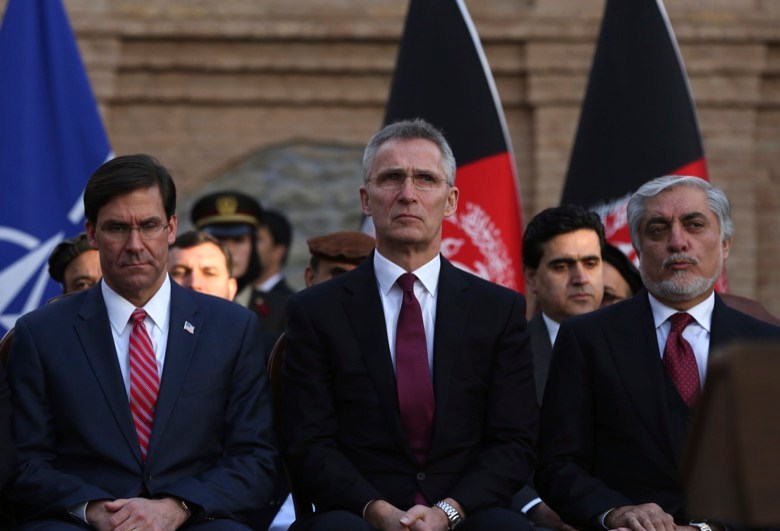
U.S. Secretary of Defense Mark Esper, left, NATO Secretary General Jens Stoltenberg, and Afghan Chief Executive Officer Abdullah Abdullah attend before a joint news conference in presidential palace in Kabul, Afghanistan, Saturday, Feb. 29, 2020. The U.S. signed a peace agreement with Taliban militants on Saturday aimed at bringing an end to 18 years of bloodshed in Afghanistan and allowing U.S. troops to return home from America's longest war. (AP Photo/Rahmat Gul)
U.S. Secretary of Defense Mark Esper, left, NATO Secretary General Jens Stoltenberg, and Afghan Chief Executive Officer Abdullah Abdullah attend before a joint news conference in presidential palace in Kabul, Afghanistan, Saturday, Feb. 29, 2020. The U.S. signed a peace agreement with Taliban militants on Saturday aimed at bringing an end to 18 years of bloodshed in Afghanistan and allowing U.S. troops to return home from America's longest war. (AP Photo/Rahmat Gul) U.S. Secretary of Defense Mark Esper, left, NATO Secretary General Jens Stoltenberg, and Afghan Chief Executive Officer Abdullah Abdullah attend before a joint news conference in presidential palace in Kabul, Afghanistan, Saturday, Feb. 29, 2020. The U.S. signed a peace agreement with Taliban militants on Saturday aimed at bringing an end to 18 years of bloodshed in Afghanistan and allowing U.S. troops to return home from America's longest war. (AP Photo/Rahmat Gul)

KABUL, Afghanistan (AP) – Now that the U.S. has signed a deal with the Taliban to eventually leave Afghanistan, it will soon be up to Afghans on both sides of the conflict to decide what peace will look like.

The stakes are high.

The big question for many – and particularly those who remember the religiously repressive Taliban rule that ended with the U.S. invasion in 2001 – is whether the newly emboldened militants have changed their ideology. Women, especially in the cities, worry that their rights will be bargained away.

The Taliban say they have changed. Girls will be allowed to go to school, and women to work. Women can be judges but not the chief justice; they can participate in politics but not be president, they say.

The Taliban, however, will likely not back down on segregation of the sexes, said Hakim Mujahed, the Taliban’s representative at the United Nations during their five-year rule. They will not accept co-education nor will they accept women and men working together, he said.