
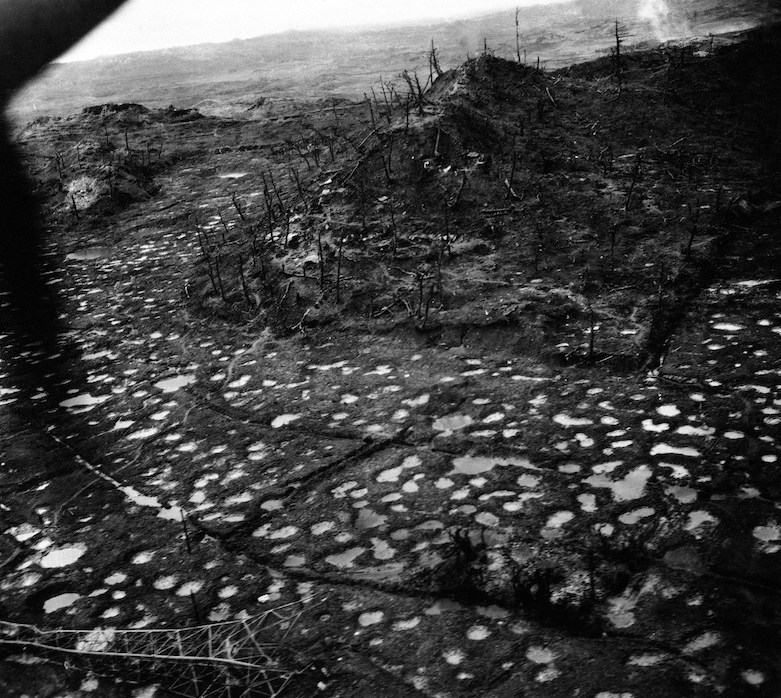
The invasion of Okinawa began 75years ago on Easter Sunday, April 1, 1945. Code-named “Operation Iceberg,” the amphibious landing had been preceded by days of heavy bombardment and air assault from U.S. and British Commonwealth ships. A protected harbor for a supporting fleet had been established on a small island to the west of Okinawa several days before the main attack.
Okinawa, the largest in a chain of islands, lay 300 miles south of the Japanese Home Islands. The island was 65 miles long, an average of seven miles wide, and occupied 460 square miles. Military planners envisioned the island as the ideal base for the eventual invasion of Japan.
By nightfall of the first day, 50,000 U.S. soldiers and Marines had landed. Their number would swell to 180,000 by the end of fighting. They faced about 95,000 Japanese soldiers, supplemented by thousands of native Okinawans, who had been forced into service. A joint force of U.S. Army and Marines advanced from a landing zone on the island’s western shore, quickly cutting the Japanese defense in half. Another attack reached the northern tip of the island. The defenders, however, had sheltered in numerous fortified bunkers from which they could repeatedly strike. The battle evolved into a series of intense, bloody actions scattered in the island’s hilly and rocky terrain. Monsoon rains arrived in early May, turning battlefields into seas of mud.
While fighting raged on Okinawa, supporting ships came under repeated attack. A Japanese task force had been intercepted and destroyed before reaching Allied ships. Waves of kamikaze planes attacked throughout April. Each aircraft was, in effect, a human-guided missile. Twenty U.S. ships were sunk; many more were heavily damaged. The aircraft carrier, USS Bunker Hill, suffered more than 600 casualties but stayed afloat after a May 11 attack by two suicide aircraft.
President Franklin Roosevelt died unexpectedly on April 12, 1945, succeeded by Vice President Harry Truman. Truman and Roosevelt had met in private only two times. Truman had few briefings on major decisions related to the war, including the ongoing development of an atomic bomb.